U.S. fears war in Lebanon but hopes Israeli attacks push Hezbollah to a deal

Add Axios as your preferred source to
see more of our stories on Google.
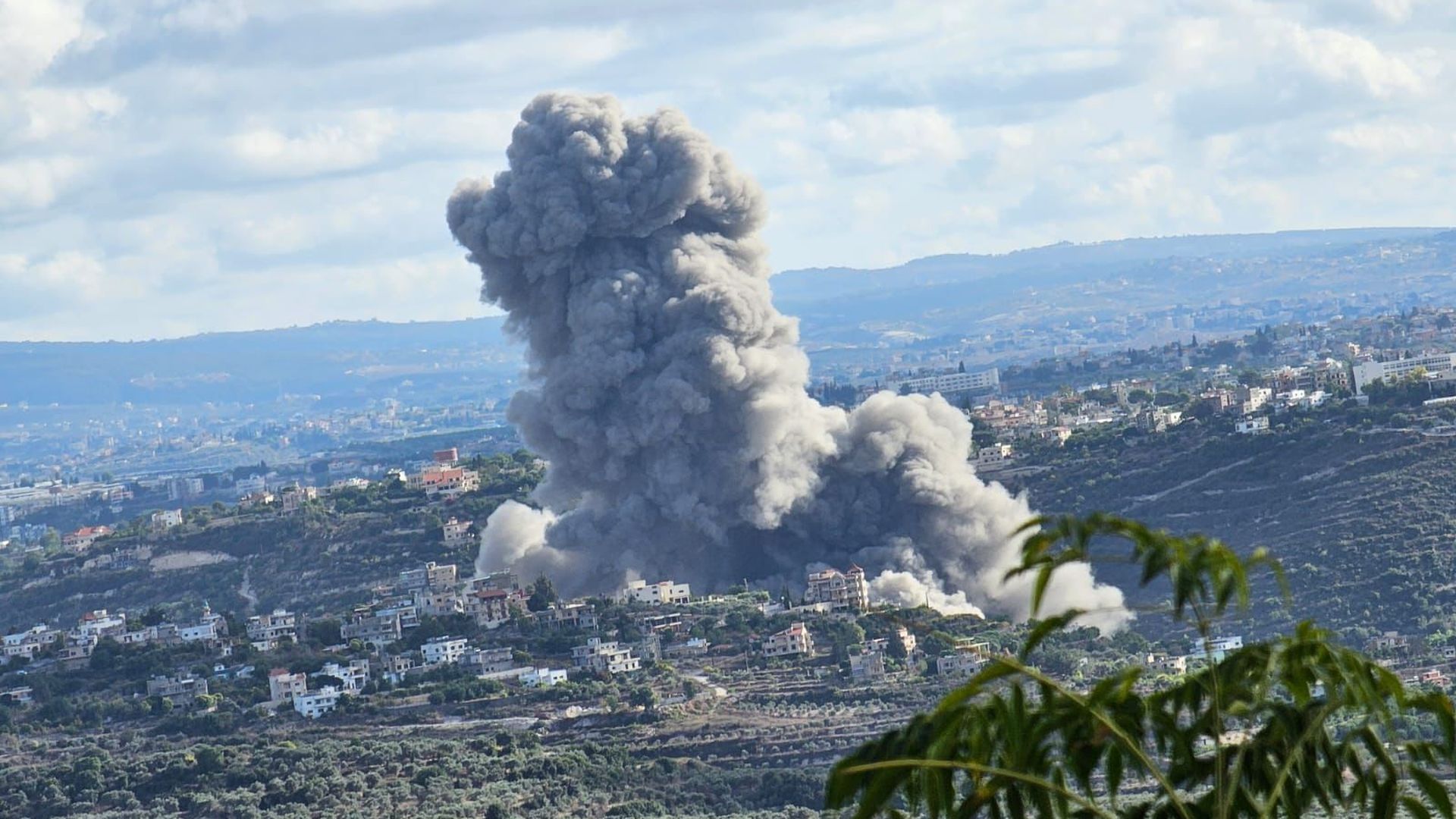
Smoke rises after an Israeli airstrike hit Tyre in southern Lebanon on Sept. 19, 2024. Photo: Stringer/Anadolu via Getty Images
U.S. officials say the Biden administration is "extremely concerned" about the risk of an all-out war between Israel and Lebanon, but hopes to use growing Israeli military pressure on Hezbollah to get a diplomatic deal to return civilians to their homes on both sides of the Israel-Lebanon border.
Why it matters: Israel and the U.S. are both looking for ways to decouple Hezbollah from Hamas. Despite months of diplomatic efforts by the Biden administration, Hezbollah hasn't agreed to any deal that would stop the current fighting with Israel before there is a ceasefire in Gaza.
- On Saturday, concerns of war continued to grow as the Israel Defense Forces (IDF) claimed Hezbollah was preparing an imminent retaliation to the series of Israeli attacks in Lebanon last week.
Driving the news: An Israeli airstrike in Beirut on Friday killed Hezbollah's top military commander Ibrahim Aqil and at least 15 other senior commanders, including those in charge of the elite Radwan force, according to both the IDF and Hezbollah.
- The Lebanese Ministry of Health said 37 people were killed in the airstrike in a Beirut suburb, including three children and seven women.
- The airstrike came after Israeli intelligence services remotely detonated pagers and Walkie-Talkies in attacks earlier in the week that killed dozens of people, including at least two children, and wounded thousands more. Many were members of Hezbollah's military units and institutions.
- Hezbollah leader Hassan Nasrallah called the attacks "an unprecedented and historic blow."
The latest: Israeli fighter jets conducted numerous airstrikes on Saturday, including against Hezbollah's medium-range rockets that the IDF claimed the militia was planning to launch imminently.
- IDF spokesman Rear Admiral Daniel Hagari said 400 rocket launchers with thousands of launching barrels were attacked.
- Hagari said Israeli defense minister Yoav Gallant signed an order designating all areas from Haifa to the border with Lebanon under emergency ahead of possible attacks by Hezbollah.
- White House national security adviser Jake Sullivan on Saturday said there is "a real and acute" danger of an all-out war between Israel and Lebanon and that the U.S. is working on preventing that from happening.
- Lebanese acting Prime Minister Najib Mikati announced on Saturday he is canceling his trip to the UN General Assembly in New York next week due to the tense situation.
The big picture: Israeli officials said their increasing attacks against Hezbollah are not intended to lead to war but are an attempt to reach "de-escalation through escalation."
- The officials said Israel believes putting more pressure on Hezbollah could push the militia to agree to a diplomatic deal that would return citizens to northern Israel and southern Lebanon irrespective of the deadlocked negotiations to establish a ceasefire in Gaza.
- U.S. officials told Axios they recognize Israel's rational and agree with it, but stress this is an "extremely difficult calibration" that could easily go out of control and lead to an all-out war.
Behind the scenes: Sullivan, U.S. Secretary of Defense Lloyd Austin and Biden advisers Brett McGurk and Amos Hochstein held several calls with their Israeli counterparts on Friday and Saturday.
- "One of the key messages was that we want to keep a path open to a diplomatic resolution and therefore don't want the Israelis to take steps that will close such a path," a U.S. official said.
Between the lines: On the one hand, Biden administration officials said the Israeli killing of Aqil provided justice for his role in the bombing of the U.S. embassy and Marine barracks in Beirut 40 years ago.
- "Any time a terrorist who has murdered Americans is brought to justice, we believe that that is a good outcome," Sullivan told reporters on Saturday.
On the other hand, the U.S. is concerned the assassination and attacks put the Israel-Hezbollah conflict on a slippery slope that could lead to war.
- The U.S. made clear to Israel that such a war wouldn't help Israel achieve its goal of returning tens of thousands of displaced Israelis to their homes on the border with Lebanon, U.S. officials said.
- The officials admit they have limited influence on Israel's military decisions and therefore are focused on reaching an understanding with Israeli leaders about the "escalation dial."
- The Biden administration asked Israel to refrain from actions like a ground invasion or wide-ranging airstrikes in civilian areas that could escalate the conflict to a war and shut down diplomatic efforts, Israeli and U.S. officials said.
- "We have disagreements with the Israelis on tactics and how you measure escalation risk," McGurk said on Friday. "It is a very concerning situation."
