U.S., China slash tariffs for 90 days in trade deal

Add Axios as your preferred source to
see more of our stories on Google.
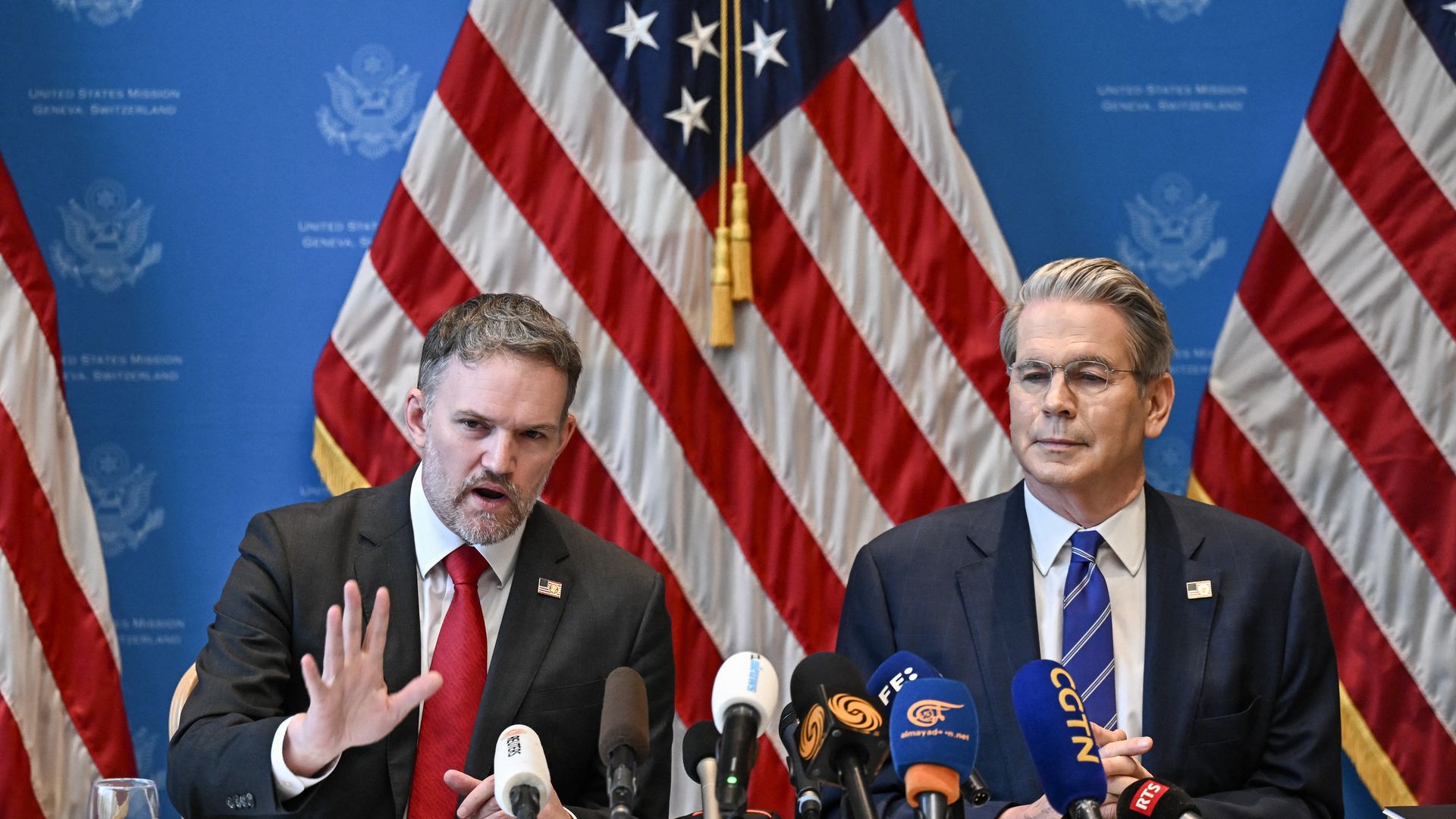
U.S. Trade Representative Jamieson Greer and Treasury Secretary Scott Bessent address reporters in Geneva. Photo: Fabrice Coffrini/AFP via Getty Images
The U.S. and China will slash their tariffs on each other for 90 days, Treasury Secretary Scott Bessent said Monday.
Why it matters: It's the relief global businesses and investors hoped for, after the trade war brought commerce to a near-halt and sent economies hurtling toward recession.
How it works: The U.S. will lower tariffs to 30% during the pause, while China will cut its tariffs to 10%, Bessent said following a weekend of high-level talks in Switzerland. (Both sides agreed to a 115% cut, though the U.S. rate was higher to begin with because of an anti-fentanyl tariff that will remain in place.)
- "We had very robust discussions, Both sides showed great respect to what was a very positive process," Bessent told reporters in Geneva.
- A joint statement issued by the world's two largest economies indicated they intend to hold continued talks during the period.
Between the lines: Bessent, in a CNBC interview later Monday morning, emphasized that the deal is just a pause, and that difficult negotiations are still to come.
- "I don't think anything's going to be easy, because this has been going on a long time," Bessent said.
- "We are the deficit country. Historically the deficit country has a better negotiating position."
The intrigue: Bessent also laid out a view of how the U.S. wants to work with China in future — a relationship, but with less American dependence on some Chinese manufacturing.
- "We do not want a generalized de-coupling from China, but what we do want is a de-coupling for strategic necessities, which we were unable to obtain during COVID, and we realized that efficient supply chains were not resilient supply chains," he said.
By the numbers: Stocks soared, with S&P 500 futures up more than 3% on the news. Tech and retail stocks led the rally.
- The U.S. Dollar Index, under heavy pressure in recent weeks over fears about the economy and concerns about America as a safe haven for investment, surged more than 1%.
- Bonds and gold sank as investors moved into a risk-on approach. The U.S. 10-year yield rose to 4.457%, its highest levels since the post-tariff market sell-off in early April, while the price of gold fell almost 4%.
What to watch: Businesses and markets will closely watch the evolution of the talks in coming months for signs of progress. Bessent said the newly agreed "Geneva mechanism" would likely lead to more meetings in the next few weeks, though when and where are still to be determined.
- The pause could also inspire a surge in ordering activity, as companies that held off due to the high tariffs rush to restock inventory — a rebound that some warn could cause a disruptive demand shock.
Editor's note: This story has been updated with Bessent's comments, the latest market activity and further context.
