Exclusive: Copyleaks expands AI detection to images

Add Axios as your preferred source to
see more of our stories on Google.
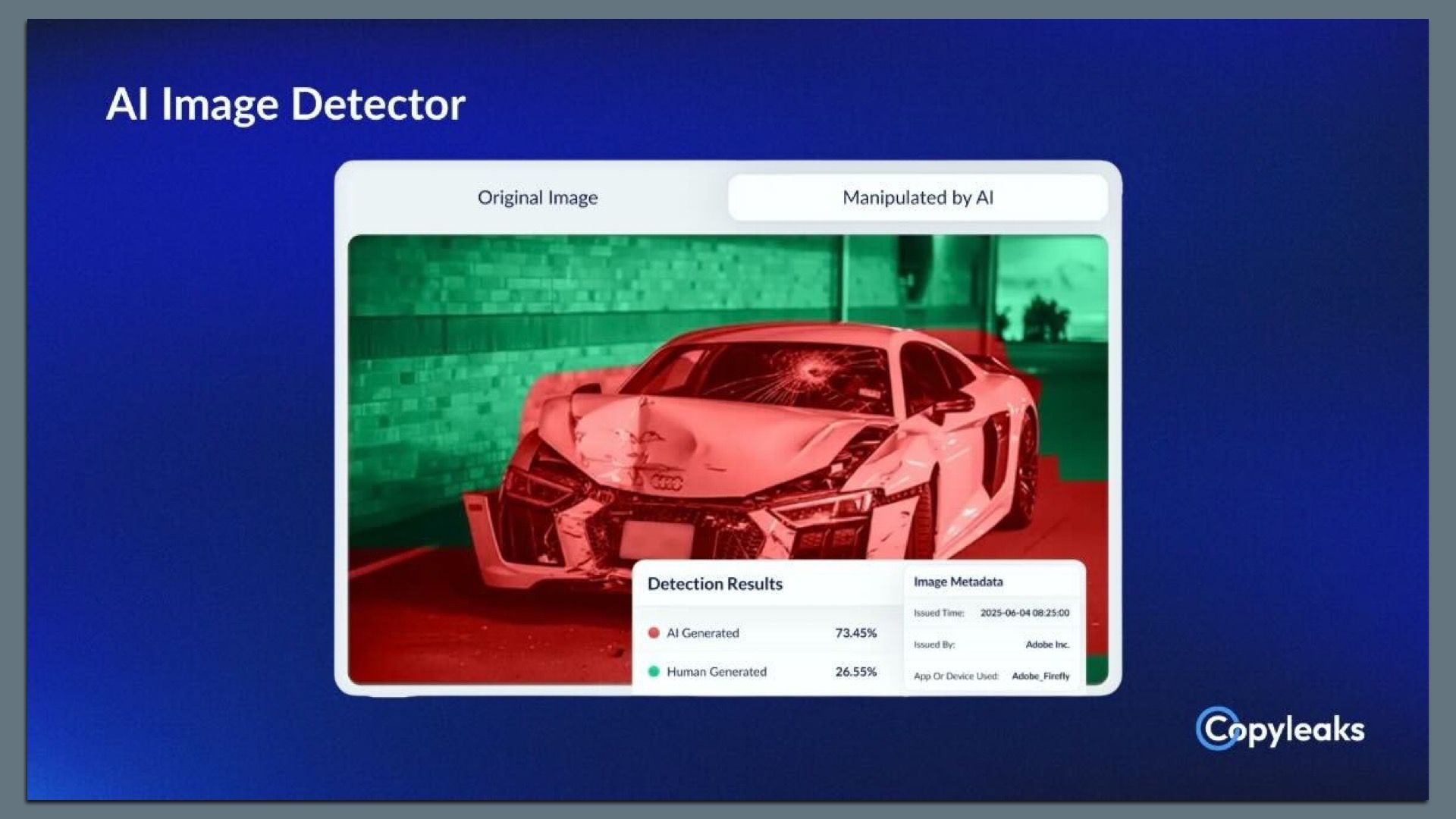
Image: Copyleaks
Copyleaks, known for its software to detect plagiarism and AI-generated text, is expanding into identifying AI use in images, the company shared first with Axios.
Why it matters: Beyond misinformation, AI image tools are fueling fraud — from fake receipts to doctored insurance claims.
Zoom in: The new Copyleaks detector assigns each image an AI-use probability score and shows where AI was likely applied on an image.
- There's a public demo of the tool.
Zoom out: CEO Alon Yamin told Axios the company sees a broad range of markets for the new tool, including education, financial services and publishing.
- "It used to be 'seeing is believing,'" Yamin said. "It's not anymore the case. So how are you making sure that you're able to really authenticate the content and understand its source?"
- As it does with its text-based detection tools, Copyleaks will charge institutions using its image detector based on volume.
Yes, but: Detecting AI-generated content is tricky; detecting whether AI is used for fraud is even trickier.
- Some phone cameras today use AI to combine multiple exposures for a "best take" or they use AI to fill in details on a zoomed-in shot.
- Limited Axios tests found mixed results — the tool flagged some AI-created images of official documents but missed others. It also returned false positives on images that weren't AI-generated.
What's next: The company says it plans to expand into identifying the use of AI in audio and video in 2026.
