Atlanta says it will cost $2 billion to improve water system

Add Axios as your preferred source to
see more of our stories on Google.
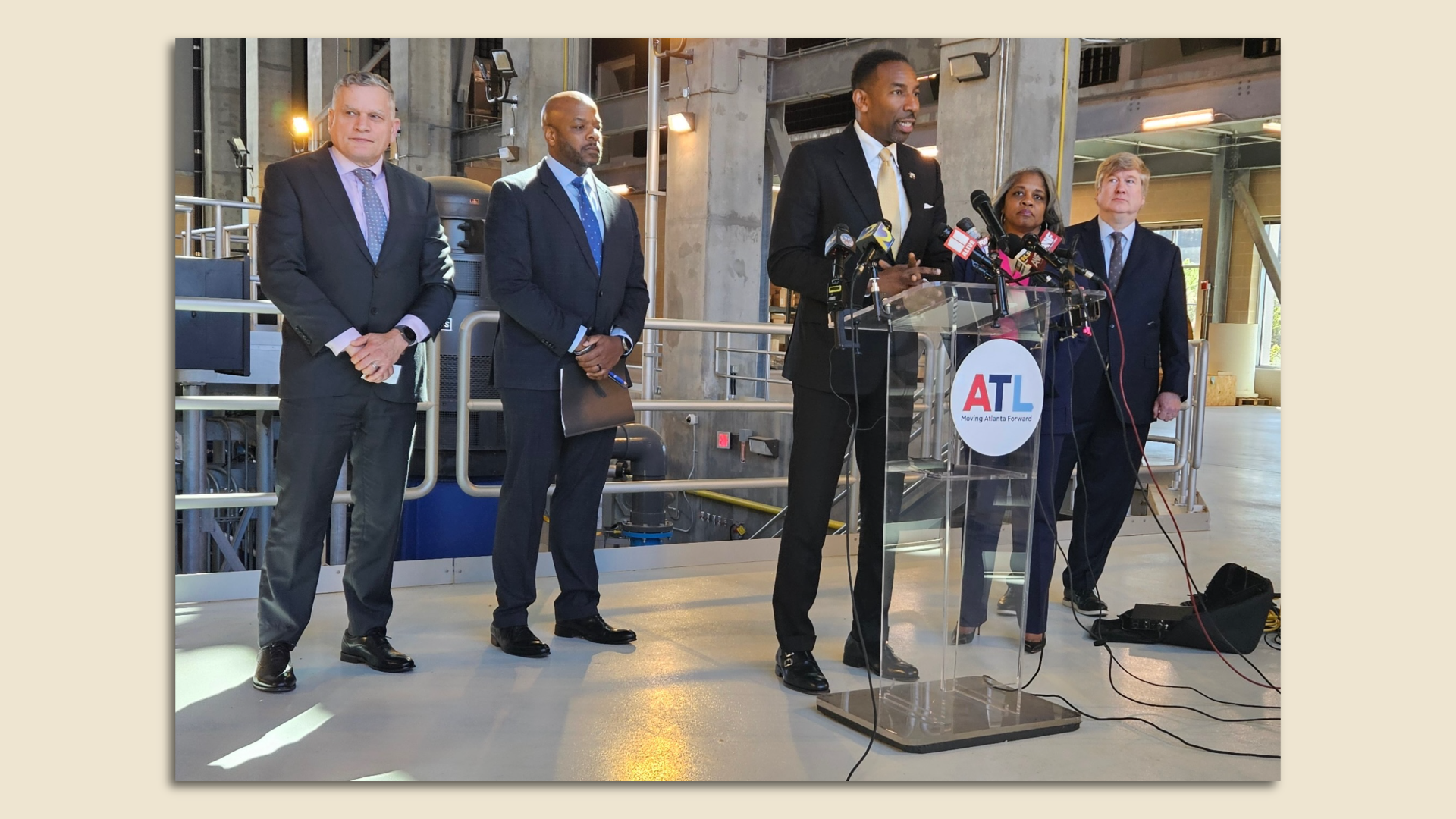
Mayor Andre Dickens speaks to reporters during a March 18 press conference at the Shirley C. Franklin Pumping Station and Quarry. Photo: Kristal Dixon/Axios
The city of Atlanta will need $2 billion to upgrade its aging water and sewer infrastructure over the next 20 years.
Why it matters: After last summer's two large water main breaks left many residents without water for days, Atlanta officials have been taking a fresh look at what needs to be done to salvage a system with 4,000 miles of pipes, many of which are at or around 100 years old.
Driving the news: Mayor Andre Dickens shared the latest in the city's plan to tackle a problem that's dogged his and previous administrations at a Tuesday press conference at the Shirley C. Franklin Pumping Station and Quarry (formerly Westside Park).
- Dickens said Atlanta is "committed to a multibillion-dollar, 20-plus year investment" in drinking water infrastructure, with the current estimate at $2 billion.
Follow the money: "I can't say that a water rate increase is on the table or off the table right now," Dickens said, adding the city will seek federal resources and use revenue paid by water and sewer customers.
Zoom in: Peter Aman, the city's chief strategy officer, said Atlanta's multi-phase long-range plan will need to include an assessment of all infrastructure, community outreach, identifying funding and planning construction to "minimize disruption."
- "We are replacing, ultimately, hundreds and hundreds of miles of pipe which currently runs underground in Atlanta and under our streets," he said.
Catch up quick: In the weeks following the 2024 water main breaks, the city partnered with the U.S. Army Corps of Engineers to assess the system and develop plans for upgrades.
- It also established the Atlanta Water Advisory Group, chaired by former Mayor Shirley Franklin, to provide advice on what the city can do to ensure the system is sustainable for the future.
State of play: The city has been using AI technology to detect leaks sooner and deploy fixes quicker.
- Department of Watershed Management commissioner Al Wiggins Jr. said those devices, which can also determine the progression of a leak, were deployed to over 1,600 locations serving critical sites including hospitals, jails and city centers.
- Since rolling out those tools, the city has issued 50 work orders to repair leaks, Wiggins told reporters.
Improving wastewater management is also a work in progress, Dickens said.
- Most of the city's water is treated at the R.M. Clayton Reclamation Facility on the Chattahoochee River in northwest Atlanta.
- The Georgia Environmental Protection Division last month fined the city nearly $300,000 for sewage spills into the river.
- Dickens said the city has made improvements to the water treatment process and "we remain focused on completing additional repairs outlined in our corrective action plan."
The bottom line: James "Gregory" Eyerly, who on April 1 will become the city's new watershed commissioner, said Atlanta will have to be up front with residents about what's needed to improve water infrastructure.
- "I believe we achieve all of this through increased transparency and trust," he said. "We need to talk about what our issues are."