Putting AI to work for public defenders

Add Axios as your preferred source to
see more of our stories on Google.
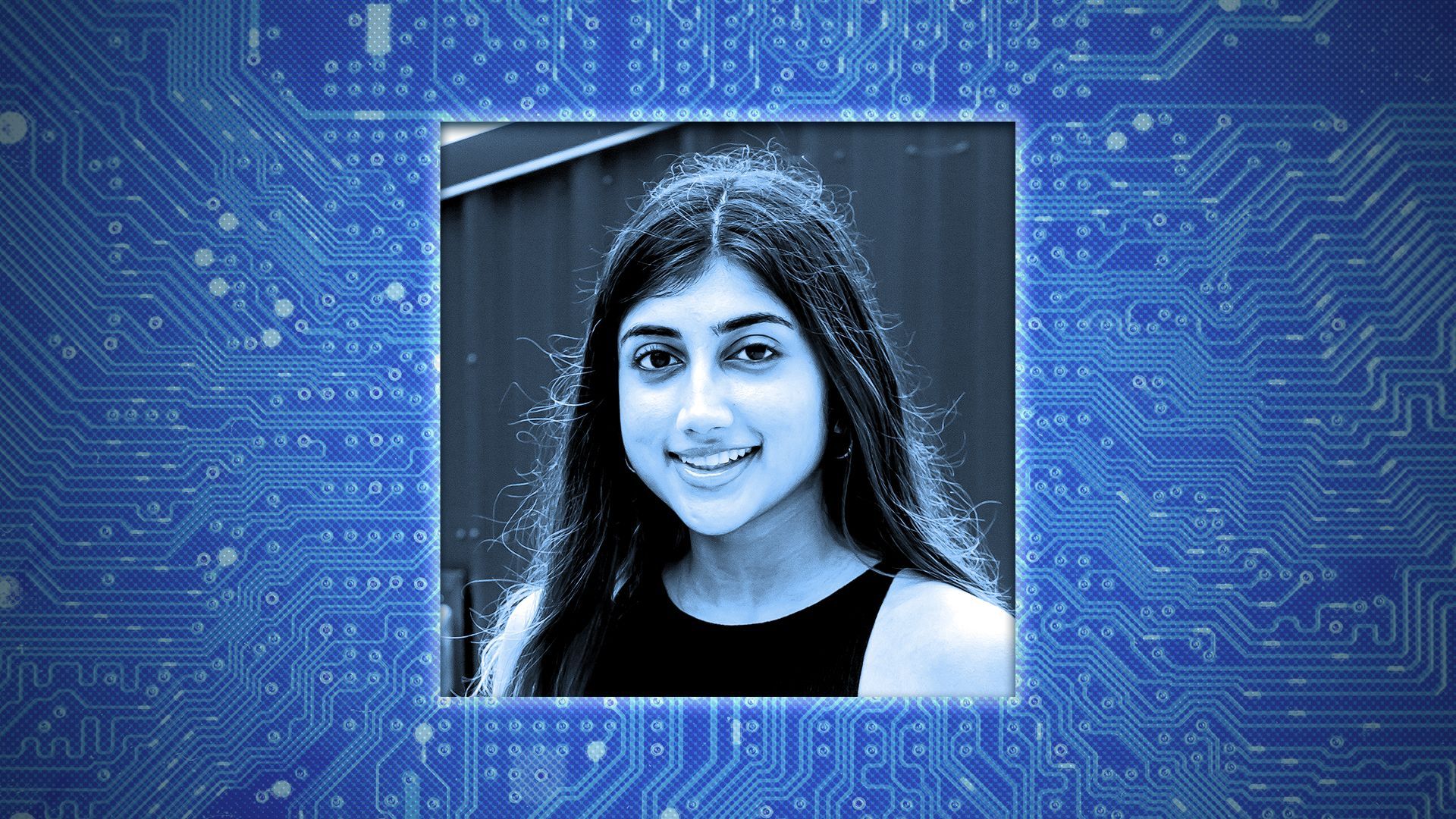
Photo Illustration: Axios Visuals. Photo: Josef Tyler Hicks
The daunting overload of digital evidence public defenders face — including exponentially more body camera footage than they can review — prompted young entrepreneur Devshi Mehrotra to create an AI assistant for them.
Why it matters: A decade ago, a wave of whistleblowers, mostly women of color, called out bias in algorithms, and now a new generation of entrepreneurs is getting down to work on countering the problem.
During Mehrotra's senior year of college, she watched from the sidelines as her community in the south side of Chicago organized around the murder of Laquan McDonald by a police officer, Mehrotra told Axios.
- Body camera footage that was eventually released contradicted police reports, and gave rise to nationwide transparency laws and body cam requirements.
- This also led to a surge in video evidence that already strapped public defenders struggle to sift through.
Catch up quick: Following the killing of Michael Brown, the Obama administration launched the President's Task Force on 21st Century Policing, which aimed to enhance police training with de-escalation tactics.
- To promote accountability, the Justice Department allocated over $23 million for a pilot program, enabling law enforcement agencies to equip officers with 50,000 body-worn cameras over three years.
How it works: JusticeText is an AI-powered body cam analysis tool that allows attorneys to search the text and match it with the video.
- Mehrotra says the tool also automatically flags key moments that an attorney might be interested in, like someone being read their Miranda rights, being placed under arrest or asking for a lawyer.
- Public defenders can also feed theories of defense into the AI and it will search through evidence and surface moments that would support the theory and those that undermine it.
- The tool is currently used by around 65 public defender offices.
Mehrotra warns that JusticeText should be used primarily as an assistant. JusticeText is built with guardrails that keep it from giving definitive answers that might not be accurate.
- "It's still incumbent on the attorneys to make sure that they're doing their due diligence," Mehrotra says.
Between the lines: Although experts say body cams can dramatically increase police accountability, deploying them widely has been difficult.
- Aside from the inability to search through footage, cameras are expensive, video is difficult to store and some police officers equipped with the cameras simply fail to turn them on.
- Startups like JusticeText and others aim to solve this problem with tools aimed at policing and law enforcement; other multi-purpose transcription tools like Otter and Trint can also help.
Flashback: Mehrotra's first summer internship in college was at a biophysical sciences lab in China where she was tasked with building an image-processing pipeline that used deep learning to research cancer cells.
- With only a few computer science classes under her belt, Mehrotra says she was "up for the challenge," and taught herself the fundamentals of deep learning and neural networks.
- And that, she says, is how she fell in love with the field of AI.
- Mehrotra then interned at Google Brain and Microsoft Research. During the pandemic, she put her graduate studies on hold and co-founded JusticeText with Leslie Jones-Dove, whom she'd met at University of Chicago. They raised $3 million in total from investors, including Reid Hoffman and John Legend.
Friction point: Mehrotra says JusticeText faces specific challenges because AI already has a reputation of harm for many communities of color and for low-income communities, especially around policing.
- "I think a lot of folks who share my progressive values and my progressive vision have skepticism," Mehrotra says, and they "aren't always looking towards technology" to solve every problem.
- The biggest challenge, she adds, is "walking that fine line of building technology that's truly responsive, truly ethical, and building trust and buy-in."
The bottom line: Mehrotra is upbeat about the abilities of JusticeText to help solve some of the thorniest problems of our current system of policing.
- But she's also still wary of AI's potential unintended consequences and harms: "We should be thinking very intentionally, especially when it comes to dealing with sensitive data."
