"Superhuman" AI could transform medicine, Zocdoc CEO says

Add Axios as your preferred source to
see more of our stories on Google.
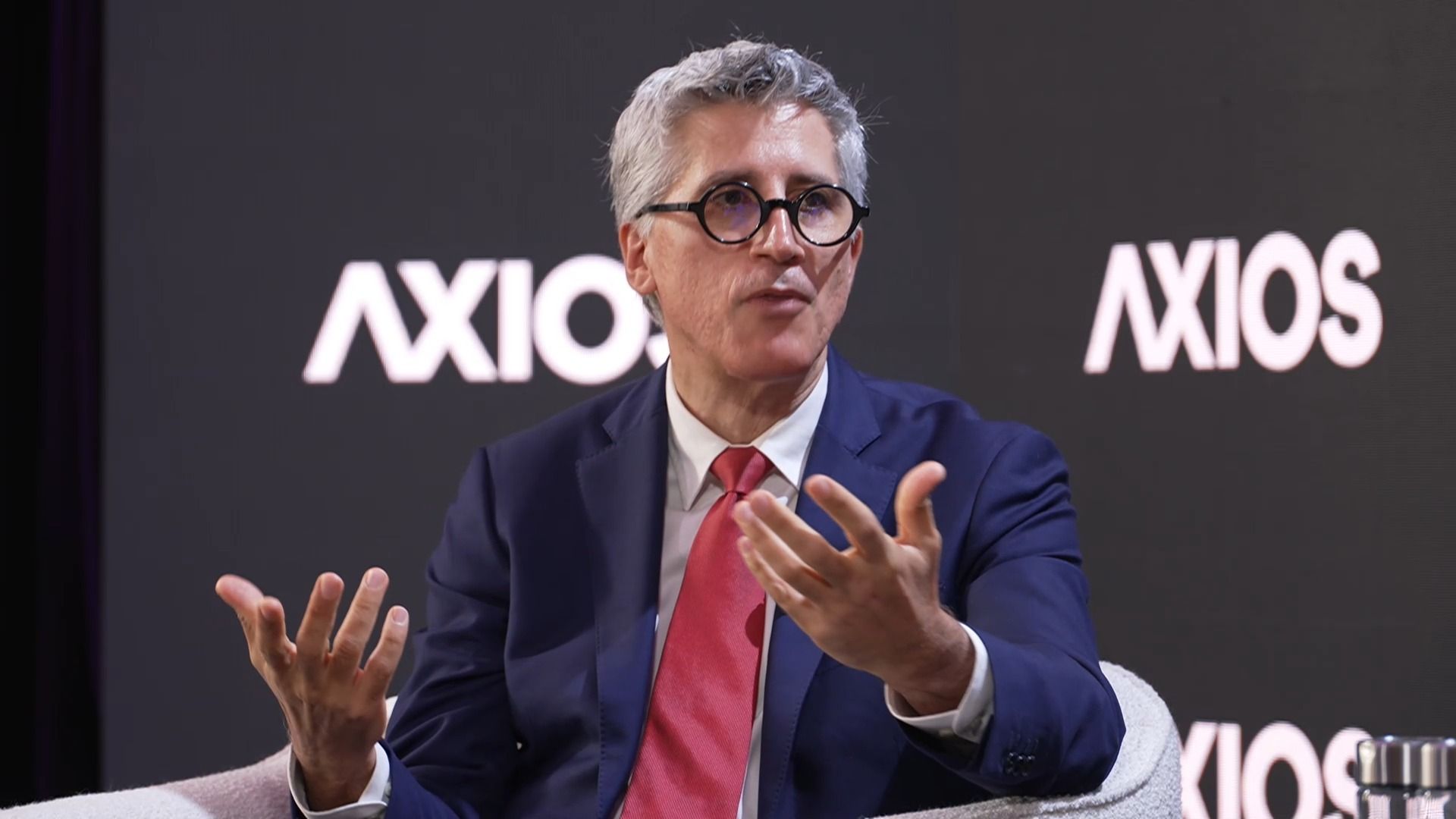
Zocdoc CEO and founder Oliver Kharraz speaks at Axios' Future of Health Summit in Washington, D.C., on May 14. Photo: Axios
The next stage of medical technology could incorporate "superhuman" augmentative artificial intelligence, Zocdoc CEO and founder Oliver Kharraz said Wednesday at Axios' Future of Health Summit in D.C.
Why it matters: Artificial intelligence can replace or supplement many of the functions within medicine, AI proponents argue.
- Zocdoc started as a clearinghouse for patients to access providers, Kharraz said. Now, it boosts technology to make appointments more efficient.
- "There's a really amazing journey of productivity ahead of us," he told Axios' Tina Reed.
Zoom in: Examples for future AI use cases in medicine could include high-level translation or predicting a patients' no-show likelihood.
- As of now, though, "there's thousands and thousands of edge cases that you need to teach individually," Kharraz said.
State of play: The applications of artificial intelligence in health care could improve the quality of patient care and trim costly waste, Axios' Caitlin Owens previously reported.
- For example, AI within biotech could discover more drugs, speed up the development process and better match drugs to patients.
- It can also improve diagnostics, reduce providers' paperwork and streamline billing processes.
Driving the news: Zocdoc this month launched an AI phone assistant chatbot intended to limit hold times and book appointments. It can answer unlimited calls concurrently and "instinctively" route them.
- "Free your staff to focus on care — not the phones," the Zocdoc website said.
- The chatbot is autonomous and does not require human supervision. It needed to be trained in cadence adjustment and utterance detection to appropriately speak with patients in different parts of the country.
- "It can pick up the phone and have a natural conversation with a patient to figure out what they need," Kharraz said.
Reality check: AI won't replace doctors, but it could replace many of the functions around them.
Context: Ambient listening was an early use case for AI in medicine.
- Generative AI and natural language processing could help gather patient information, provide reliable care summaries and flag health risks.
Flashback: Kharraz in 2023 told Axios he wanted Zocdoc to be the "connective tissue of health care."
- At the time, he was looking to transition the company from mainly patients' pockets to running physicians' front offices.
Go deeper: How AI will — and won't — change health care
