Trump says U.S. reached Japan trade deal with 15% tariffs

Add Axios as your preferred source to
see more of our stories on Google.
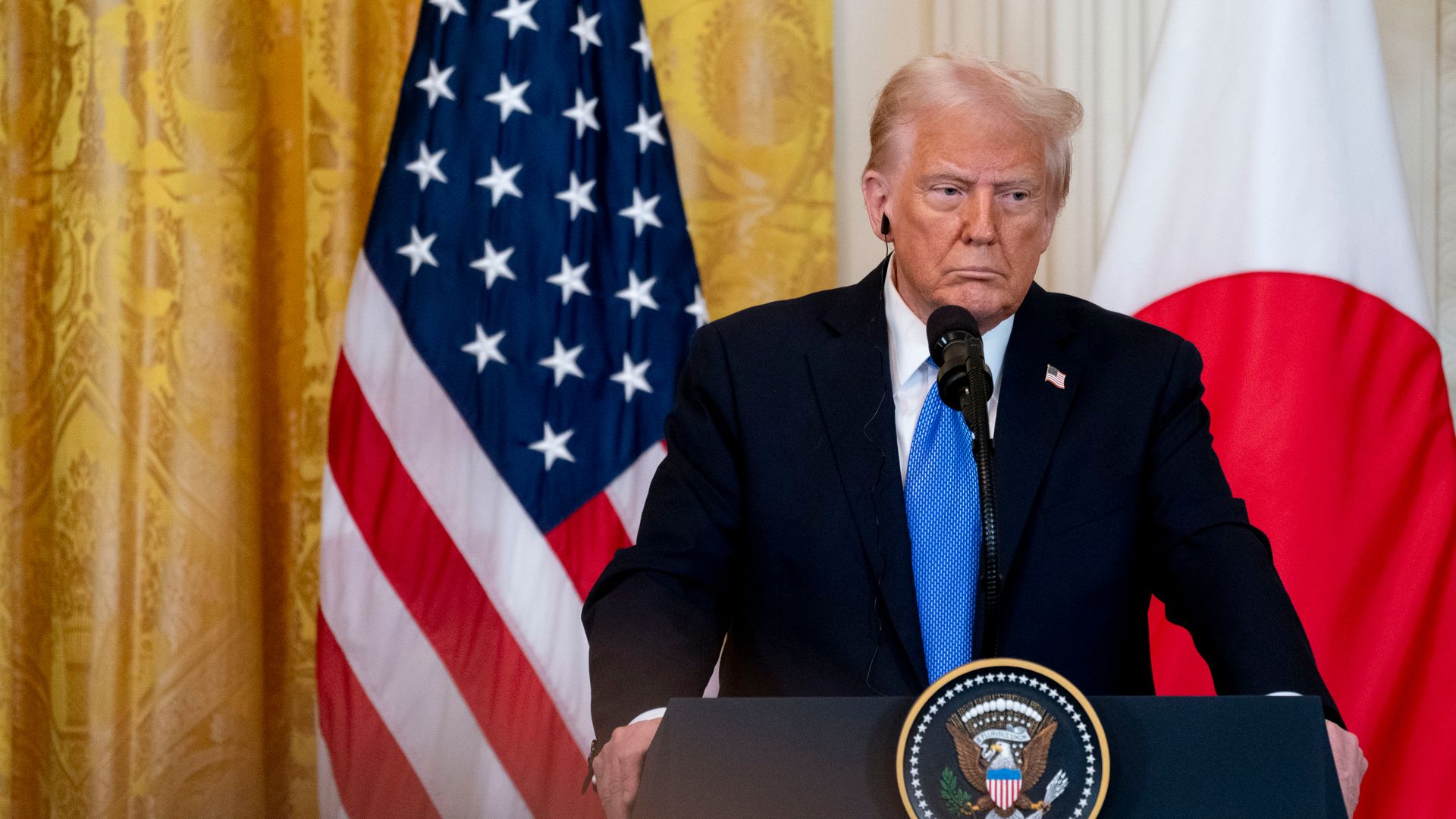
Trump at the White House in February. Photo: Stefani Reynolds/Bloomberg via Getty Images
President Trump on Tuesday said the U.S. notched a trade agreement with Japan that would see 15% tariffs on all goods imported from one of the nation's key trade partners.
Why it matters: A U.S.-Japan trade deal would be the most significant since the White House threatened to impose sharply higher tariffs on much of the globe.
Driving the news: "Japan will open their Country to Trade including Cars and Trucks, Rice and certain other Agricultural Products and other things," Trump said on Truth Social.
- He said that Japan would invest $550 billion in the U.S., "which will receive 90% of the Profits." Trump did not specify what form such an investment would take.
- The deal will include "reciprocal tariffs" of 15%, Trump added.
Zoom in: That is lower than the 25% tariff rate that the White House threatened in a letter sent to Japanese officials earlier this month, which would have taken effect on Aug. 1 if no deal was reached.
- On April 2, Trump was set to impose a tariff of 24% on goods from the world's fourth-largest economy before postponing the so-called Liberation Day tariffs.
- Ryosei Akazawa, Japan's top tariff negotiator, appeared to confirm the deal in a post to X that featured an image of his Tuesday White House visit.
- U.S.-listed shares of Japanese automakers including Toyota and Honda surged on the news.
The intrigue: The U.S. is a massive buyer of Japanese cars and auto parts, which have been subject to a 25% tariff rate since the spring.
- Trump's social media post did not specify how sector-specific tariffs would be treated under the deal.
What they're saying: Any "deal that charges a lower tariff for Japanese imports with virtually no U.S. content than the tariff imposed on North American-built vehicles with high U.S. content is a bad deal for U.S. industry and US auto workers," said Matt Blunt, president of the American Automotive Policy Council that represents the Detroit Three automakers, in a statement to Reuters.
- Blunt, whose group represents General Motors, Ford and Chrysler-parent Stellantis, noted that tariffs on imports from Canada and Mexico were at 25%.
By the numbers: U.S. goods imports from Japan last year were $148 billion, so 15% tariffs on Japan on its own would be good for $22 billion a year in revenue.
- That represents almost a third of total U.S. tariff revenue for the last fiscal year.
What we're watching: Trump told lawmakers in D.C. the U.S. and Japan were close to striking a partnership deal on a gas pipeline in Alaska.
- "We concluded the one deal and now we're going to conclude another one because they're forming a joint venture with us in Alaska for the LNG," he said. "They're all set to make that deal now."
The big picture: Tuesday was a trade deal whirlwind.
- Trump said earlier the U.S. reached an agreement with the Philippines that included a tariff rate of 19% on U.S.-bound goods.
- The White House also released text of the previously announced trade framework with Indonesia, which also set tariffs on goods from the nation at 19%.
- Like Japan, Trump said both nations have agreed to open their markets to U.S. exporters.
The bottom line: Forget the era of ultra-low tariffs. The U.S.-Japan trade deal is the latest to feature double-digit levies on foreign goods.
Go deeper: Wall Street likes the economy more than voters do
Editor's note: This article has been updated with new details throughout.
