Why ESG is proving good for business

Add Axios as your preferred source to
see more of our stories on Google.
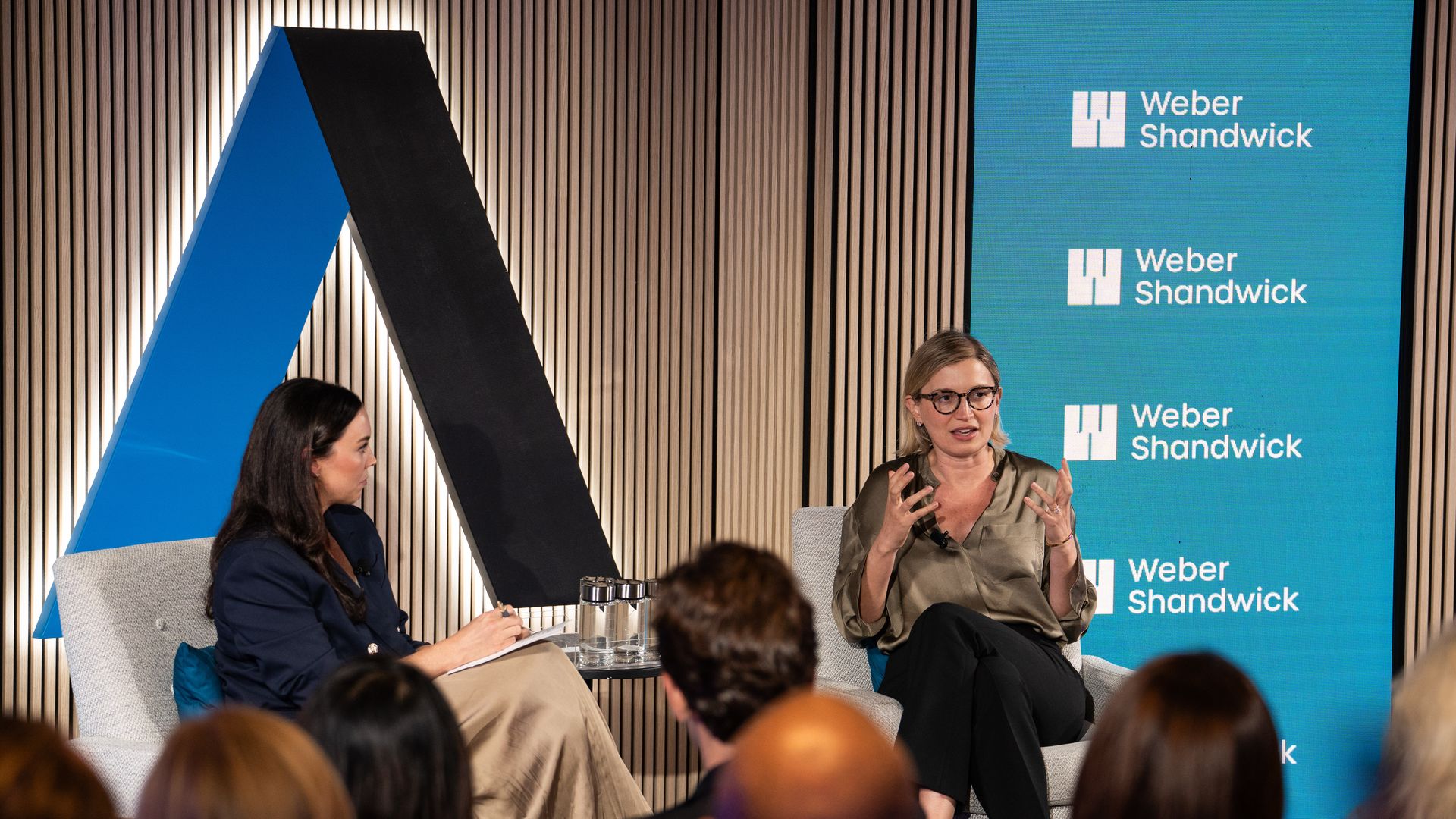
Carlyle global head of corporate affairs Megan Starr at Axios House alongside Climate Week. Credit: Sam Popp on behalf of Axios
ESG — as fraught as the acronym might be — is actually good for business, according to Carlyle global head of corporate affairs Megan Starr.
Why it matters: Companies have shied away from promoting their environmental, sustainability and socially conscious business activities for fear of coming under attack or being deemed "woke" by right-wing activists.
State of play: In 2021, Starr began work on the ESG Data Convergence Initiative (EDCI), which collects sustainability data from thousands of private companies and measures it against the companies' performance.
- The database tracks board and leadership diversity, employee turnover, greenhouse gas emissions, renewable energy usage and more.
- "We just closed the books on 2024 data," she said at Axios House on Tuesday. "We have 9,000 private companies reporting quantitative comparable ESG data tied with performance data across about 320 private equity firms, which gives us actual data about what is working, how it works and in what instances."
- "We're actually seeing ESG performance levers really being tied to financial performance. And that's kind of the holy grail that we've all been waiting for."
For example, companies with top-level employee satisfaction scores see about half the turnover of other businesses and about 7% higher revenue growth.
- That's because they are paying to recruit, train and onboard new employees, Starr said.
- The data also shows that companies with more gender-diverse boards and C-suites have faster revenue growth, and "there are some correlations there around business development and creativity," Starr added.
The big picture: Weber Shandwick surveyed 250 C-suite business leaders between Sept. 2 and 18 and found that nearly half are evolving their corporate social and environmental initiatives to better align with business priorities.
- 45% are emphasizing substantive change over symbolic gestures, and nearly one-third have decreased allocations to some ESG, DEI or related initiatives, primarily citing concerns about short-term (36%) and long-term (34%) stakeholder value creation.
Yes, but: It's important to look at this data clinically, Starr said.
- Each ESG decision "has specific levers to EBITDA that may or may not exist," she said. "Our job as sustainability professionals is not to say this is all sunshine and rainbows and will make your company better, but to really specify where and how so you can prioritize those investment dollars."
Between the lines: When it comes to corporate environmental and social initiatives, the messaging seems to be a key sticking point.
- "If you asked two investors — one from a red state, one from a blue state — do you want your investment manager in your portfolio of coastal real estate to be thinking about hardening assets, making sure that you have great insurance policies, making sure they're really understanding floodplain risk, 95%, if not more, of investors would say yes, I hope my manager thinks about that," Starr said.
- "But if you ask those same people, do you want your investment manager thinking about climate change? A lot now would say no."
- "We don't need to use unhelpful terminology if that's just going to create confusion."
What to watch: Businesses are using more precise language to communicate their ESG initiatives, Weber Shandwick global president Jim O'Leary said on Tuesday at Axios House.
- "We're seeing more use of language that leans into technology and innovation, even in the context of sustainability and ESG," he said. "And given what's going on politically, more are leaning into a more economic message focused on the workforce, job creation and American manufacturing."
More on Axios:
