AI is triaging mothers' hidden labor

Add Axios as your preferred source to
see more of our stories on Google.
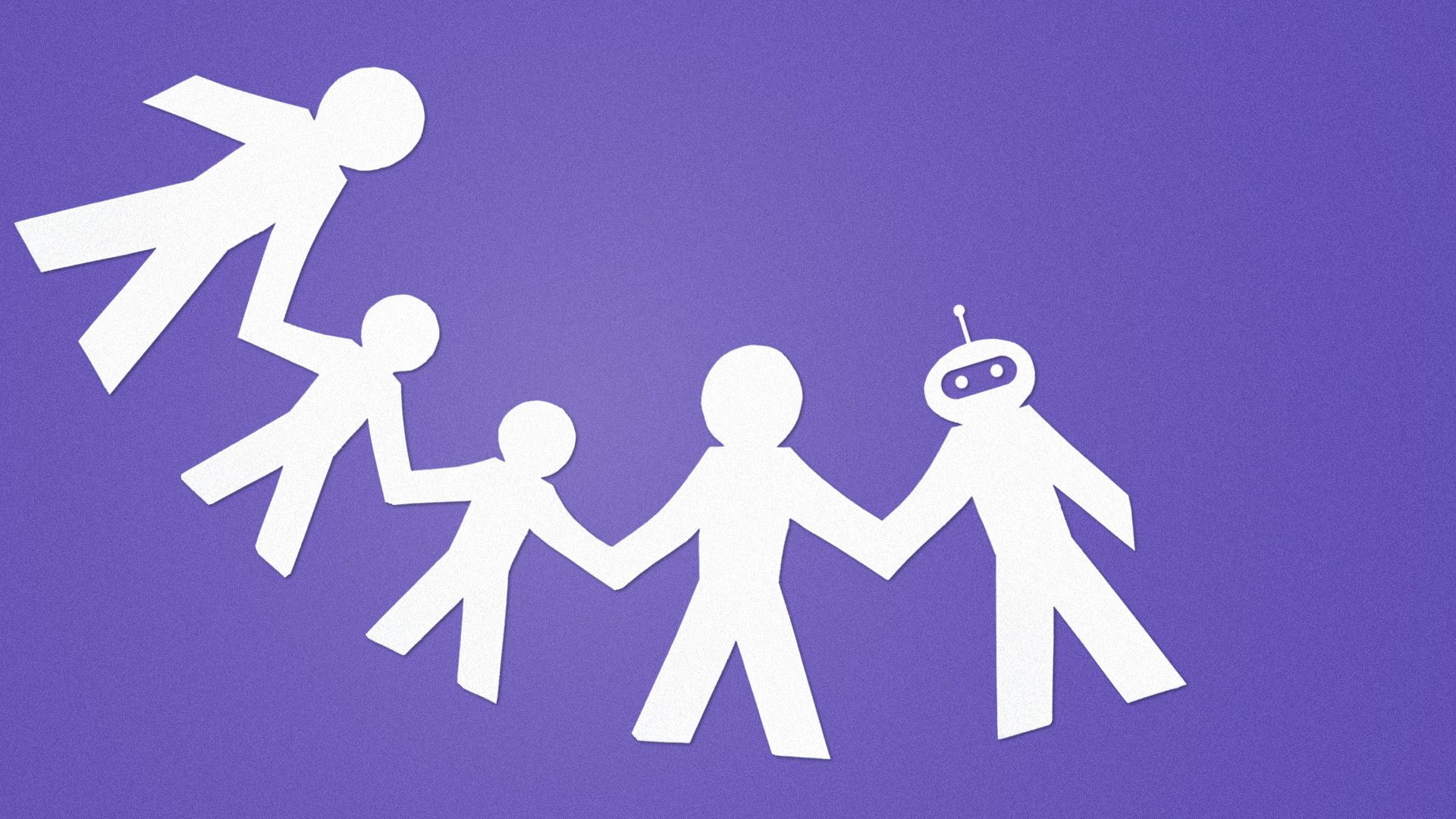
Illustration: Lindsey Bailey/Axios
Mothers are using AI as a personal assistant to manage the invisible work of raising today's kids.
Why it matters: Parents have long outsourced domestic chores to dishwashers, laundry machines and in-home help, but the mental load tied to coordinating child care and family logistics still falls mostly on women.
The big picture: Busy moms and dads quickly figured out how to use ChatGPT, Gemini and Claude to offload some parenting tasks.
- But now AI makers are trying to turn this use into a product, targeting overwhelmed moms with the promise of a personal or executive assistant for free or for a much lower price than hiring a human.
- Outsourcing scheduling, managing, anticipating, planning and reminding to bots may ease stress — or let male partners off the hook.
Driving the news: OpenAI released ChatGPT Pulse for Pro subscribers last week. It's a new "experience" that turns the bot into a proactive personal assistant.
- "The average U.S. household spends nearly 20 hours a week on domestic work, logistics, and errands," OpenAI's CEO of applications, Fidji Simo, wrote on Substack. Pulse is designed to tackle at least some of those tasks.
By the numbers: "Organizing my life" was the second-most popular use case for genAI in 2025, according to new research from Harvard Business Review.
- ChatGPT's gender gap appears to be closing. Immediately following its release, only 17.6% of active ChatGPT users had typically feminine first names. As of June 2025 the percentage of active users with feminine first names had jumped to 52.4%.
What they're saying: "ChatGPT has basically become like an extended village of my parenting," Sandy Shakoor, a PR director with two young kids, told Axios.
- "Now there are three of us to do things," Sarah Dooley, founder of AI-Empowered Mom and mother of three, told Axios. "AI is the third supporter, the third leg of the stool in this little household."
- Dooley used to teach mothers how to use AI in classes she held in her living room. Now she hosts a podcast, writes a newsletter and is developing an AI assistant, all in the service of reducing the mental load of motherhood.
The other side: Many moms are wary of inviting AI to be a bonus third parent.
- As a working mom of two toddlers, Maayan Weiss, communications director at Zencity, says, "My thinking process has become so dull and scrambled, that I sometimes actively choose to not use the AI shortcuts outside of work, as a sort of challenge to myself to sharpen my thinking."
- "Most of AI is one giant self-help engine," says Julia Freeland Fisher, director of education at the Clayton Christensen Institute and author of the Connection Error newsletter.
- "While that may be super useful, it's also just another way of telling moms that help is not on the way" in the form of social or material support, Freeland Fisher told Axios in an email.
So much of raising kids, especially when they're young, is physical work. And Rosie the Robot Maid doesn't yet exist.
- "I'm a little bit frustrated by where AI is because it can't take a lot of the manual labor off my plate," says Jane Alexander, CEO and founder of Emma Advisor, which is building an AI-powered companion designed to aid parents during the college admissions process.
- "It can't do the dishes. It can't vacuum for me. That's what I want. I want a robot in my house so that then I can have higher order thinking," Alexander told Axios.
What we're watching: The choices moms make are highly personal — and judged by other moms and everyone else.
- The next episode in the mommy wars may be about whether embracing AI shortcuts or refusing them makes you a better parent.
