U.S. companies more confident on trade than global peers, HSBC says

Add Axios as your preferred source to
see more of our stories on Google.
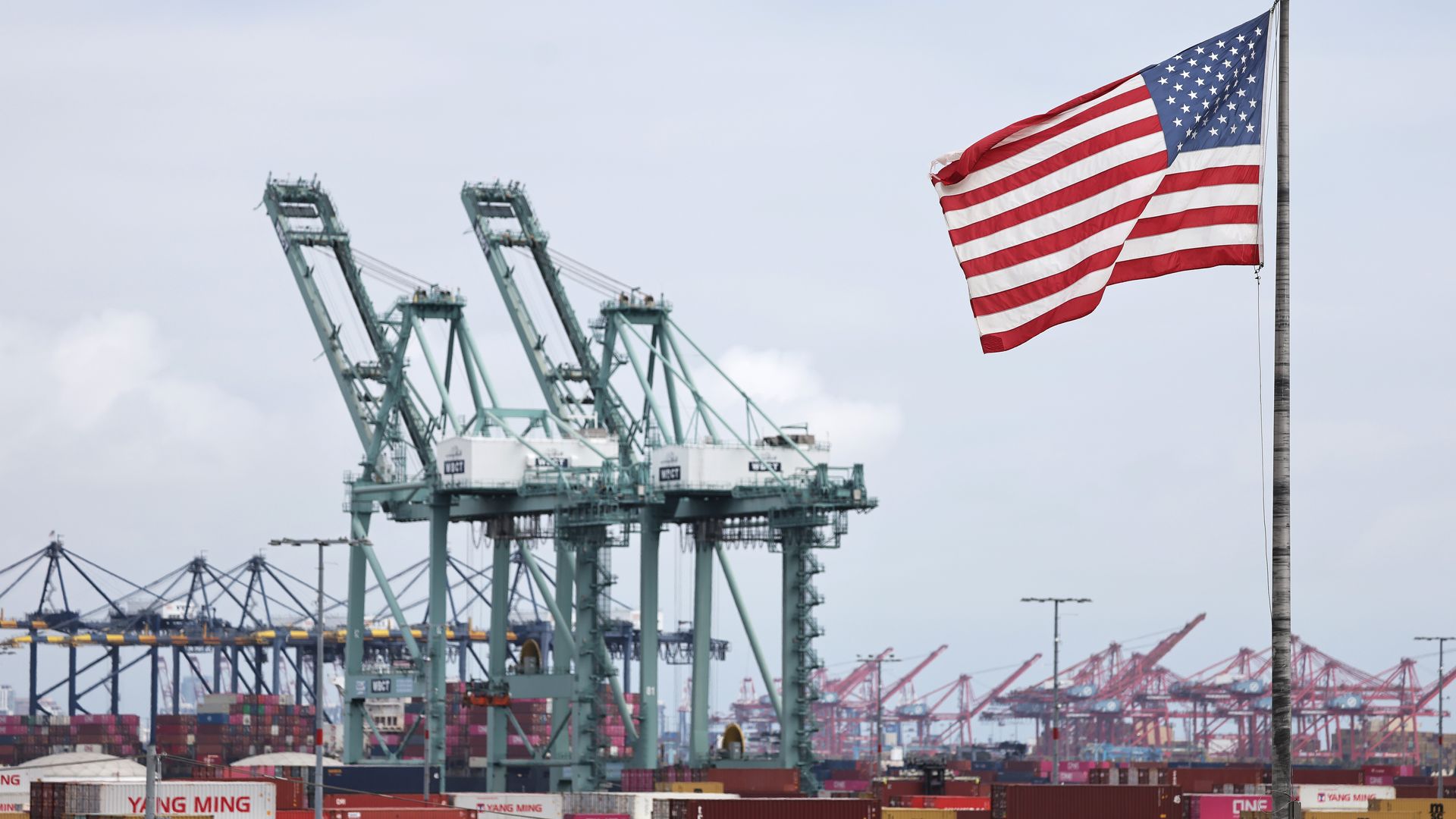
Containers and cranes at the Port of Los Angeles. Photo: Mario Tama/Getty Images
U.S. companies are much more confident than their international peers about cross-border trade in the coming years, even with the uncertainty of tariffs, HSBC said Tuesday.
Why it matters: It's a sign that American companies have accepted and adapted to a new global trade order faster than competitors elsewhere.
The intrigue: AI adoption is driving some of that gap, HSBC executives say, as American companies take the broad shift in trade as a moment to invest in new technologies.
- "I do think the U.S. has that advantage," Marissa Adams, regional head of global trade solutions for HSBC, tells Axios. "We have the largest AI companies in the world."
- "There's a lot more adoption, and I think that nascent technology here, that corporates across the sectoral spectrum are really doubling down on."
- "I see that particularly in my role across Europe and Americas. It's a very different view here in the United States, which I think is part of that optimism."
By the numbers: 57% of U.S. companies are "very confident" about international trade the next two years, compared with 38% of global respondents, the HSBC Trade Pulse survey finds.
- The bank surveyed more than 6,750 companies active in international trade from 17 countries, including 1,000 U.S. businesses.
The intrigue: As disruptive as tariffs have been, it's been somewhat easier for American companies exporting than for foreign companies importing.
- 52% of U.S. businesses say they feel "informed and prepared" to handle trade disruptions, versus 36% globally.
What they're saying: "There's only so long companies can wait, and we are starting to see some of the corporates go, 'I'm going to make a decision that is based on long-term business trends rather than a specific trade policy,'" Adams says.
Friction point: Even as American companies express confidence in trade at a high level, they remain cautious in their decision-making, in part due to costs.
- 73% say they're experiencing more pressure on working capital, significantly higher than companies elsewhere.
The bottom line: Corporate America is feeling the effects of the trade war, but also trying to push past it much more aggressively than businesses in the rest of the world.
