Hurricane season is ending without a U.S. landfall. We got lucky

Add Axios as your preferred source to
see more of our stories on Google.
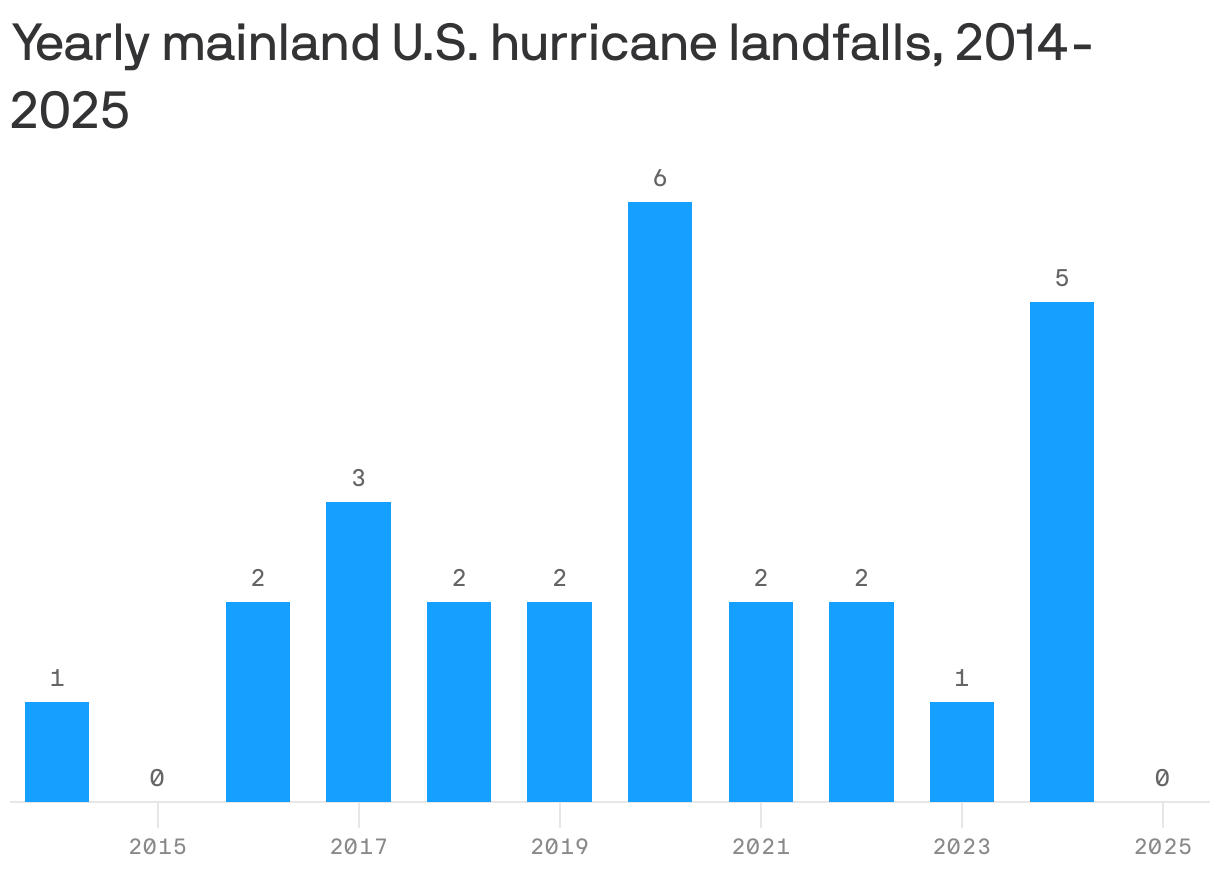
The 2025 hurricane season is about to end on Nov. 30 without a single mainland U.S. landfall for the first time in a decade.
Why it matters: That's welcome news for hurricane-prone states, but doesn't mean future years will be equally calm — especially as climate change continues to warm the oceans, essentially creating hurricane fuel.
The big picture: Just because this year's Atlantic hurricanes steered clear of the continental U.S. doesn't mean it was a gentle season.
- Hurricane Melissa slammed into Jamaica as a category 5 hurricane on Oct. 28 after rapidly intensifying over warm ocean waters, with maximum sustained winds of 185 mph.
- It was one of the most intense Atlantic hurricanes on record, with a lowest recorded pressure of 892 mb. (Lower pressure is correlated with stronger storms; only a handful on record have made it below 900 mb.)
- Melissa caused at least $10 billion in damage and nearly 100 known deaths as it ravaged the Caribbean; those numbers may yet rise.
What they're saying: "While intensifying, Melissa passed over waters made 1.4°C warmer, on average, by climate change," per Climate Central, a climate research group developing "rapid attribution" techniques to quickly understand climate change's impact on specific hurricanes.
Zoom in: Hurricanes Erin, Gabrielle and Humberto also reached category 4 or higher in the Atlantic this season, though none hit the mainland U.S.
- That's in part due to atmospheric conditions during their life cycles.
For example: Humberto — which, like Melissa, also rapidly intensified — essentially steered a simultaneously active storm, Imelda, away from the mainland U.S. through a form of the "Fujiwhara effect."
- When two large cyclones get close, they can start spinning around a shared center point, affecting their course and structure.
Caveat: It's possible to get hurricanes outside the official season, but it's rare.
What's next: That the mainland U.S. escaped the 2025 hurricane season unscathed meant that FEMA went untested during a time of great upheaval.
- Acting FEMA administrator David Richardson recently left his post after just six months on the job after he was criticized for being absent after deadly flooding ravaged central Texas, and for lacking the qualifications necessary for the role.
- His departure leaves FEMA in limbo; President Trump has suggested massive overhauls of the agency and leaving individual states largely responsible for disaster recovery.
