The cybersecurity race inside Formula One

Add Axios as your preferred source to
see more of our stories on Google.
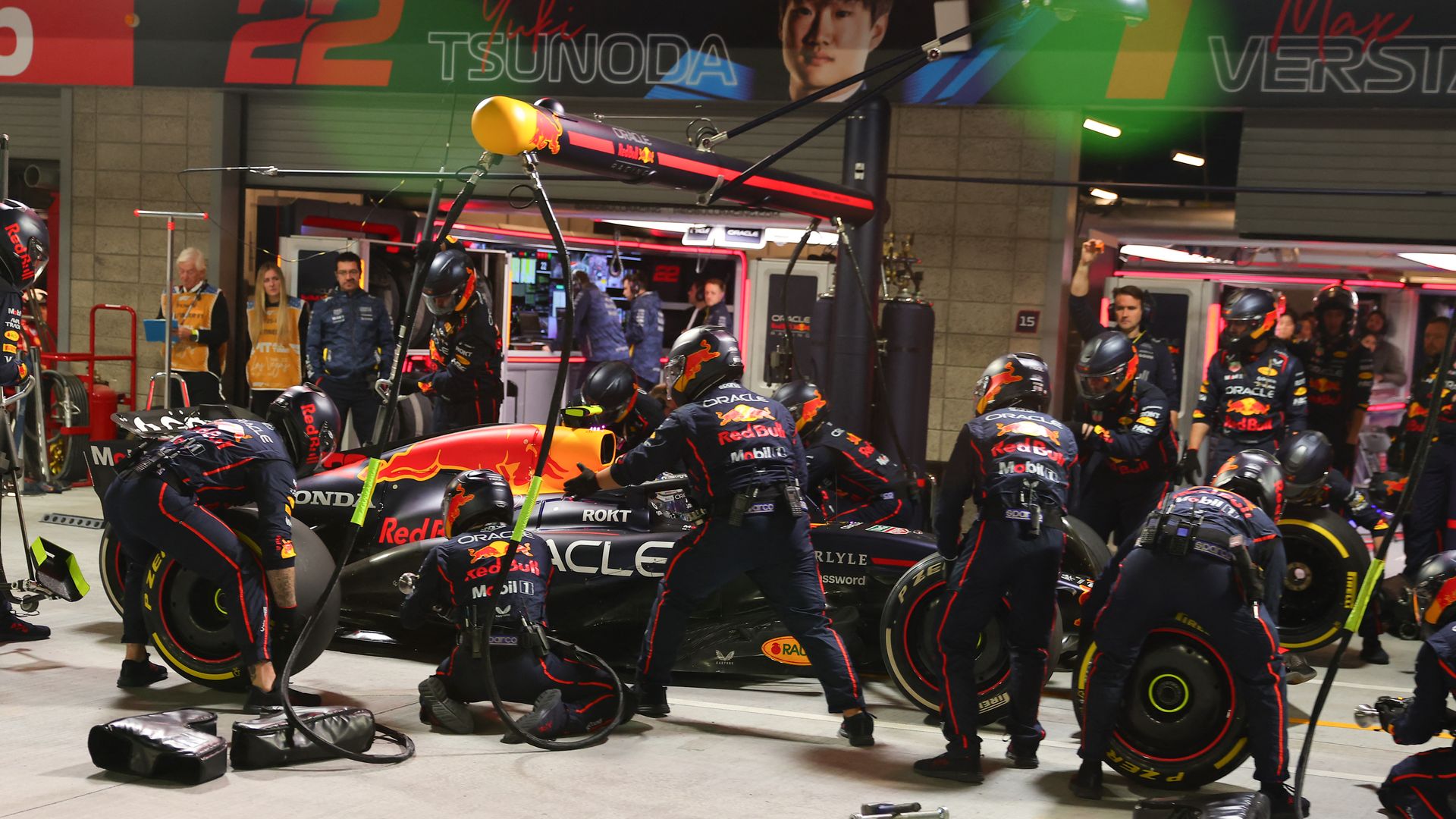
Red Bull Racing's Yuki Tsunoda makes a pit stop during the Las Vegas Formula One Grand Prix on Nov. 22. Photo: Cristobal Herrera-Ulashkevich/Pool/AFP via Getty Images
In Formula One, the real race is the one happening in the data stream.
Why it matters: A compromised data stream doesn't just threaten privacy — it threatens race-day performance itself.
As one executive put it: "Performance is useless if you don't have security."
- "We put the highest level of security on that data and make sure it's consistent across the globe," Cato Networks' vice president of sales Marcus Guerriero tells Axios.
State of play: F1 teams move massive volumes of sensitive telemetry and engineering data, all of which must be processed, encrypted and transmitted in milliseconds.
- Teams say endpoint breaches are the entry point for most threats. Without strong network-level protection, a rival or bad actor could access design secrets or disrupt live operations.
What they're saying: Companies like AT&T, which supports Oracle Red Bull Racing (ORBR), say if their systems can hold up under race-day pressure, they can protect anything from robot-driven manufacturing lines to financial-sector endpoints.
- "If we can perform at the highest level here and we can showcase that performance, surely we can go and support a financial institution. ... We can support a health care institution to make sure that they always have reliable connectivity," Zee Hussain, AT&T's head of global enterprise solutions, tells Axios.
Driving the news: ORBR driver Max Verstappen won the Las Vegas Grand Prix Saturday night and has a shot to win his fifth world championship two weeks from now in Abu Dhabi.
Cato is partnering with BWT Alpine in 2026, and they're innovating with cloud-connected solutions.
- Alpine says the collaboration will replace legacy infrastructure and allow them to pack lighter as F1 teams go to a new city each week.
Zoom in: Ian Goddard, BWT Alpine's head of technical and integrated partnerships, says the security system should run quietly in the background so engineers don't have to think about it — only that everything is fast, reliable and safe.
The bottom line: "Getting cybersecurity right is hard, and it's important whether you're talking about banking or F1 or enterprise systems where you've got extremely valuable trade secrets that you're trying to protect. I think that's common to all these applications," says UCLA Institute for Technology, Law and Policy founder John Villasenor.
