Trump imposes global 10% tariff after Supreme Court loss

Add Axios as your preferred source to
see more of our stories on Google.
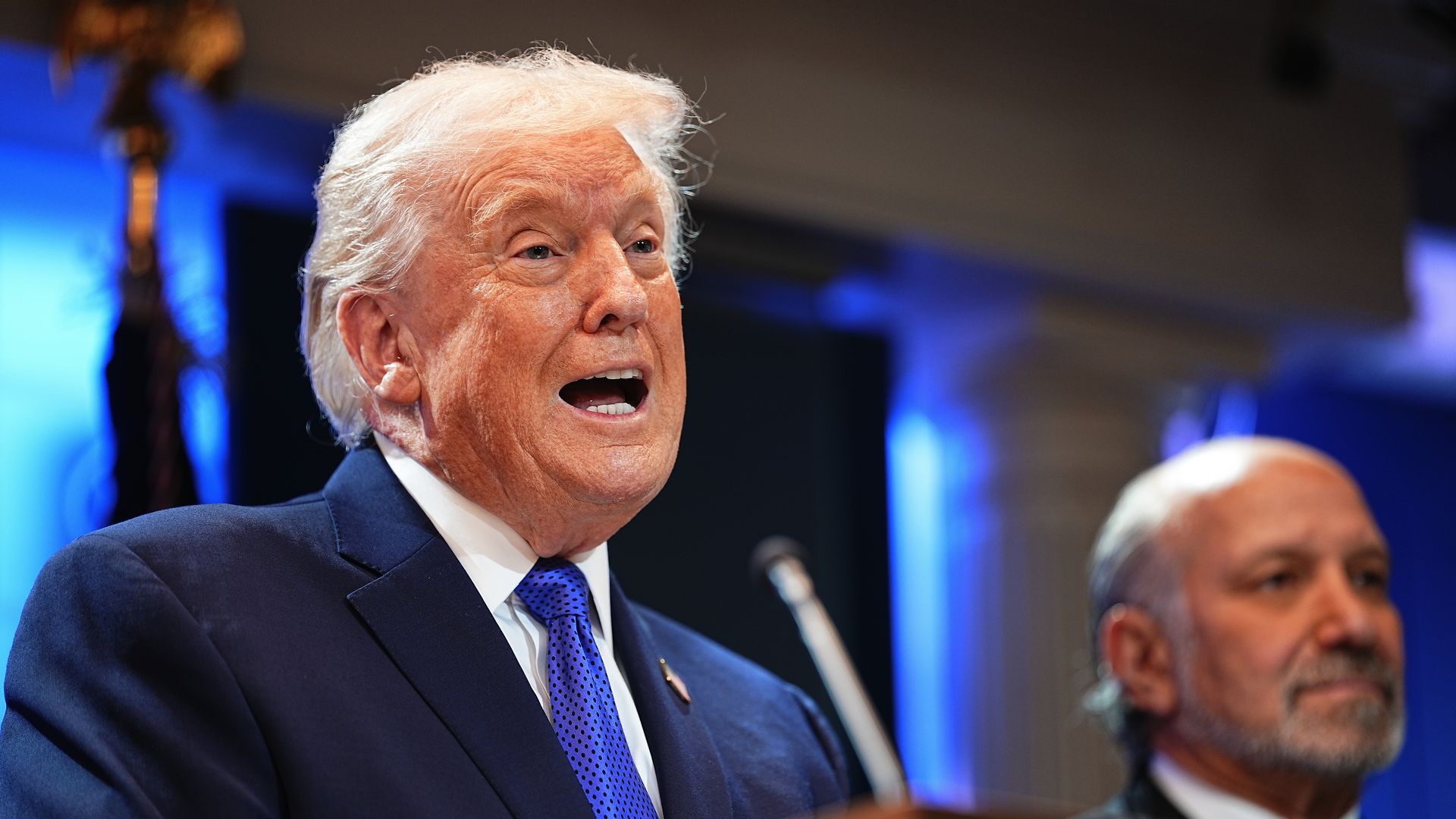
President Trump speaks at the White House affter the Supreme Court struck down his tariffs Feb. 20. Photo: Aaron Schwartz/Getty Images
President Trump signed a proclamation on Friday to impose 10% tariffs on all nations, replacing part of the tariffs overturned by the Supreme Court.
Why it matters: It might be just the beginning of a patchwork of new tariffs imposed by the administration to remake the sweeping levies deemed illegal.
What they're saying: "It is my Great Honor to have just signed, from the Oval Office, a Global 10% Tariff on all Countries, which will be effective almost immediately," Trump said on Truth Social Friday night.
- He had earlier, in a media briefing, detailed his intent to impose the tariff "under Section 122, over and above our normal tariffs already being charged."
- It is the first time the U.S. has invoked that trade authority to impose tariffs.
- The move replaces the 10% tariff on global goods that the administration announced on "Liberation Day" in April.
Between the lines: The provision in the Trade Act of 1974 is sweeping, but limited.
- Unlike the International Emergency Economic Powers Act — which the Supreme Court says cannot be used to impose tariffs — Section 122 limits how long tariffs can remain in place and how high the tariffs can be.
- The text of the law says the president can impose a tariff of up to 15% for 150 days to address trade deficits or a dollar crisis. But the measure cannot exceed that time period without congressional approval.
State of play: The president also used the International Emergency Economic Powers Act, the National Emergencies Act and other U.S. codes on Friday to continue suspending duty-free de minimis treatment for all countries.
- That means low-value imports that previously entered the U.S. without duties must now be assessed any applicable tariffs, taxes and fees.
What to watch: Trump also said the administration would rely on other provisions in trade laws to impose the levies scrapped by the Supreme Court, including those used to put tariffs on China and steel/aluminum.
- Trump's top trade negotiator Jamieson Greer called those measures "incredibly legally durable."
- "We're going to keep continuity ... we're going to keep addressing this so that the deficit can keep going down," Greer said on Friday.
- "Treasury's estimates show that the use of Section 122 authority, combined with potentially enhanced section 232, and section 301, tariffs will result in virtually unchanged tariff revenue in 2026," Treasury Secretary Scott Bessent said Friday.
Editor's note: This story has been updated with the president's tariff actions.
