The political games: Winter Olympians are not "sticking to sports"

Add Axios as your preferred source to
see more of our stories on Google.
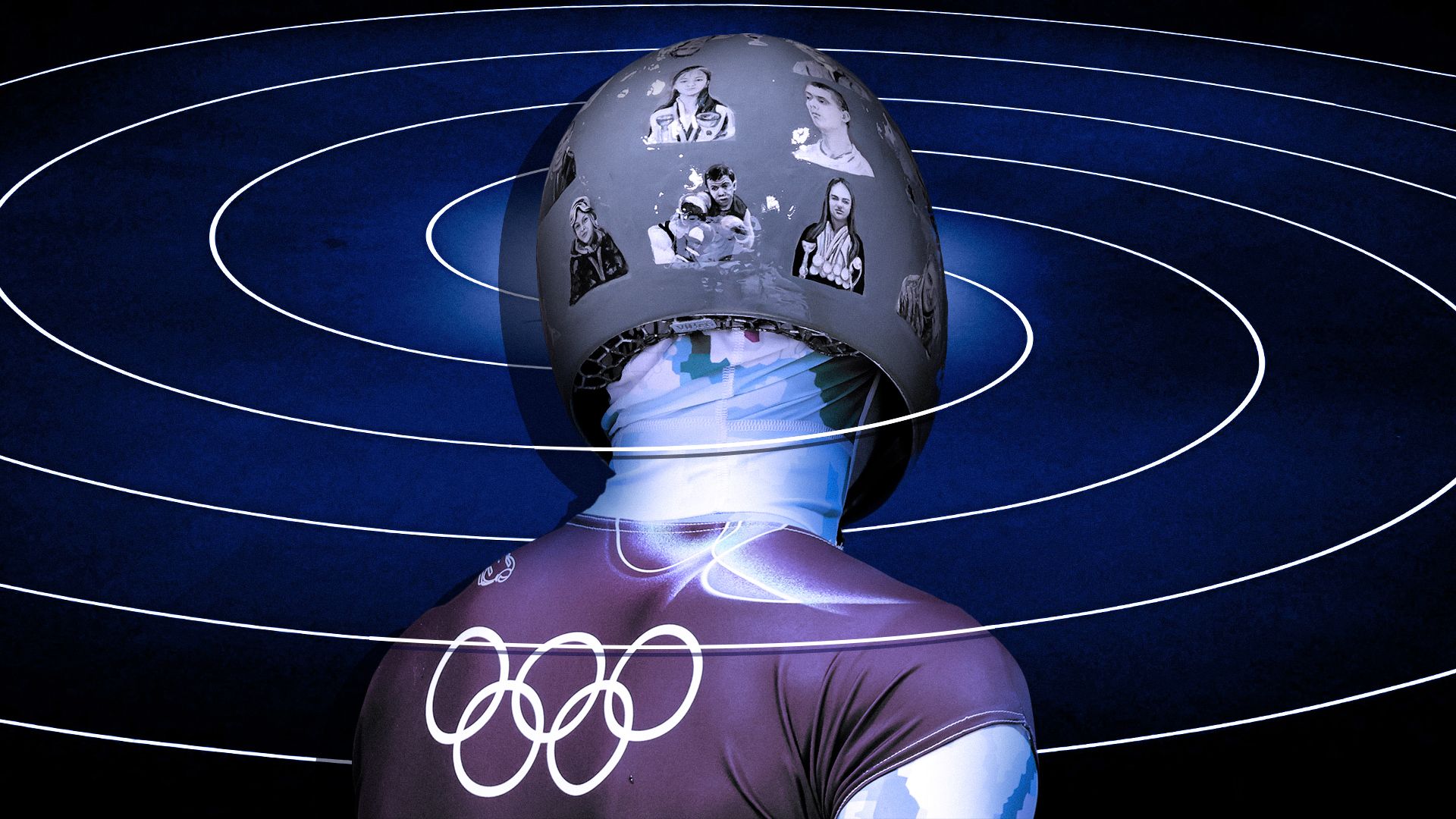
Photo illustration: Aïda Amer/Axios. Photo: Richard Heathcote, Gabriel Bouys/AFP via Getty Images
MILAN — From anti-ICE messages written in the snow to blunt criticism of the Trump administration, Olympic athletes in Milan used their fleeting global spotlight to weigh in on some of America's most contentious political topics.
Why it matters: The spotlight rarely lingers on skiers, skaters and skeleton racers. But for a brief moment, the Olympics gave them an outsized platform — and many seized it.
- "When you have vibrant political movements active on the ground, it creates a certain degree of protection, but also inspiration for athletes to speak out," Jules Boykoff, a Pacific University political science professor, who has studied the intersection of politics and the Olympics, told Axios via email.
- In other words, the hyper-politicized political climate in the U.S. collided with the Olympic stage.
- "We're living in a pick-a-side moment in the U.S. right now," Boykoff added. "Athletes can't just transcend it, jam, their fingers in their ears, and say 'la la la'."
Catch up quick: Even before the games started this month, protesters filled the Italian hosts' streets over the presence of U.S. immigration and customs agents.
- At the opening ceremony, fans cheered American athletes, but booed when Vice President JD Vance appeared on screen.
Once the games started, athletes added their own voices, speaking out against ICE as well as the the Trump administration's treatment of LGBTQ+ Americans.
- Former U.S. skier Gus Kenworthy, now competing for Great Britain, set an early tone by posting a photo of "F*** ICE" written in urine in the snow — then reported he'd received death threats.
- Figure skater Amber Glenn, who helped lead the U.S. to gold in the team event, denounced policies targeting the LGBTQ+ community. She said backlash led her to limit time on social media, but continued to give interviews in Milan.
- "I'm gonna keep representing what I believe in ... which is freedom and being able to love and do what you want," she told Axios.
Case in point: President Trump lashed out at Olympic skier Hunter Hess in a Truth Social post, calling him "a real Loser" after Hess said he had "mixed emotions" about representing the U.S.
- Hess said the two weeks since Trump's post had been "probably the hardest" of his life.
Sometimes the athletes themselves become politicized.
- Eileen Gu who grew up in the U.S. but competes for China, drew scrutiny from Vice President Vance Vance told Fox News he thinks people who benefitted from being raised in the U.S. should want to compete for the U.S. as well.
- "I will root for American athletes and I think part of that is people who identify themselves as Americans," he told Fox News.
Reality check: Not all athletes joined the criticism. U.S. bobsledder Danielle Gill said she was honored to represent the country and to serve in the Air Force, drawing praise from Air Force Secretary Troy Meink.
- Nor was it only U.S. politics in play. The war in Ukraine loomed large. Russian athletes were allowed to compete only as individual neutral athletes and without the national flag.
- Ukrainian skeleton athlete Vladyslav Heraskevych was disqualified wearing a helmet honoring 20 athletes and coaches killed in the war.
Between the lines: The notion that the Olympics are apolitical has always been more myth than reality — from Tommie Smith and John Carlos' 1968 Black Power Salute to decades of boycotts and bans.
- What feels different is the greater willingness of athletes to be part of that political conversation.
The IOC has eased restrictions on athletes' speech in recent years, and social media gives them direct access to millions of followers.
- That doesn't guarantee permanence, Boykoff cautions. Wealth and fame aren't always enough to insulate athletes who speak out.
What to watch: The next Summer Olympics will be on U.S. soil, during a presidential election year — with President Trump already taking an active role. What could be political about that?
