Oil prices plunge following U.S.-Iran ceasefire


Add Axios as your preferred source to
see more of our stories on Google.
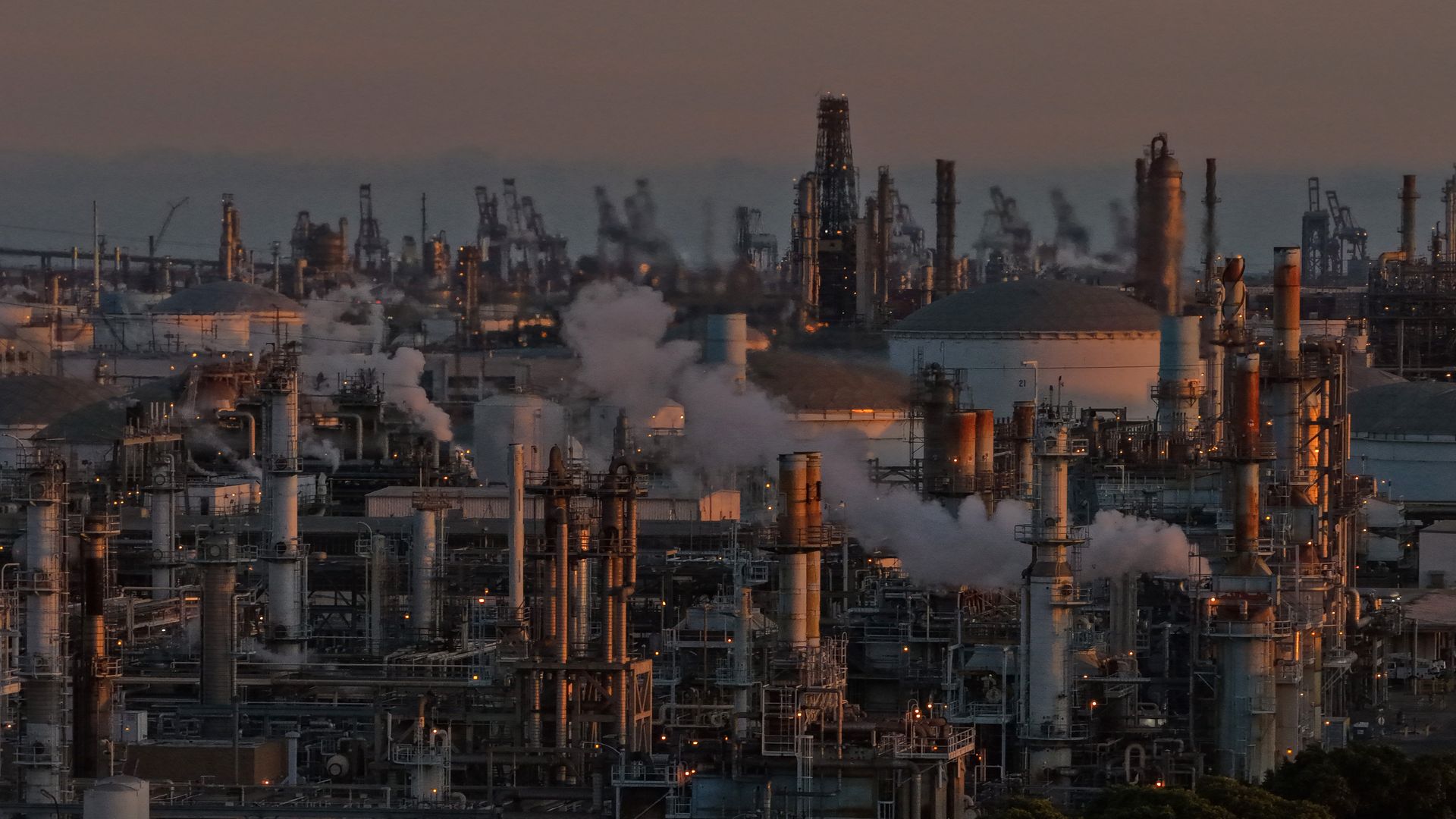
Marathon Petroleum Corp's Los Angeles Refinery in Carson, Calif. Photo: Justin Sullivan/Getty Images
Crude oil prices dropped sharply Tuesday evening, falling well under $100 per barrel after President Trump said the U.S. agreed to a two-week ceasefire with Iran that Pakistan had proposed.
Why it matters: Apart from COVID, it's the biggest one-day free fall in oil prices since the 1991 Gulf War.
Driving the news: The global benchmark Brent crude futures price fell about 13% to about $95 a barrel. But it's still far above the roughly $73 mark right before the war began at the end of February.
- WTI, the U.S. benchmark, was down to about $96 a barrel, a drop of about 14 percent.


The big picture: The agreement is subject to Iran to allowing "complete" reopening of the Strait of Hormuz, Trump said.
- The de facto closure of the waterway — which handles about a fourth of the world's seaborne oil trade — has brought the largest disruption in oil market history.
- Iran's minister of foreign affairs issued a statement on behalf of the country's Supreme National Security Council saying that passage through the strait "will be possible via coordination with Iran's Armed Forces and with due consideration of technical limitations."
- No further details about any limitations were provided.
What we're watching: Whether shippers have enough confidence in safe passage of the narrow waterway off Iran to resume shipments of oil, liquefied natural gas and other products.
- Ship operators' confidence that they won't be attacked "is the one and only litmus test to assess whether energy flows are likely to resume," said Clayton Seigle, an oil analyst at the Center for Strategic & International Studies.
- He said he expects operators to seek permission from Tehran.
- "We'll know from tracking platforms and anecdotal reporting of tanker movements whether they get it," he said in an email. "So the real question here is whether Tehran grants new assurances to ship operators that they'll be safe in resuming normal activities."
The physical oil market remains in turmoil after Middle East producers lowered output with export routes cut off.
- Dated Brent — the global benchmark for real-world, physical barrels of crude oil — reached its highest recorded price of $144.42, according to S&P Global Energy Platts. The previous record was set in 2008 at the height of the financial crisis.
- Iraq, Saudi Arabia, Kuwait, UAE, Qatar, and Bahrain collectively shut-in 7.5 million barrels per day of crude production in March, with a higher figure this month, according to Energy Department's stats arm.
Go deeper: Iran ceasefire may bring gasoline relief by Friday, analyst says
Editor's note: This story has been updated with an oil price chart.
