Vance: Israel offered to restrain strikes in Lebanon during U.S.-Iran talks

Add Axios as your preferred source to
see more of our stories on Google.
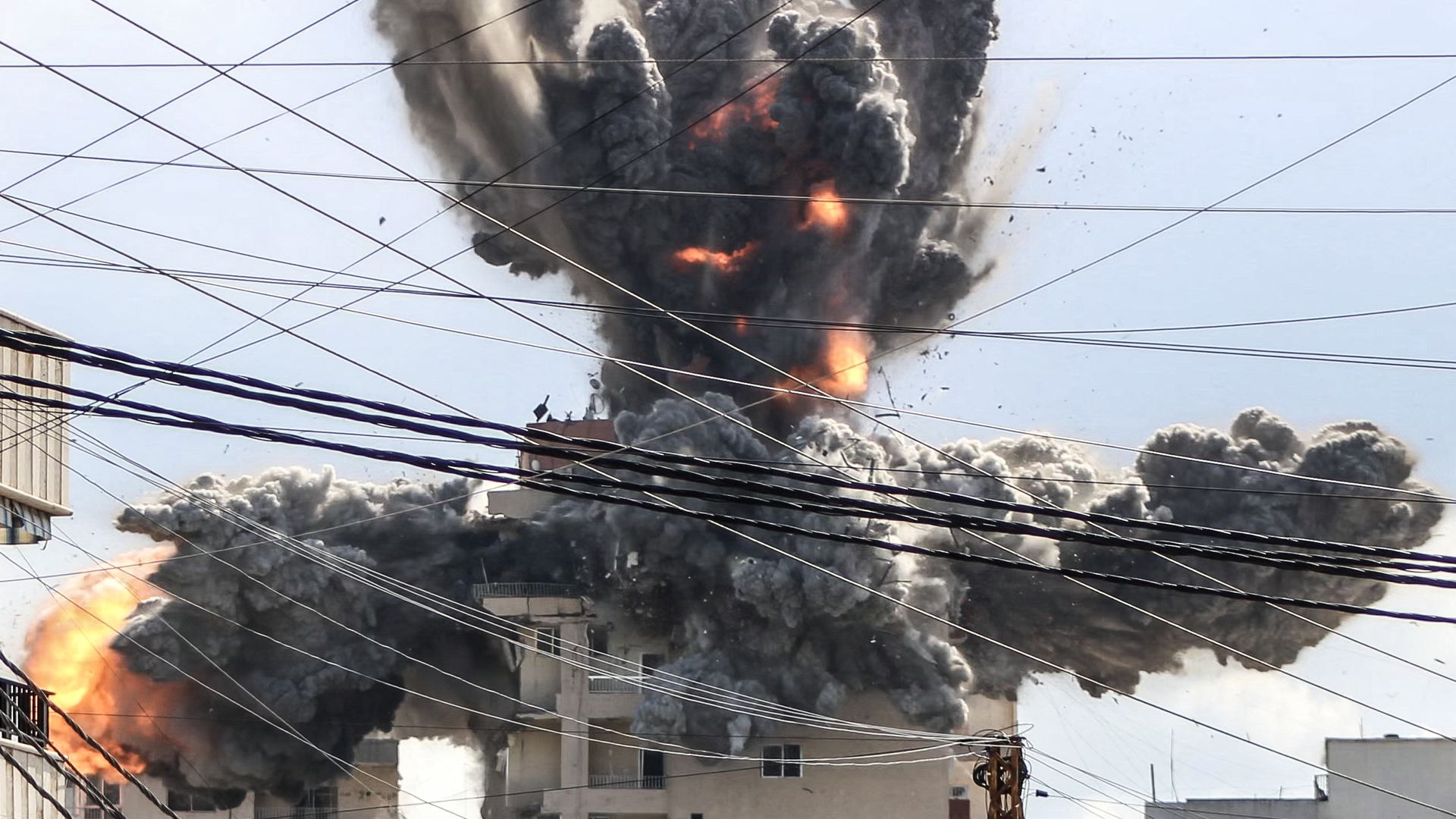
A fireball rises from a building hit by an Israeli airstrike near the southern Lebanese city of Tyre on April 8. Photo: Kawnat Haju/AFP via Getty
Vice President Vance said Wednesday Israel has proposed to restrain itself when it comes to strikes in Lebanon as long as the negotiations between the U.S. and Iran are taking place.
Why it matters: The Israeli military's renewed attacks in Lebanon posed an immediate challenge to the stability of the ceasefire and led Iran to threaten to pull out of negotiations with the U.S. planned for Saturday. At least 254 people have been killed in Israel's strikes, according to Lebanese Civil Defense.
The big picture: Stopping the Israeli strikes against Hezbollah, Tehran's proxy in Lebanon, was one of Iran's key demands for the ceasefire.
- The Iranians are now threatening to resume the fighting and close the Strait of Hormuz if the fighting in Lebanon continues.
- "The Iran–U.S. Ceasefire terms are clear and explicit: the U.S. must choose— ceasefire or continued war via Israel. It cannot have both.
The world sees the massacres in Lebanon. The ball is in the U.S. court, and the world is watching whether it will act on its commitments," Foreign Minister Abbas Araghchi wrote on X. - Egypt, which helped mediate the ceasefire, accused Israel of a "premeditated" attempt to undermine the truce.
The latest: Vance told reporters at the end of his visit to Budapest there's a "legitimate misunderstanding" between the U.S. and Iran regarding the ceasefire in Lebanon.
- "I think the Iranians thought that the ceasefire included Lebanon and it just didn't. We never made that promise. We never indicated that would be the case. What we said is that the ceasefire will be focused on Iran and America's allies both Israel and the Gulf Arab states," he said.
- "That said, the Israelis have actually offered to check themselves a little bit in Lebanon because they want to make sure that our negotiation is successful. That's not because that is part of the ceasefire. I think that's the Israelis trying to set us up for success."
- If Iran withdraws from the negotiations over Lebanon "that would be dumb but that's their choice," Vance added.
State of play: Hezbollah launched missile strikes at Israel soon after the U.S. and Israel attacked Iran five weeks ago, opening a new front in the war.
- Israel responded with airstrikes in Beirut and other parts of the country, and later with a ground invasion and occupation of large swaths of southern Lebanon.
- Thousands of Israeli soldiers are in positions as deep as six miles into Lebanese territory.
- The Israeli government says it will not pull out its troops and will not allow hundreds of thousands of displaced Lebanese civilians to return home until Hezbollah is disarmed.
Driving the news: On Tuesday, when Pakistani Prime Minister Shehbaz Sharif announced the ceasefire, he said it would apply "everywhere, including Lebanon and elsewhere."
- Shortly afterward, Israeli Prime Minister Benjamin Netanyahu issued a statement claiming the ceasefire did not include Lebanon.
- The U.S. did not make its own position clear prior to Leavitt's statement to Axios.
- It's not clear whether the U.S. agreed at any point in the negotiations that the ceasefire would apply to Lebanon.
Behind the scenes: A senior U.S. official said Netanyahu raised the issue of Lebanon in a phone call with President Trump shortly before the announcement of the ceasefire.
- Trump and Netanyahu agreed during the call that the fighting in Lebanon could continue, the U.S. official and an Israeli official said.
- The U.S. official said the White House is not currently concerned that the situation in Lebanon would cause the ceasefire with Iran to collapse.
On Wednesday, the Israel Defense Forces conducted a massive wave of strikes against Hezbollah targets in Beirut, in the Beqaa Valley and in southern Lebanon.
- The IDF said it was "the largest coordinated wave of strikes in Lebanon" since the start of the war in Iran.
- 50 Israeli Air Force fighter jets participated in the strikes and attacked 100 Hezbollah command centers and military infrastructure sites using approximately 160 munitions, the IDF said.
- According the the Lebanese Red Cross, more than 80 people have been killed and 200 wounded.
The other side: Iran's Tasnim news agency quoted sources who said Iran would withdraw from the ceasefire agreement if the attacks on Lebanon continue.
- Fars news agency said oil tankers passing through the Strait of Hormuz had been stopped on Wednesday after the massive Israeli strikes.
What they're saying: Lebanese Prime Minister Nawaf Salam also accused Israel of breaching the ceasefire. The Lebanese presidency called the Israeli strikes "a new massacre."
- Araghchi said in calls with several foreign ministers that the Israeli strikes in Lebanon were a breach of the ceasefire.
- Sharif wrote on X that ceasefire violations had "been reported at few places across the conflict zone which undermine the spirit of peace process. I earnestly and sincerely urge all parties to exercise restraint and respect the ceasefire for two weeks, as agreed upon, so that diplomacy can take a lead role towards peaceful settlement of the conflict."
- Hezbollah said it had a right to respond to Israeli's attack.
Editor's note: This article has been updated with additional details throughout.
