U.S. warships cross Strait of Hormuz for first time since Iran war began

Add Axios as your preferred source to
see more of our stories on Google.
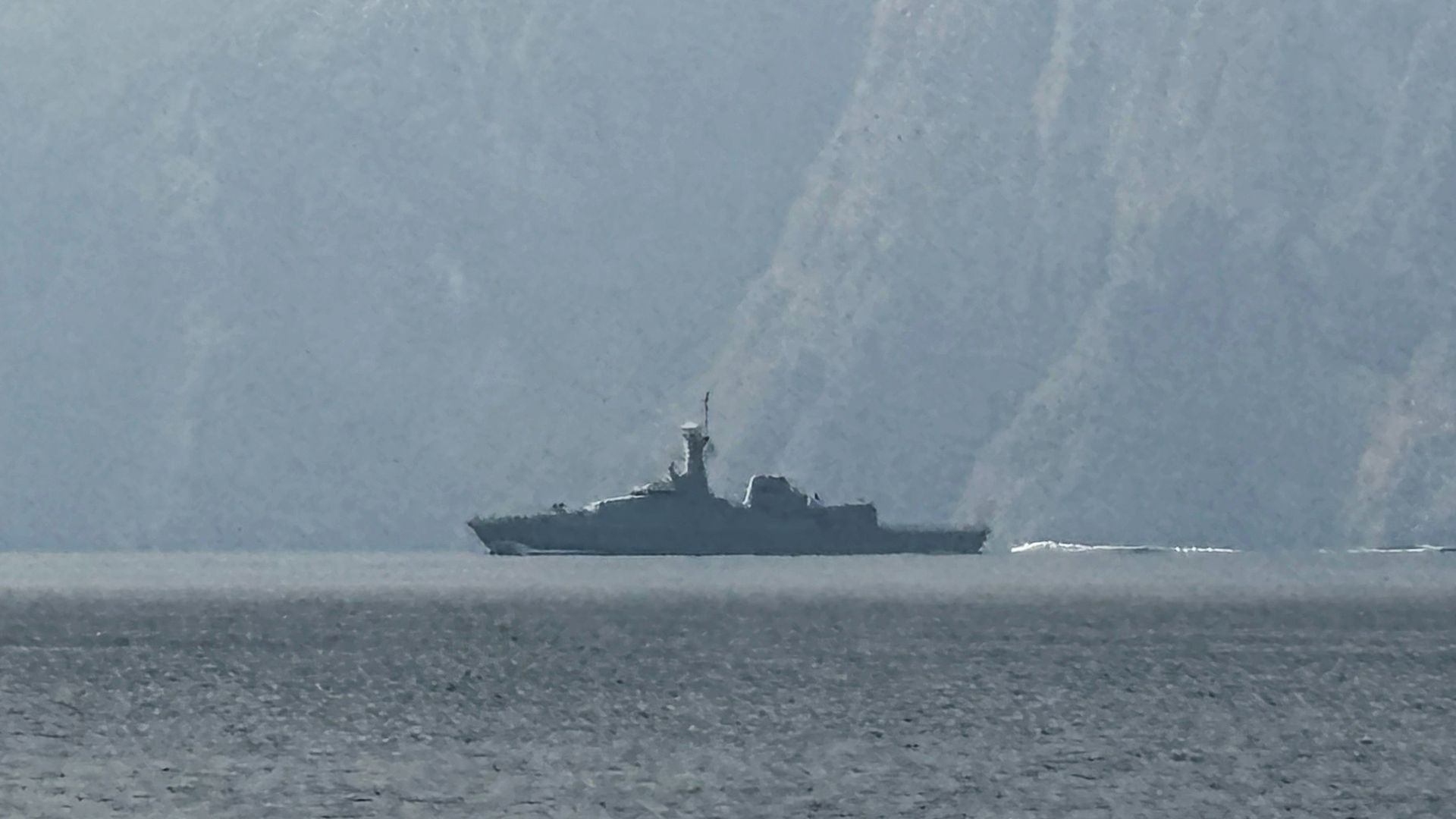
A naval vessel in the Strait of Hormuz in March 2026. Photo: Sahar AL ATTAR / AFP via Getty Images
Several U.S. Navy ships crossed the Strait of Hormuz on Saturday, a U.S. official told Axios
Why it matters: The move, which was not coordinated with Iran, was the first time U.S. warships crossed the strait since the beginning of the war.
- It came as peace talks between the two sides kicked off in Pakistan.
- "This was an operation that focused on freedom of navigation through International waters," the U.S. official said.
Driving the news: The official said the Navy ships crossed the strait from east to west to the Gulf, and then made their way back through the strait to the Arabian Sea.
- The Iranian government reportedly called the crossing a ceasefire violation and threatened to attack the ships, per state media reports.
- A U.S. official says the U.S. received no such warning.
Zoom out: The U.S. military's Central Command said in a statement that two guided-missile destroyers, the USS Frank E. Peterson and the USS Michael Murphy, "transited the Strait of Hormuz and operated in the Arabian Gulf."
- The operation was part of a broader mission "to ensure the strait is fully clear of sea mines previously laid by Iran's Islamic Revolutionary Guards Corps," CENTCOM said.
- Additional U.S. forces, including underwater drones, will join the clearance effort in the coming days, CENTCOM said.
- "Today, we began the process of establishing a new passage and we will share this safe pathway with the maritime industry soon to encourage the free flow of commerce," said Adm. Brad Cooper, commander of CENTCOM, in the statement.
The big picture: The reopening of the strait was a key provision in the U.S.-Iran ceasefire deal.
- The narrow waterway off Iran's southern coast is vital to the normal functioning of the global economy.
- For several days after the ceasefire was announced very few ships crossed. There were reports Saturday morning that at least three oil-carrying supertankers crossed — a tentative sign of movement, though a tiny fraction of normal.
- A U.S. official admitted earlier this week that ships were not moving through because they were intimidated by the Iranians.
What they're saying: President Trump posted on Truth Social on Saturday that the threat that a ship may "bunk" into sea mines was the only thing Iran had to intimidate them from crossing the strait.
- 'We're now starting the process of clearing out the Strait of Hormuz as a favor to Countries all over the World, including China, Japan, South Korea, France, Germany, and many others," he wrote.
Editor's note: This story has been updated with additional details on the crossing.
