Fuel shock could revive radical airplane design

Add Axios as your preferred source to
see more of our stories on Google.
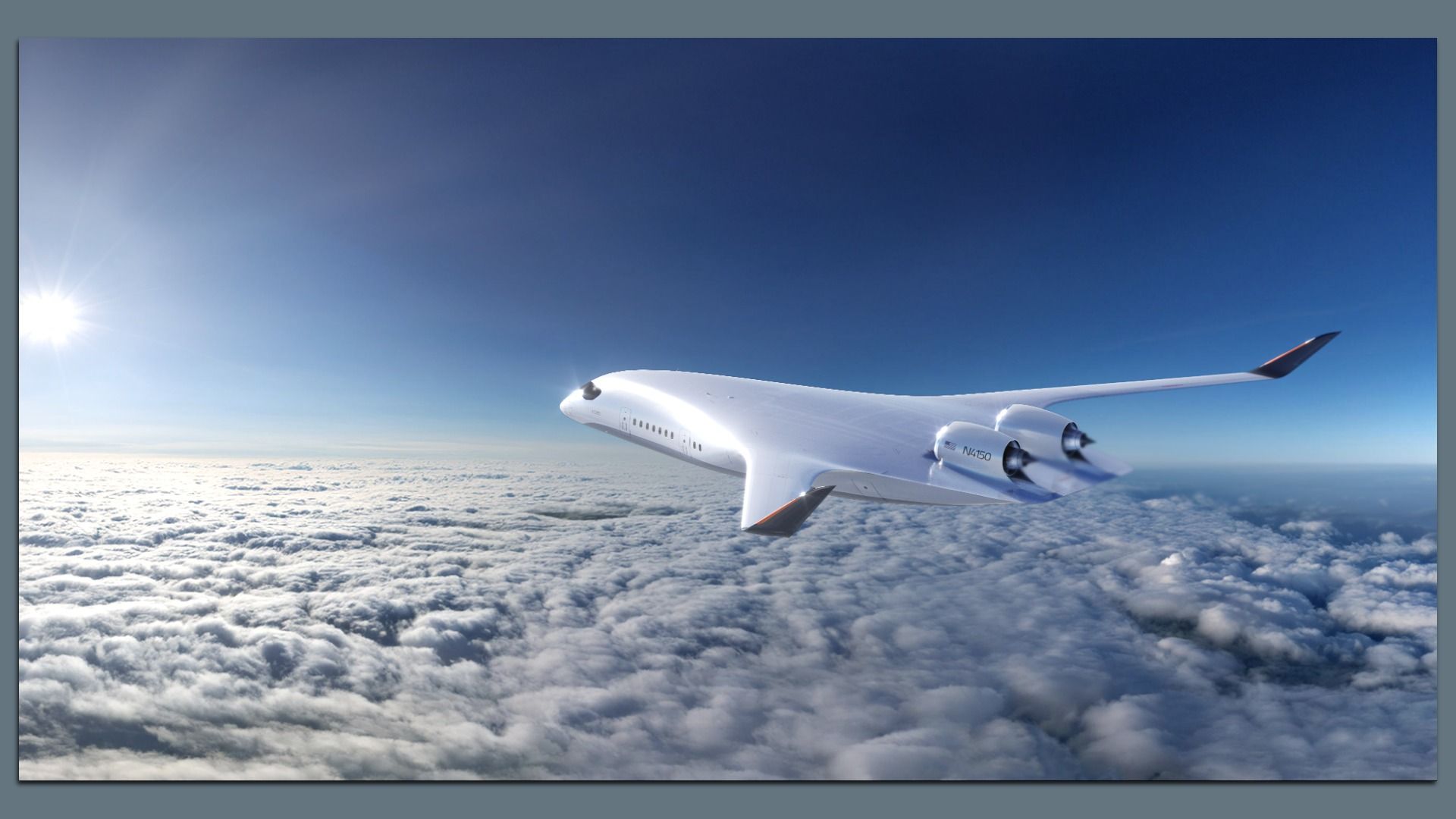
The JetZero Z4's aerodynamic design could dramatically cut fuel costs. Rendering: Courtesy of JetZero
Airlines are raising fees and cutting routes as the cost of jet fuel soars, which could revive interest in a radical airplane design that promises big fuel savings.
Why it matters: Fuel is airlines' single biggest cost — and one of the few they can't control, as shown by the volatility in oil prices during the Iran war.
- A clean-sheet airplane design that improves aerodynamics could be a game-changer — if developers can muster the financial and technical resources needed to get their designs off the ground.
The big picture: Blended-wing body aircraft — planes that look like manta rays, with the fuselage and wings morphed into one fluid shape — are suddenly looking more attractive.
- Lower drag resistance and better lift promise to cut fuel consumption by 30% or more.
- "If somebody can make it work, they're going to start printing money," Graham Phero, an aviation patent attorney at Sterne Kessler, tells Axios.
Two aerospace startups, both based in southern California and stocked with industry veterans, are pushing to bring blended-wing planes to reality.
- Jet Zero, which has raised $226 million to date and is backed by United Airlines and Alaska Airlines, has a $235 million Defense Department contract to develop a full-size demonstrator by 2027.
- Natilus, another startup, announced $28 million in Series A financing earlier this year led by Draper Associates and various strategic investors in aerospace, defense and global freight logistics.
Context: The blended-wing concept isn't new.
- It dates back to the 1940s, when U.S. aircraft designer Jack Northrop pioneered the idea of "flying wing" aircraft, later developed as the B-2 stealth bomber, which proved the concept works.
- Now, after advances in materials, computers and fly-by-wire controls, it is becoming more feasible as a commercial plane.
State of play: Between its Air Force contract, other government incentives and commercial commitments, JetZero says it has raised or secured more than $1 billion in financing.
- Progress on the full-scale demonstrator is "on track and on budget," a spokesperson says, and JetZero plans to break ground on a new factory in Greensboro, North Carolina, in mid-June. It's looking to enter commercial service in the early 2030s.
- Natilus's latest funding will enable the company to complete its first full-scale prototype of a regional cargo plane, which it hopes to be FAA-certified by the end of the decade.
Zoom in: As a passenger jet, JetZero's design could replace aging midsize jets on transcontinental and some international routes up to 5,000 nautical miles.
- It would carry about 250 passengers in a wide, multi-aisle "theater-style" cabin with larger overhead bins and more personal space.
- The tradeoff: fewer window seats, although virtual screens could provide everyone with a view of the clouds.
Natilus plans to move freight before passengers. But it's also working on a 200-passenger aircraft intended to compete with the Boeing 737 MAX and Airbus A321-neo, which would arrive in the early 2030s.
- Natilus says it's in talks with major carriers, and claims more than 570 pre-orders, worth $24 billion. Among them is SpiceJet of India, which plans to purchase 100 aircraft, once the plane is certified.
What they're saying: With demand for new airplanes far exceeding production capacity, it's a crucial moment for innovation, says former Boeing CEO Dennis Muilenburg, whose firm, New Vista Capital, is an investor in Natilus.
Reality check: Bringing these airliners to market is far from certain, says AeroDynamic Advisory consultant Richard Aboulafia.
- "There is something here," he says of blended-wing designs. "It's just that there are big, big hurdles."
- Companies need a path to FAA certification, of course, but they also need to build factories and establish global operations to support their aircraft.
Follow the money: "JetZero has raised $1 billion or so. They have $11 [billion] or $12 [billion] to go. Entering this market is ridiculously expensive," Aboulafia said.
- "Airlines are willing to listen to the newcomer, but it's not like you can stake your fleet plans on somebody who needs $12 billion."
The bottom line: Innovations in aircraft design could make global airlines more resilient to geopolitical volatility and help them achieve their long-term sustainability goals — if they can get off the ground.
