Iran offers U.S. deal to reopen strait but postpone nuclear talks

Add Axios as your preferred source to
see more of our stories on Google.
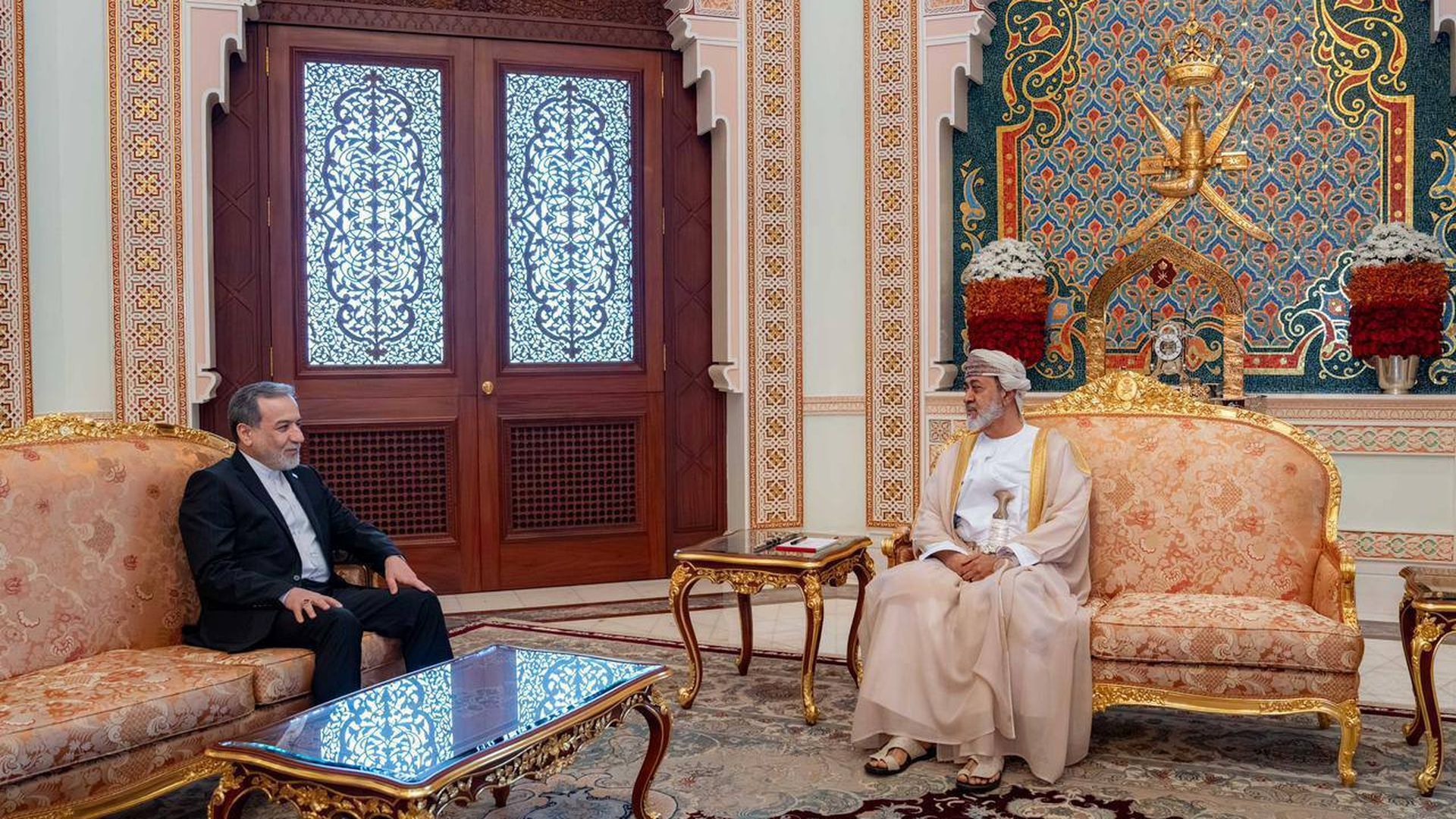
Iranian Foreign Minister Abbas Araghchi and Sultan of Oman, Haitham bin Tariq, meeting in Muscat, Oman, on Sunday. Photo: Iranian Foreign Ministry/Handout/Anadolu via Getty Images
Iran gave the U.S. a new proposal to reopen the Strait of Hormuz and end the war, with nuclear negotiations postponed for a later stage, according to a U.S. official and two sources with knowledge.
Why it matters: The diplomacy is in a stalemate, and the Iranian leadership is divided about what nuclear concessions should be on the table. The Iranian proposal would bypass that issue en route to a faster deal.
- But lifting the blockade and ending the war would remove President Trump's leverage in any future talks to remove Iran's stockpile of enriched uranium and convince Tehran to suspend enrichment — two primary war objectives for Trump.
What to watch: Trump is expected to hold a Situation Room meeting on Iran on Monday with his top national security and foreign policy team, according to three U.S. officials.
- One source said Trump's team would discuss the stalemate in the negotiations and potential next steps.
- Trump signaled in an interview with Fox News on Sunday that he wants to continue the naval blockade that is choking off Iran's oil exports, hoping it will get Tehran to cave over the next few weeks.
- "When you have vast amounts of oil pouring through your system ... if for any reason this line is closed because you can't put it into containers or ships ... what happens is that line explodes from within. ... They say they only have about three days before that happens," Trump said.
Driving the news: The crisis in the negotiations between the U.S. and Iran deepened over the weekend after a visit by Iranian Foreign Minister Abbas Araghchi to Pakistan ended with no progress.
- The White House had announced Trump's envoys Steve Witkoff and Jared Kushner would be meeting Araghchi in Islamabad, but the Iranians were noncommittal. Trump told Axios the Iranian position led him to cancel that trip.
- "I see no point of sending them on an 18-hour flight in the current situation. It's too long. We can do it just as well by telephone. The Iranians can call us if they want. We are not gonna travel just to sit there," Trump said.
- On Sunday, Araghchi held talks with Omani officials in Muscat that focused on the Strait of Hormuz, then went back to Islamabad for a second round of talks.
- On Monday, Araghchi was expected to travel to Moscow and meet Russian President Vladimir Putin.
Behind the scenes: Araghchi raised the plan to bypass the nuclear issue during his meetings in Islamabad, two sources with knowledge said.
- One source said Araghchi made it clear to the Pakistani, Egyptian, Turkish and Qatari mediators over the weekend that there's no consensus inside the Iranian leadership about how to address the U.S. demands. The U.S. wants Iran to suspend uranium enrichment for at least a decade and remove its enriched uranium from the country.
The new proposal, given to the U.S. via the Pakistani mediators, focuses on solving the crisis over the strait and the U.S. blockade first.
- As part of that, the ceasefire would be extended for a long period or the parties would agree on a permanent end to the war.
- According to the proposal, the nuclear negotiations would only start at a later stage, after the strait was open and the blockade lifted.
- The White House has received the proposal, but it's unclear whether the U.S. is willing to explore it.
What they're saying: "These are sensitive diplomatic discussions and the U.S. will not negotiate through the press. As the president has said, the United States holds the cards and will only make a deal that puts the American people first, never allowing Iran to have a nuclear weapon," White House spokesperson Olivia Wales told Axios.
- Spokespeople for Pakistan's military and Ministry of Foreign Affairs declined to comment.
