Who won the 2026 Pulitzer awards for journalism

Add Axios as your preferred source to
see more of our stories on Google.
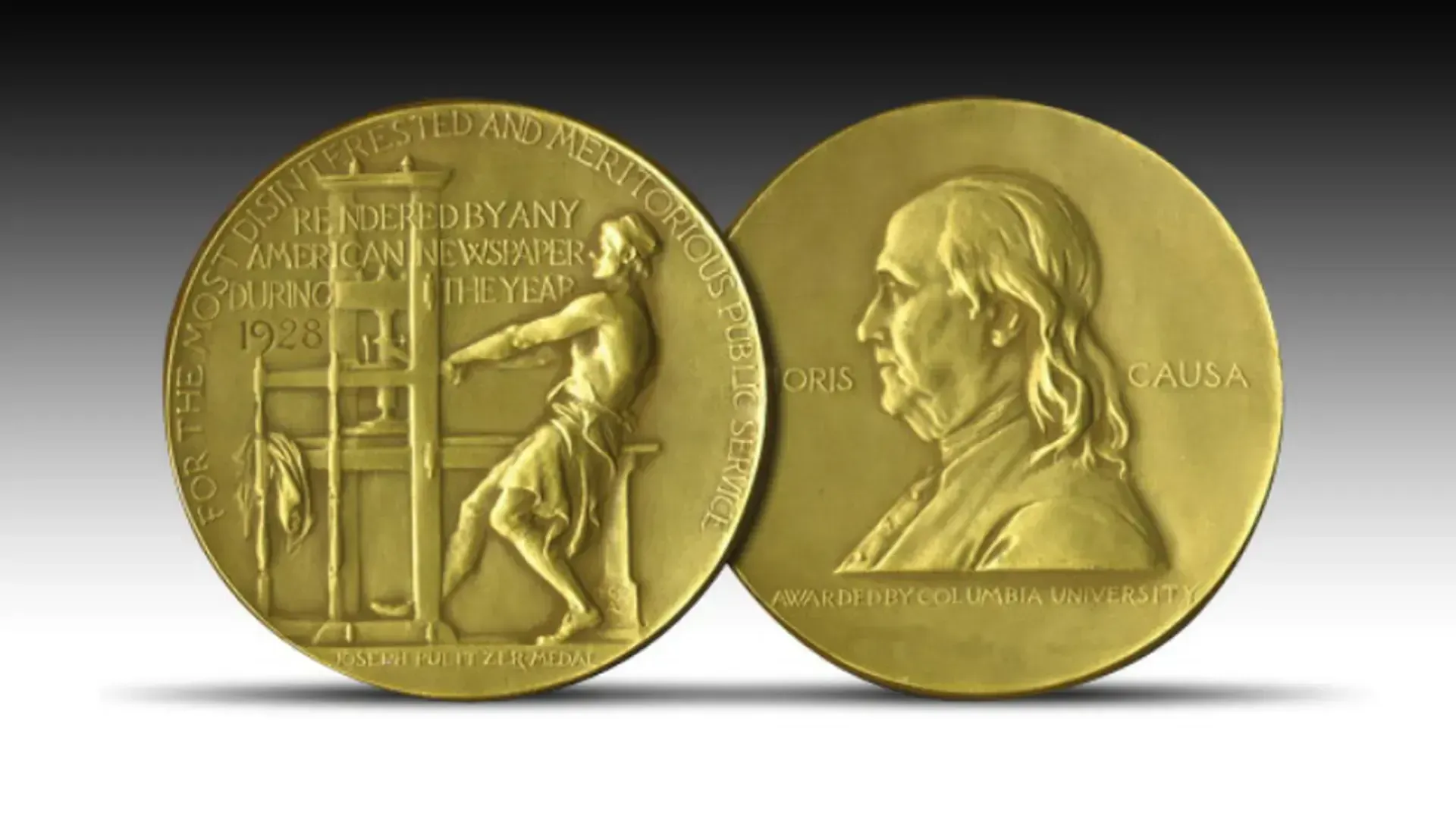
Photo: Fort Greene Focus/Flickr
The 2026 Pulitzer Prize winners were announced Monday, with more than one-third of the prizes being awarded to local news outlets.
Why it matters: The awards serve as a powerful reminder of the importance of local news in holding power to account, even as the industry faces serious economic headwinds.
- "The future of some major news media is uncertain. Many local news outlets have folded, and the book publishing industry is struggling with economic and technological pressures. And yet, the fields are robust thanks to so many dogged and talented people and new digital startups," said Pulitzer Prizes administrator Marjorie Miller shortly before presenting the winners.
The big picture: Although no single outlet dominated the awards this year, the New York Times won three, while the Washington Post and Reuters each won two.
- The most prevailing theme among this year's winners was outstanding coverage of the current political landscape, including stories about the Trump administration's federal government overhaul, expansion of executive power, conflicts of interest and immigration enforcement.
- Several category winners were awarded prizes for their work highlighting the dangers of Big Tech, including surveillance and scams.
Of note: The Pulitzer Committee presented one special citation to Miami Herald reporter Julie K. Brown, "for her groundbreaking reporting in 2017 and 2018 that exposed Jeffrey Epstein's systematic abuse of young women, the justice system that protected him, and, over time, his powerful network of associates and enablers."
- Inclusive of the special citation, local news outlets and reporters received a total of seven acknowledgments by the Pulitzer Board on Monday.
Zoom out: In announcing the 2026 awards, Miller acknowledged the political pressure facing newsrooms today, noting the lawsuits being waged against media companies by President Trump.
- "The Pulitzer Prizes support the First Amendment. We believe in access to government institutions and in independent press. We stand for civil discourse and against censorship," she said.
- "Unfortunately, this bears repeating now, as media access to the White House and Pentagon is restricted, free speech is challenged in the streets, and the president of the United States has filed lawsuits for billions of dollars for defamation and malice against multiple print and broadcast media."
Zoom in: The below descriptions of the winners' work are quotes from Miller, who announced the winners.
Public Service (1917–present)
- Winner: The Washington Post, "for piercing the veil of secrecy around the Trump administration's chaotic overhaul of federal agencies and chronicling in rich detail the human impacts of the cuts and the consequences for the country."
Breaking News Reporting (1998-present)
- Winner: Staff of the Minnesota Star Tribune, "for its coverage of a shooting in a back-to-school Mass at a Catholic school that left two children dead and 17 wounded, powerful stories marked by thoroughness and compassion."
Investigative Reporting (1985-present)
- Winner: Staff of the New York Times, "for deeply reported stories that exposed how President Trump has shattered constraints on conflicts of interest and exploited the moneymaking opportunities that come with power, enriching his family and allies."
Explanatory Reporting (1998-present)
- Winner: Susie Neilson, Megan Fan Munce and Sara DiNatale of the San Francisco Chronicle "for their series 'Burned,' which showed how insurance companies using algorithmic tools have failed Californians who lost their homes to fire by systematically undervaluing their properties, denying claims, and making it impossible for them to rebuild."
Beat Reporting (1991-2006; 2026-present)
- Winner: Jeff Horowitz and Engen Tham of Reuters, "for inventive and revelatory reporting on Meta that detailed the technology company's willingness to expose users, including children, to scams and AI manipulation."
Local Reporting (1948-1952, 2007-present)
- Winner: Dave Altimari and Ginny Monk of the Connecticut Mirror, and Sophie Chou and Haru Coryne of ProPublica, "for an impressive series exposing how the state's unique towing laws favored unscrupulous companies that overcharged residents, prompting swift and meaningful consumer protections."
- Winner: Staff of Chicago Tribune, "for its powerful coverage of the Trump administration's militarized immigration sweep of the city that described in vivid, muscular prose how the siege-like incursion of ICE agents unified Chicagoans in resistance."
National Reporting (1948-present)
- Winner: Staff of Reuters, notably Ned Parker, Linda So, Peter Eisler and Mike Spector "for documenting how the president used the U.S. government and the influence of his supporters to expand executive power and exact vengeance on his foes."
International Reporting (1948-present)
- Winner: Dake Kang, Garance Burke, Byron Tau, Aniruddha Ghosal of the Associated Press and contributor Yael Grauer, "for an astonishing global investigation into state-of-the-art tools of mass surveillance, created in Silicon Valley, advanced in China, and spreading worldwide before returning to America for secret new uses by the U.S. Border Patrol."
Feature Writing (1979-present)
- Winner: Aaron Parsley of Texas Monthly, "for his extraordinary personal account of survival and loss written days after the historic Central Texas floods that tore the writer's house out from under him and his family, taking the life of his nephew."
Criticism (1973-present)
- Winner: Mark Lamster of the Dallas Morning News, "for his rigorous and passionate architecture criticism, using wit and expertise to amplify his opinions and advocate for city residents."
Opinion Writing (2026-present)
- Winner: M. Gessen of the New York Times, "for an illuminating collection of reported essays on rising authoritarian regimes that draw on history and personal experience to probe timely themes of oppression, belonging and exile."
Illustrated Reporting and Commentary (2022-present)
- Winner: Anand RK and Suparna Sharma, contributors, and Natalie Obiko Pearson of Bloomberg, "for 'trAPPed,' a riveting account of a neurologist in India threatened with 'digital arrest' by her phone, reporting that uses visuals and words to cast light on the growing global challenges of surveillance and digital scams."
Breaking News Photography (2000-present)
- Winner: Saher Alghorra, a contributor for the New York Times, "for his haunting, sensitive series showing the devastation and starvation in Gaza resulting from the war with Israel."
Feature Photography (1968-present)
- Winner: Jahi Chikwendiu of the Washington Post "for a heart-wrenching and achingly beautiful photo essay on a young family welcoming the birth of their first child as the father is slowly dying from cancer."
Audio Reporting (2020-present)
- Winner: Staff of "Pablo Torre Finds Out" "for a pioneering and entertaining form of live podcast journalism that investigated how the Los Angeles Clippers seemingly evaded the NBA's salary cap by funneling money to a star player through an environmental startup."
Full list of winners in journalism and descriptions of their awards, via The Pulitzer Board, can be found here.
Editor's note: This story has been corrected to reflect the New York Times won three awards this year.
Go deeper:
- 2025 Pulitzer winners for journalism
- 2024 Pulitzer winners for journalism
- 2023 Pulitzer winners for journalism
- 2022 Pulitzer winners for journalism
- 2021 Pulitzer winners for journalism
- 2020 Pulitzer winners for journalism
- 2019 Pulitzer winners for journalism
- 2018 Pulitzer winners for journalism
- 2017 Pulitzer Winners for Journalism
