U.S. keeps bombing boats in Caribbean with little public scrutiny

Add Axios as your preferred source to
see more of our stories on Google.
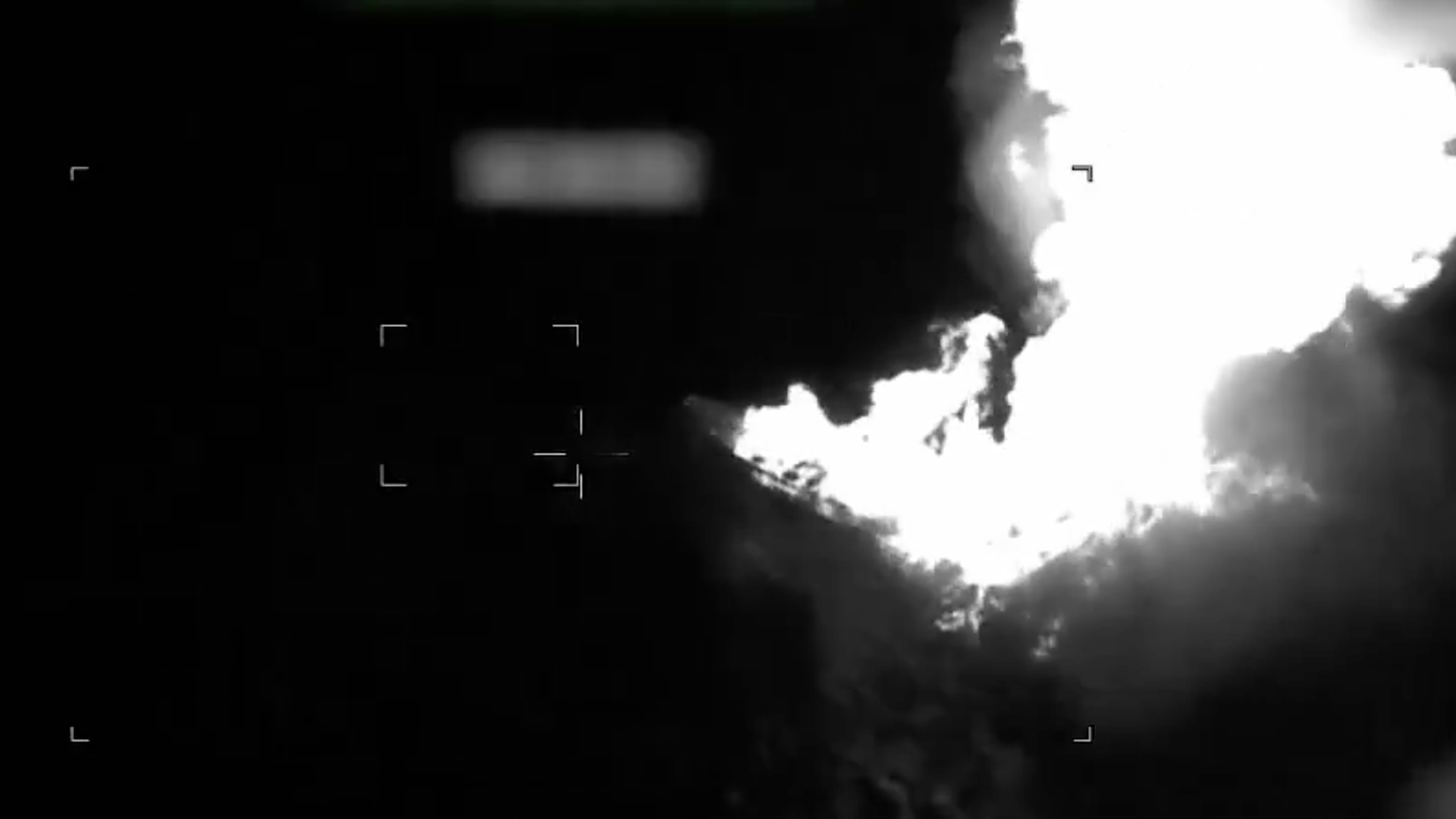
Footage from one of dozens of boat strikes conducted by the U.S. military. Photo: Courtesy of U.S. Southern Command/via X
The U.S. has killed more than 180 people in eight months in the Caribbean Sea and Pacific Ocean. While the headlines have slowed, the Southern Spear strikes on alleged drug runners have not.
Why it matters: The Trump administration says it's reprioritizing security in "America's neighborhood." Critics say it's carrying out an indefinite campaign of extrajudicial killings.
- Public scrutiny of the operation, meanwhile, has largely faded.
Driving the news: Democrat displeasure surfaced briefly last week during back-to-back Hill testimonies from Defense Secretary Pete Hegseth, Joint Chiefs Chairman Gen. Dan Caine and Pentagon comptroller Jules Hurst.
- Sen. Jack Reed of Rhode Island dinged the strikes as "illegal."
- Sen. Tim Kaine of Virginia questioned the targeting criteria.
- And Rep. Bill Keating of Massachusetts described the operations as "pirating American values," predicated on "phony rationale" and requiring further investigation.
- Hegseth called Keating's remarks an "incredible array of false accusations."
Zoom in: The military continues to release virtually no information about who was killed, on what basis, or with what weapons.
- U.S. Southern Command made seven announcements about strikes in April, as late as the 26th. Three such disclosures were made in March. Only one strike was noted in January.
- The command publishes footage of individual airstrikes with boilerplate language summarizing the scene.
But we are beginning to learn a bit more.
- The New York Times reported a ramp-up of MQ-9 Reaper drones, made by General Atomics, and fixed-wing attack aircraft operating from El Salvador and Puerto Rico.
- The U.S. has used between $12-50 million in munitions to carry out the strikes, according to a Costs of War analysis. The same report found the U.S. spent upward of $4.7 billion on Southern Spear and Absolute Resolve, the latter culminating in the capture of Venezuela's Nicolás Maduro.
- "Costs will continue to mount as some naval assets and aircraft remain in the region and strikes continue," it reads. "Without greater accountability, the human toll will mount and U.S. citizens will continue to bear the financial cost."
Zoom out: There's no indication Southern Spear will wrap anytime soon. Carrying on through the long term could stretch resources.
- "If the administration wants to compete with China — that seems to be central — and wants to maintain this presence in the hemisphere and wants to be involved in a foreign conflict, then you need a bigger Navy," Mark Cancian, a senior adviser at the Center for Strategic and International Studies, told Axios.
- "Now, they are doing that, but that will take many years."
Go deeper: Trump 2.0 refashions U.S. military muscle
