Trump's ruthless midterm power play

Add Axios as your preferred source to
see more of our stories on Google.
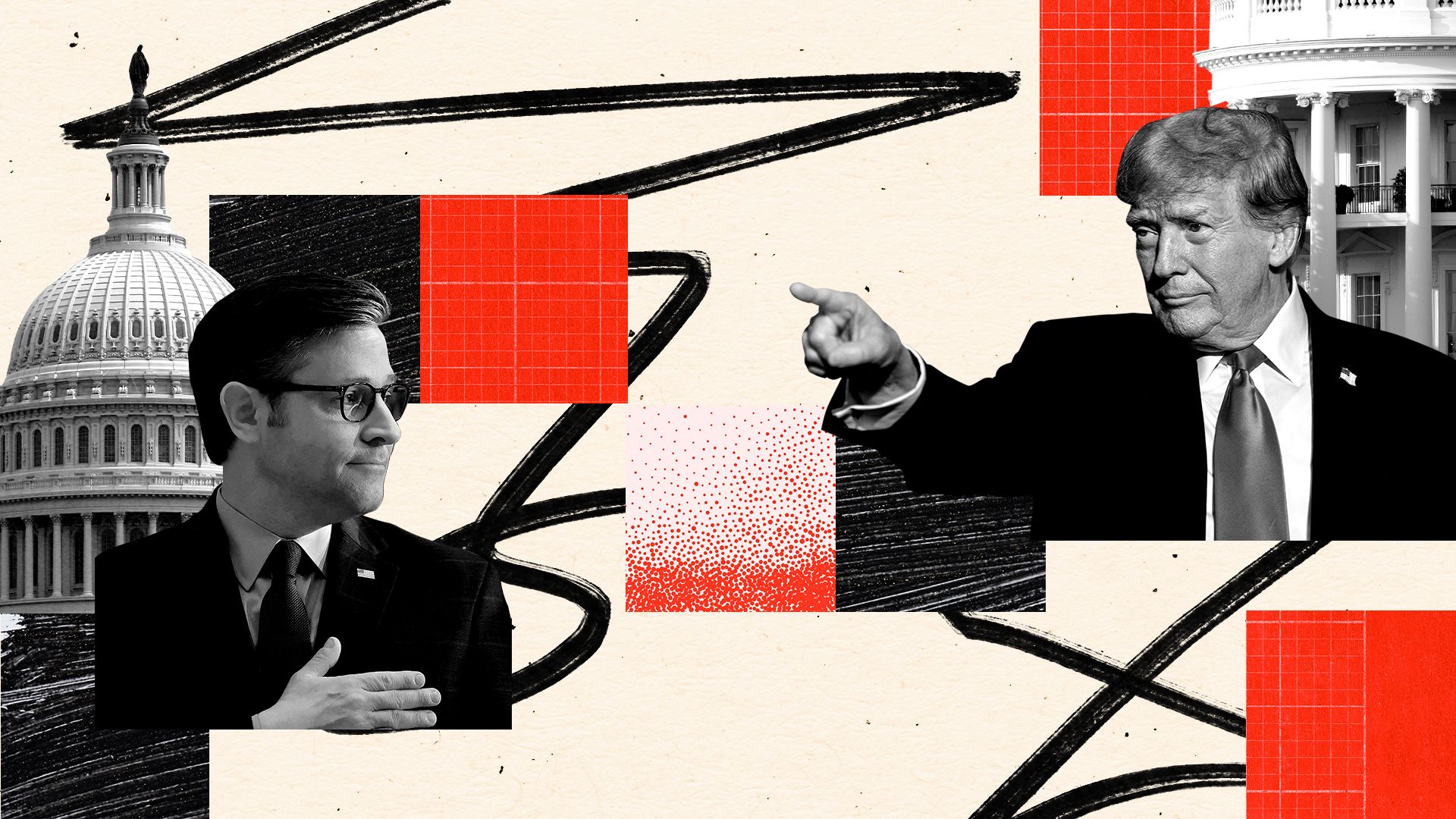
House Speaker Mike Johnson and President Trump. Photo illustration: Aïda Amer/Axios. Photo: Kevin Dietsch and Al Drago/Bloomberg via Getty Images
President Trump is flexing his dominance over the Republican Party to stamp out primaries that would bleed party coffers and fracture the GOP ahead of a treacherous midterm election.
Why it matters: If the party defies expectations and keeps control of Congress this fall, Trump's ruthless maneuvers to sideline some candidates while forcefully backing others will be a big reason.
By the numbers: Trump has picked favorites in more primaries than any other president in history.
- He endorsed 95% of the 217-member House GOP Conference, including 43 candidates running in the Cook Political Report's 60 most competitive House races.
- He endorsed Republican candidates in nearly two-thirds of Senate races.
While Democrats are still favored to pick up seats, they're dealing with a string of divisive and costly primaries that could leave candidates weakened heading into the general election.
Behind the scenes: Trump's hardball tactics were on display last week, when the president asked Kentucky Senate candidate Nate Morris to step aside.
- Trump told Morris — a friend of Donald Trump Jr. who had been endorsed by conservative activist Charlie Kirk before Kirk's death last year — that he planned to endorse Rep. Andy Barr.
- After Morris announced he was dropping out, Trump said on social media that he would be appointing him to an ambassadorship.
A similar scenario played out in March, when Trump un-endorsed Hope Scheppelman in her primary challenge to Colorado Rep. Jeff Hurd.
- After concluding that Hurd had a better chance of winning the general election, Trump asked Scheppelman to drop out and later announced she would be joining the administration.
At times, it's left hurt feelings. Trump last year pressed Michigan Rep. Bill Huizenga to forgo a Senate primary against a fellow Republican, former Rep. Mike Rogers, and instead seek reelection with his support.
- Huizenga backed down, though he wasn't happy about it.
Zoom in: Trump decided shortly after taking office last year that he wanted to play an active role in primaries, says a person familiar with his thinking.
- He particularly wanted to endorse vulnerable incumbents early on, figuring the longer he waited, the more it would expose them to damaging primary challenges.
- But there was a risk: By endorsing candidates just months into his term, Trump gave up a key source of leverage over members whose support he needed to pass critical legislation.
What they're saying: "The president and his political team deserve much more credit than they get for shaping this battlefield," Chris Winkelman, president of the conservative Congressional Leadership Fund, tells Axios.
- "Their early engagement allows our candidates in the toughest fights to focus on what matters: beating Democrats," Winkelman adds.
The other side: Trump's decision to endorse candidates he views as most electable has sometimes drawn pushback from MAGA supporters.
- "This is why they say MAGA is dead," one conservative activist wrote on X after Trump's endorsement of Barr. "Everything MAGA opposes, Andy Barr is for."
Yes, but: There are a few notable instances in which Trump has stayed out of primaries.
- That includes the Texas Senate race, where Sen. John Cornyn and state Attorney General Ken Paxton have been locked in a nasty yearlong primary whose price tag tops $100 million.
- Had Trump weighed in, he could have put a stop to the primary.
But the president has been torn between the two candidates, both of whom he regards as allies.
