SpaceX shoots 19% higher in first day of trading

Add Axios as your preferred source to
see more of our stories on Google.
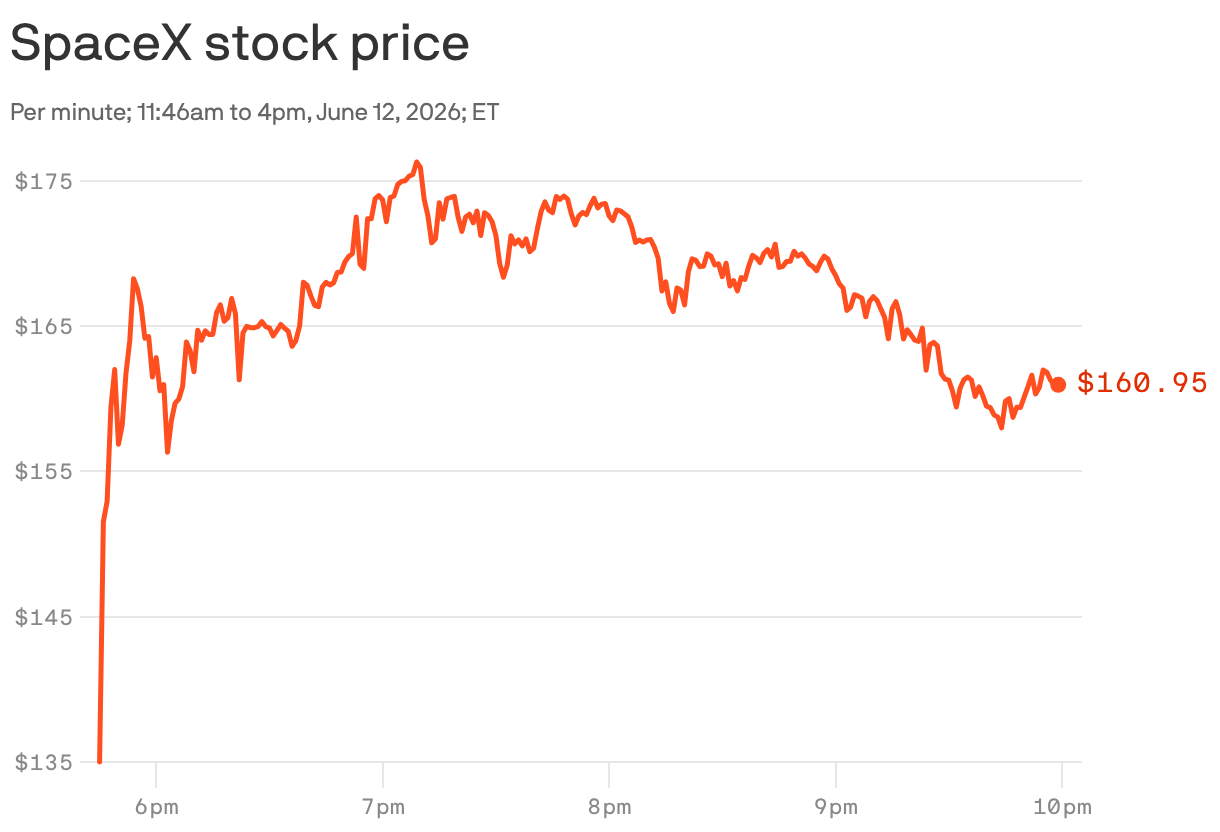
SpaceX shares rose 19% in their first trading day, landing the company as the sixth-largest company in the U.S.
Why it matters: Elon Musk's company ended the day with a $2.1 trillion market cap, officially the biggest IPO in U.S. history.
Driving the news: SpaceX shares priced at $135 late Thursday afternoon.
- If SpaceX were included in the S&P 500 today, it would be over 5% of the overall index based on its current valuation.
What they're saying: "I'd love to be on that list of retail shareholders getting IPO shares. Long term, the possibility that he could merge Tesla into SpaceX becomes even more interesting and compelling," Nancy Tengler of Laffer Tengler Investments told Axios.
- "I gave SpaceX less than a 10% chance of succeeding at all to be clear," Elon Musk said in remarks ahead of the company's debut, adding that it was worth the try to create a "space-faring civilization."
Friction point: SpaceX went into its IPO trading at 90 times its sales (not profits. Sales.)
- That indicates a valuation that is divorced from underlying business fundamentals, Adam Johnson, portfolio manager at the Bullseye American Ingenuity Fund told Axios.
- Historically, the majority of companies that go public underperform the market in the first three years, according to analysis from University of Florida finance professor Jay Ritter.
Yes, but: The top performing companies in the S&P 500 are all trading at a premium to their underlying earnings, a dynamic that has been exacerbated by the euphoria around the AI boom.
- "Hype is a borrowing, if you will, in the short term against future performance, so some companies will repay it," Isabelle Freidheim, founder at Athena Capital told Axios.
What we're watching: What happens when the lock up period ends.
- Early investors may sell as much as 20% of their holdings as of the second full day of trading after the next earnings report. Those who got in early may want to realize some gains.
- Anyone can sell 180 days post-IPO, except Elon Musk, who has to hold for 366 days.
- "The lock up ends fast, so once insiders can sell, we'll see who's left holding the bag," Sarah Kunst of Cleo Capital tells Axios.
The bottom line: The demand is strong for this stock, regardless of valuation.
