Inside U.S.-Iran talks in Switzerland

Add Axios as your preferred source to
see more of our stories on Google.
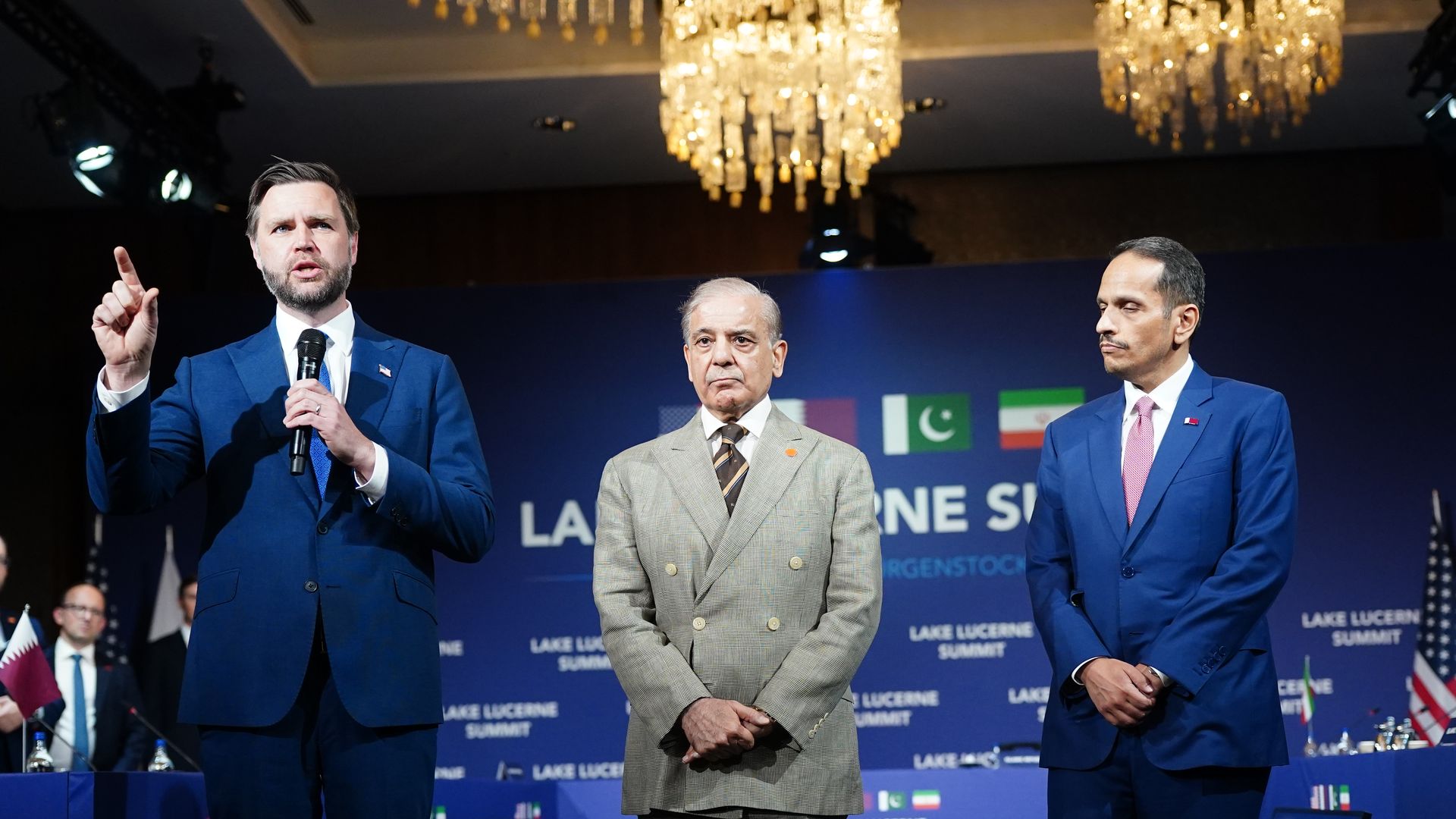
Vice President JD Vance, Pakistani Prime Minister Shehbaz Sharif and Qatari Prime Minister Sheikh Mohammed bin Abdulrahman bin Jassim Al-Thani at Lake Lucerne, near Stansstad, Switzerland, on Sunday. Photo: Nathan Howard-Pool/Getty Images
U.S. and Iranian negotiators held marathon talks in Switzerland into Sunday night as they worked to launch a 60-day effort toward a new nuclear agreement.
Why it matters: The nearly nonstop talks at the Lake Lucerne Summit signal both sides remain engaged despite significant differences and may be laying the groundwork for broader discussions on regional security.
- The talks, led by Vice President JD Vance and including White House envoys Steve Witkoff and Jared Kushner, continued through Sunday night despite Iran's claim Saturday that it was closing the Strait of Hormuz in response to alleged Israeli ceasefire violations in Lebanon.
State of play: As the negotiations started at Lake Lucerne on Saturday, President Trump issued several threats to Iran both on his Truth Social account and in an interview with Fox News.
- Iranian officials rejected Trump's threats in public but also raised the matter in private during the talks and said they represented a violation of Article 1 in the U.S.-Iran memorandum of understanding that stipulates that both parties will refrain from threats of using force during the negotiations.
- A source from one of the mediating countries and a U.S. diplomat said that although Iranian officials told traveling reporters that they pulled out of the talks in protest of Trump's public threats, in practice the talks continued all day.
Behind the scenes: The U.S. diplomat said one of the issues during discussions was "deconfliction mechanisms in Lebanon and enforcing the ceasefire," amid clashes between Hezbollah and Israeli troops in the south of the country.
- A source from one of the mediating countries said the discussion about Lebanon was "tense."
- Talks focused on "all elements of the nuclear deal." Officials also discussed the Strait of Hormuz and recent Iranian statements about potentially closing it, the diplomat said.
- "We made clear we want to ensure it remains fully open. We made good progress on that front," the U.S. diplomat said.
- A second diplomat who attended the talks described them as "tough but good," adding: "We got an outline created that will now guide technical talks in the coming weeks."
Zoom in: The two sides discussed implementation of the memorandum of understanding and how to ensure all parties are aligned, the diplomat said.
- Officials also discussed a framework for continuing talks between political leaders and technical teams.
- Representatives from the U.S., Iran, Pakistan and Qatar appeared pleased with the talks' progress, according to the diplomat.
- "The mediators are helping both sides work through things. We feel this initial round of talks is setting us up for trust building going forward."
Iranian Foreign Minister Abbas Araghchi wrote on X that Pakistani and Qatari mediators had "delivered major progress to end Lebanon War."
- He added that Iran received waivers for exports of oil and petrochemical products and some frozen assets were released. U.S. officials haven't confirmed that.
- "1st real test: Lebanon deconfliction cell," Araghchi wrote.
Zoom out: In a joint statement at the end of the Switzerland summit, Qatari and Pakistani mediators said "encouraging progress has been made" during the 18 hours of negotiations.
- U.S. and Iran officials agreed to establish a High Level Committee, which will provide political oversight of the negotiations, alongside working groups focused on nuclear issues, sanctions and dispute resolution, the mediators said.
- The U.S. and Iran agreed on a roadmap for reaching a final deal within 60 days, according to the statement.
- The parties agreed to establish a "communication line" on the Strait of Hormuz, which will operate as long as negotiations continue, in order "to avoid incidents and miscommunication with the aim of safe passage for commercial vessels through the Strait of Hormuz", the mediators said.
- The U.S. and Iran also agreed to create a "deconfliction cell" together with Lebanon and the mediators "to ensure the adherence of the termination of military operations in Lebanon."
What's next: Technical teams will remain in Switzerland to continue negotiations for the rest of the week.
Editor's note: This story has been updated with additional details throughout.
