The health risks of wildfire smoke and air quality

Add Axios as your preferred source to
see more of our stories on Google.
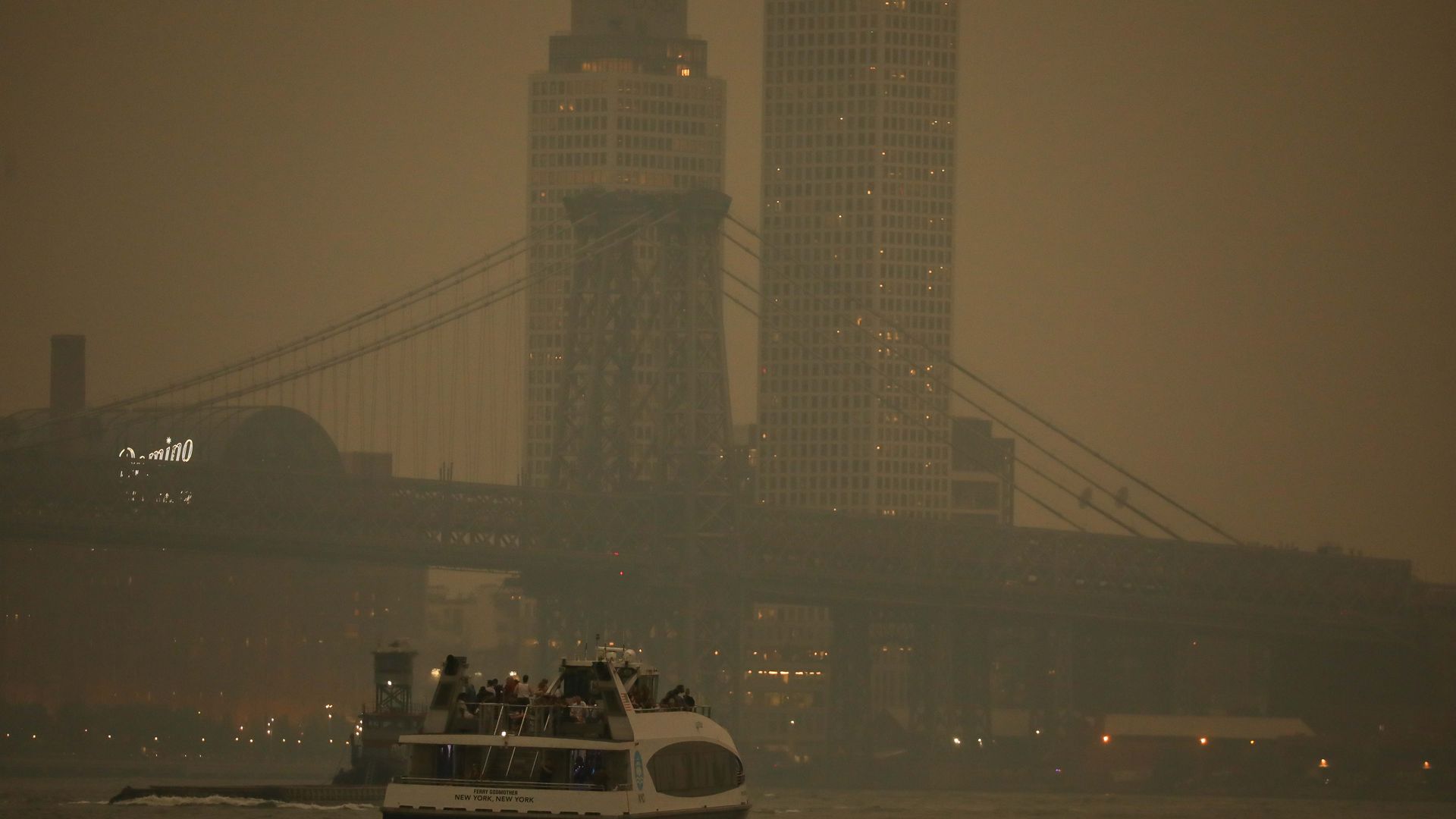
Smoke from Canadian wildfires shrouds an NYC Ferry on the East River in Brooklyn, N.Y., on July 15, 2026. Photo: Michael Nagle/Bloomberg via Getty Images
Wildfire smoke is degrading air quality across the United States, exposing millions to short- and long-term health risks.
Why it matters: Tiny particles in wildfire smoke can increase the risk of heart and lung disease, worsen chronic conditions and contribute to long-term health problems.
- "Even if this single episode is not going to make people acutely sick, it leads to higher rates of health problems to be exposed to several of these events over years," David Eisenman, a physician and professor with the UCLA Fielding School of Public Health, told Axios in an email Thursday.
Driving the news: Wildfires ravaging Canada are sending smoke across the border into the Northeast, Midwest and Northwest.
- That's why Chicago, New York and Washington, D.C., are all seeing hazy skies. Detroit had the worst air quality in the world on Thursday.
- These fires come on the heels of multiple fires across Colorado and Utah over July 4 weekend.
Zoom out: Wildfires affect more than just people living nearby. The smoke can linger for hundreds of miles, with the smallest particles in wildfire smoke, PM2.5, can seep into the lungs and bloodstream.
Here's what the health effects are and how to stay safe.
The side effects of bad air quality
Wildfire smoke damages the air quality far beyond its origin spot and "can make anyone sick," according to the Centers for Disease Control and Prevention.
- Breathing in the smoke can lead to coughing, wheezing, trouble breathing, stinging eyes and scratchy throats, among other health effects, the CDC says.
- It can also trigger asthma attacks, bronchitis and COPD episodes.
Over the long term, wildfire smoke exposure, as well as bad air quality, can increase the risk of several chronic health issues, including:
- Heart attacks, strokes and high blood pressure.
- Chronic lung disease and some cancers.
- Anxiety, depression, stress and sleep disruption.
- Cognitive decline and dementia-related conditions.
Who is at risk and how to reduce it
Context: Children, older adults and people with heart or lung conditions face the greatest risk from wildfire smoke.
- Health officials recommend pregnant people to limit their time spent outdoors.
- The CDC recommends people with health conditions monitor air quality reports and consider evacuating the area if they have trouble breathing.
Threat level: "For people who already have heart or lung problems, the smoke can tip them over the edge and send them to the hospital," says Eisenman, the UCLA professor.
Other ways to reduce risk include:
- Stay inside.
- Limit physical activity.
- Keep windows closed.
- Keep the A/C system on.
- Shut the windows while driving.
How to stay safe from wildfire smoke and bad air
Zoom in: Experts and health officials have several recommendations to reduce exposure to smoky air.
- Wear masks: Experts suggest wearing a N95 or KN95 mask can help filter out smoke particles. However, it won't eliminate the smell of smoke or kill toxic gases. The EPA recommends a P100 respirator if you expect to be outside for a prolonged period of time.
- Air purifiers: Using an air filtration system or a purifier with a HEPA filter can help keep your indoor space safe, experts said. Some research suggests a good system can reduce pollution levels by 50%-80%.
- Avoid creating indoor pollution: California's health department advises people to avoid cigarettes, frying or broiling meat, burning candles or incense, or even vacuuming.
Go deeper: How to protect yourself from wildfire smoke
