CVS wants to become the AI front door to health care

Add Axios as your preferred source to
see more of our stories on Google.
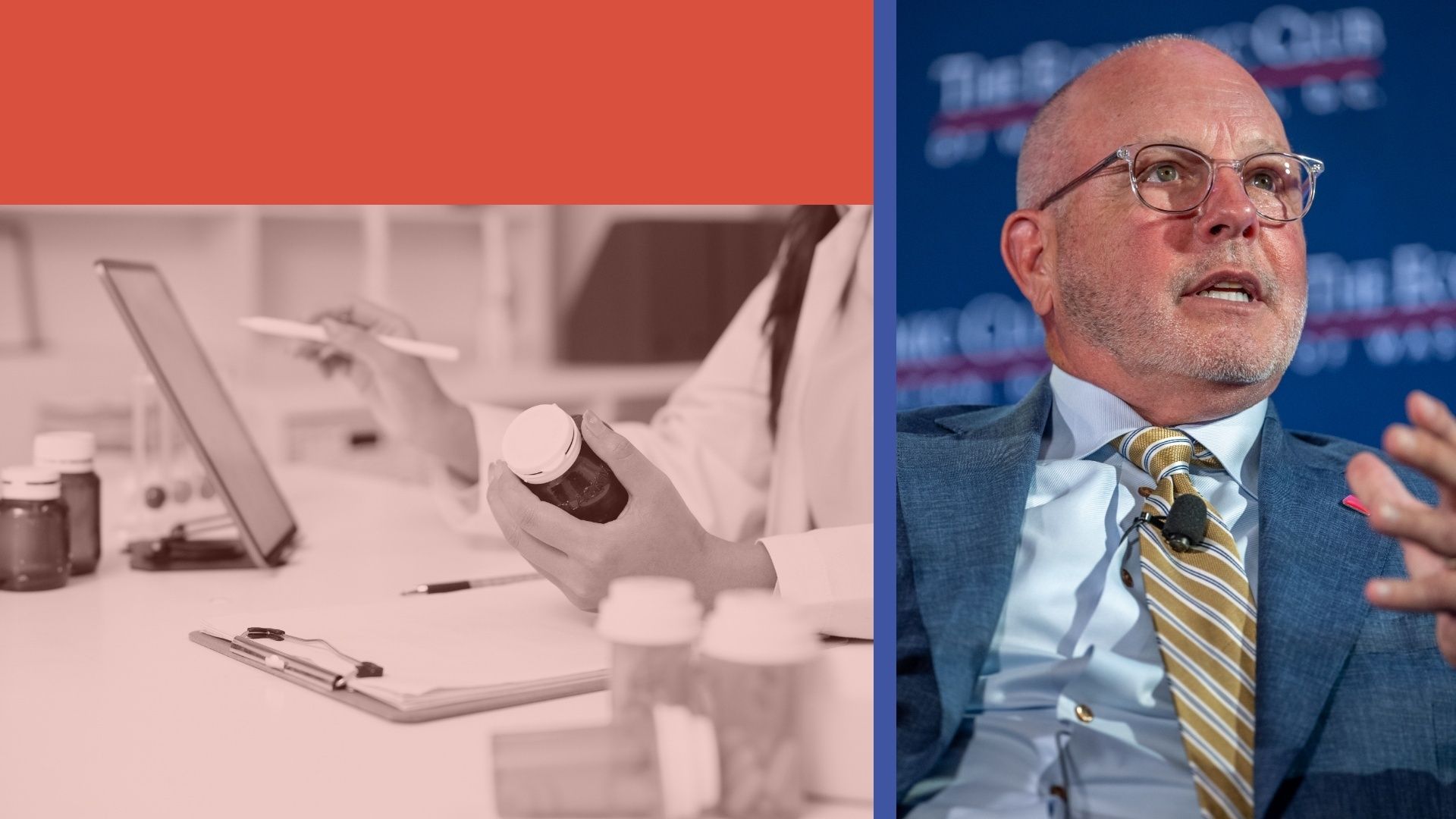
Photo collage: Sarah Grillo/Axios. Photo: Daniel Heuer/Bloomberg via Getty Images
CVS Health is betting it can drive customer engagement with an AI assistant it developed with Google to help schedule checkups, fill prescriptions and check what insurance covers.
Why it matters: As the biggest names in health care rush to build AI agents to serve as trusted guides to an increasingly fragmented system, CEO David Joyner is betting the new Health100 platform can become the industry standard, regardless of where people get their care.
State of play: The tool is part of an extensive turnaround the health care giant has launched under Joyner. He's gained attention for shoring up the finances of CVS' insurance arm Aetna by exiting Affordable Care Act marketplaces and rebuilding its leadership team.
- Behind the scenes, the company over the past 18 months overhauled the digital infrastructure connecting its insurance, pharmacy and providers to lay the groundwork for Health100, Joyner told Axios.
- Federal rules are making it easier to share medical data, fundamentally changing how consumers navigate the health care system and helping different systems talk to each other, he said.
- "Interoperability is not that far away," he said.
What we're hearing: Joyner told Axios the company will evaluate its ability to be a 24/7 health care partner with a small test group of customers before expanding access later this year.
- The platform uses Google Cloud's AI to link existing apps and offer an agent to help with patient-specific tasks. Terms of the companies' arrangement haven't been disclosed.
- "It's always on, and as it learns more about the person and is grabbing all the data across the system, [patients get] their own personal health record with an agent that sits on top of it helping them make sense of it all," Joyner said.
- For example, a diabetic patient could get a notification that their blood sugar is trending higher, receive a reminder to refill their insulin before leaving town, schedule an overdue eye exam and get alerted that a lower-cost medicine is available.
Between the lines: For now, the Health100 platform is only available to CVS customers. But Joyner said it could become a gateway for competing pharmacies, providers or insurers trying to connect with patients.
- "We're at a point where the government is encouraging interoperability, so there's a race to figure out now what to do with all the data," he said. "Is it the technology companies that are going to organize it, or is it the health care companies?"
- Joyner said CVS believes its long-standing relationship with consumers gives it an advantage. "I like our chances of being able to engage that consumer and that patient differently," he said.
Reality check: Health companies have spent years trying and largely failing to get consumers to regularly use apps.
- And CVS is counting on consumers to trust it as a custodian of more personal information despite regulatory and antitrust scrutiny over its vertically integrated business model.
- CVS has grown from a pharmacy chain into a colossus that can influence insurance coverage, pharmacy services, primary care and more.
- It's also not clear whether CVS can persuade rival pharmacies and insurers to share data through its platform as many pursue their own AI strategies. Amazon launched its own agentic AI tool for consumers in March, and OpenAI and Anthropic rolled out their own health offerings.
Joyner insists the vision is not far-fetched. Unlike most competitors, CVS already sits at multiple points in patient care.
- "We are the largest pharmacy in the country, and we've got 90-plus million people that are going to, we hope, use the service. The customer is going to expect it."
What's next: Health agents have arrived and will continue to proliferate.
- The question may be whether patients want a single company to organize their health information — and who they trust.
