Zoox's big bet on robotaxis starts in Las Vegas

Add Axios as your preferred source to
see more of our stories on Google.
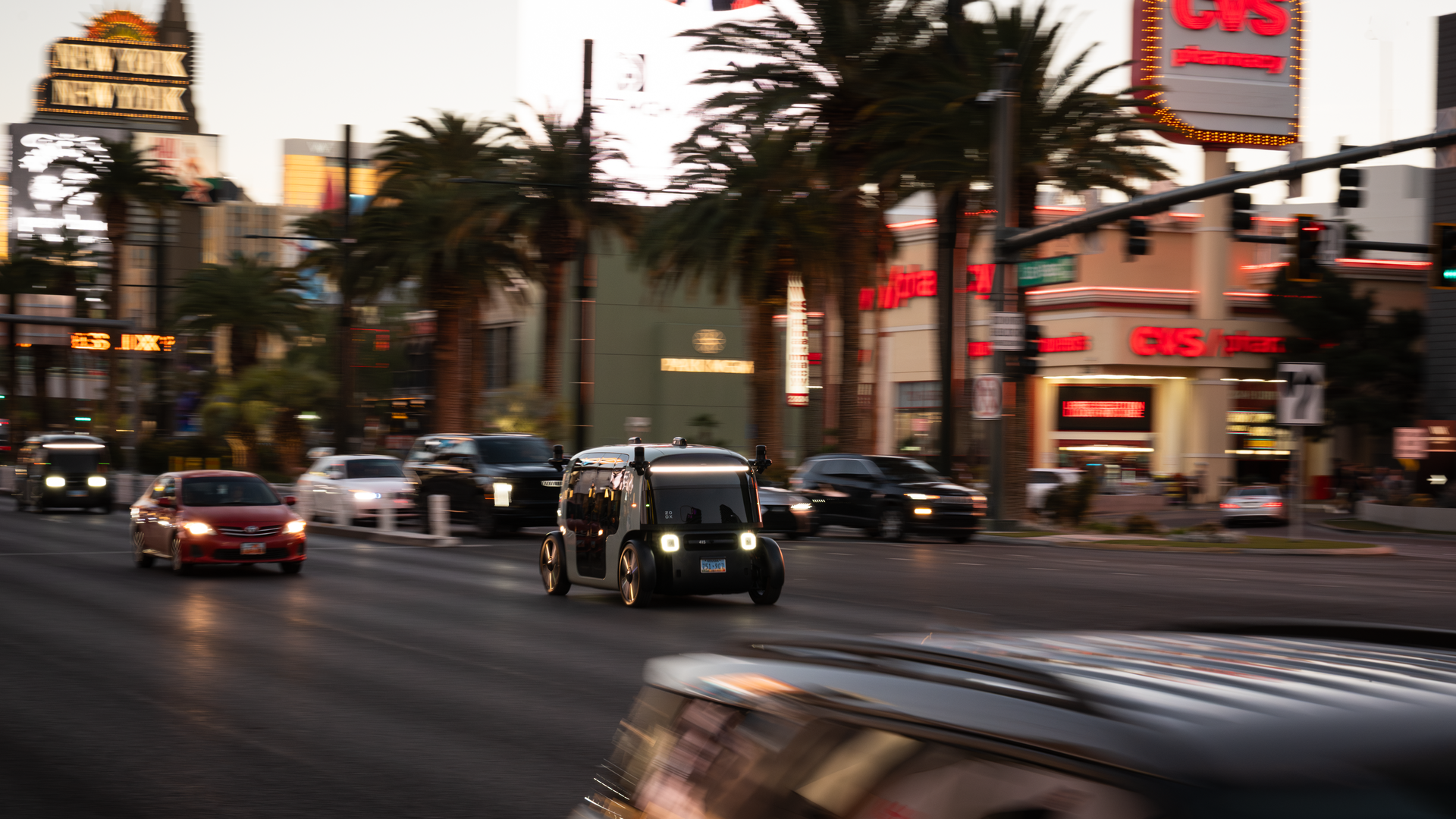
Zoox's commercial service begins next week in Las Vegas. Photo: Courtesy of Zoox
Amazon-owned Zoox is about to start scaling its robotaxi service after federal regulators last week cleared it to charge for rides in its driverless vehicles with no steering wheel or other human controls.
Why it matters: Zoox and Amazon are playing the long game, betting a purpose-built vehicle and a self-sufficient business model can crack a market that's become almost synonymous with Waymo.
The big picture: Zoox has chosen a harder path than other mobility providers.
- While Waymo and Uber increasingly lean on partners to build vehicles and service fleets, Zoox is designing its own vehicle, manufacturing it, operating depots and controlling nearly every aspect of the customer experience.
- That could result in a more lucrative profit haul down the road, but the risk is that it multiplies the number of things Zoox has to get right.
Driving the news: Starting Monday, Zoox says it will begin charging fares in Las Vegas, after receiving a critical exemption last week from federal regulators for its purpose-built robotaxi — required because they don't have steering wheels, brake pedal and mirrors, controls normally required for human drivers.
- Collecting payments is an important milestone for Zoox as a business, and comes less than a year after the company launched its free service to the public in Las Vegas.
- Since then, Zoox's custom robotaxi has driven more than 3 million miles on public roads and carried nearly 1 million riders across Las Vegas, San Francisco, Austin and Miami.
- By comparison, Waymo robotaxis have driven more than 220 million miles and log about 500,000 trips per week across 11 cities.
Zoom in: Instead of turning an existing car into a robotaxi, Zoox designed its friendly-looking, toaster-shaped vehicle from scratch.
- It's bidirectional — meaning there's no front or rear — and it features carriage-style seating and wide symmetrical doors that open only on the safest side of the street.
- Interior cameras automatically check whether a vehicle is clean before sending it to another rider, and the system alerts riders if they leave a phone or coffee behind.
- With ZooxCast, riders can pair their phone once via Bluetooth, and then every time they hail a ride, their Zoox will recognize them.
- Another app feature, Find My Zoox, lets riders select distinct lighting and sound cues to help identify their specific robotaxi in crowded pickup zones.
What they're saying: "Because we're vertically integrated, we can do things that other companies can't," Jesse Levinson, co-founder and CTO, told Axios during a tour in San Francisco recently in a Zoox.
State of play: Others have opted not to do it all, finding it's better to focus on their specialty, given the huge capital expense of standing up a large-scale robotaxi service.
- Waymo, for example, buys cars from Jaguar, Geely and Hyundai, and outfits them with its proprietary self-driving tech. And it lets fleet management partners operate its depots.
- Uber's robotaxi strategy is also heavily dependent on partners, while AV developers like Nuro and Wayve license their self-driving technology to carmakers.
Tesla's integrated approach with Cybercab is similar to Zoox, but it starts with almost two decades of manufacturing experience and 9 million cars already on the road.
- Zoox hopes to build 10,000 robotaxis a year someday. So far, it's built a little more than 100.
With Amazon's backing, however, Zoox executives are confident they'll get there.
- "Zoox is going to be basically [spending] double-digit billions to scale the technology," Levinson said, adding that Amazon, which bought the company in 2020 for $1.2 billion, understood that the project would take more time and capital than Zoox itself projected.
- "They love the purpose-built robotaxi," he said. "They would not have bought us if we didn't have the vehicle. It wasn't like just a pure technology play...it's a whole new market for their customers that they've never played in before."
What we're watching: Amazon has long characterized Zoox as a long-term investment. Like other tech giants, however, it has ramped up AI spending significantly in recent years on things like data centers, chips and power.
- Amazon did not respond to a request for comment on Levinson's remarks.
The bottom line: Ultimately, the payoff for Zoox — and Amazon — depends on how quickly it can ramp up production and deployment to amortize that investment across a huge fleet of vehicles.
