Wildfires become a grid planning challenge

Add Axios as your preferred source to
see more of our stories on Google.
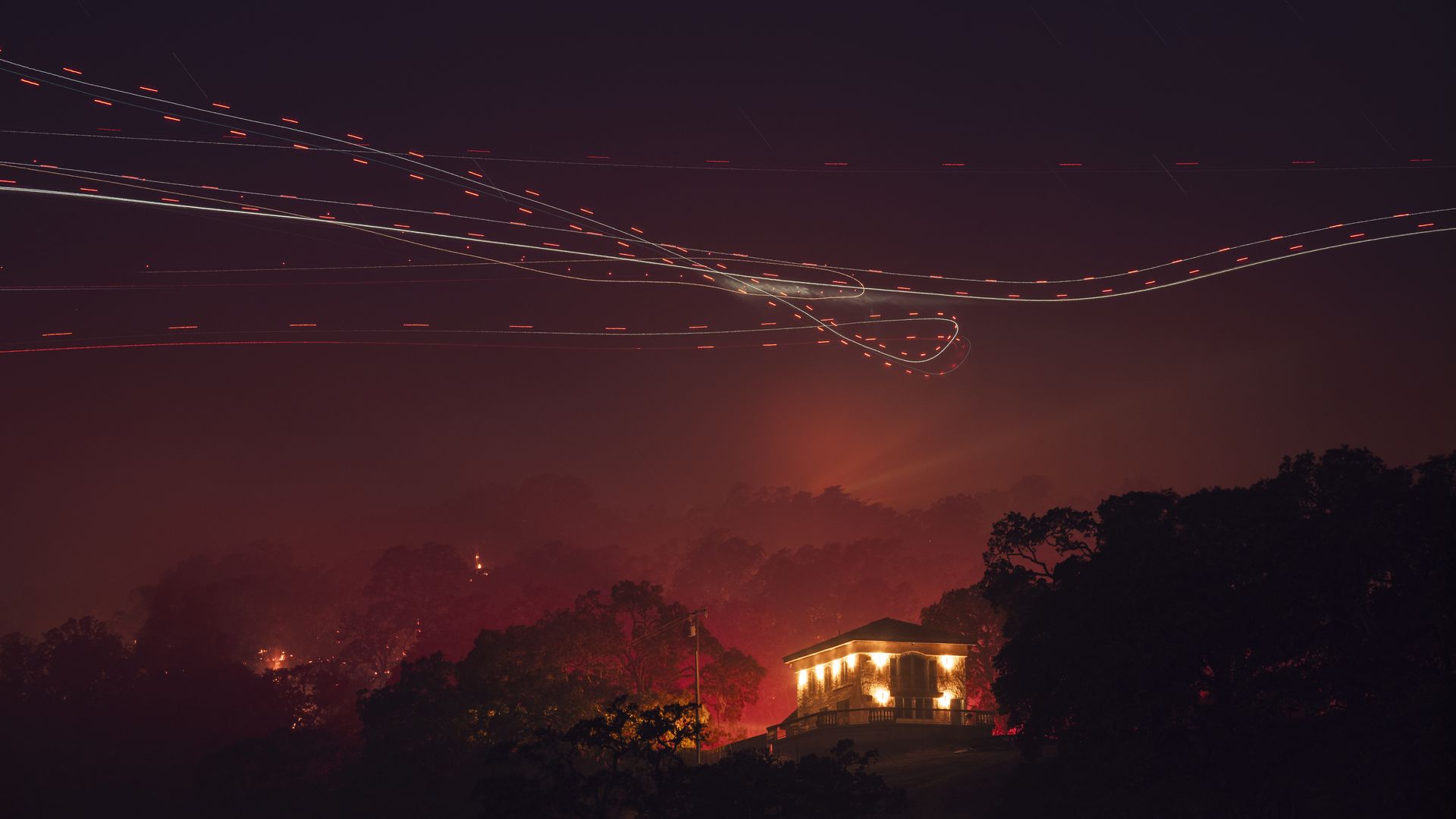
The Feliz Fire near Hopland, California, on Aug 1. Photo: Stephen Lam/San Francisco Chronicle via Getty Images
Years of destructive fires are forcing utilities to prioritize wildfire resilience as they plan the next generation of the U.S. electric grid.
Why it matters: Utilities aren't just expanding the electric grid — they're designing it to withstand a more fire-prone climate.
- This year's wildfire season is exceeding the 10-year average for both the number of fires and acres burned.
The big picture: The U.S. is embarking on one of the biggest grid expansions in decades just as wildfire risk is becoming a defining challenge for utilities. Today's planning decisions may determine how resilient tomorrow's grid becomes.
- Utilities are combining weather models, wildfire behavior, infrastructure data and population impacts to help prioritize resilience investments, Nadia Panossian, an electrical engineering researcher at the National Laboratory of the Rockies, tells Axios.
- Undergrounding — burying power lines underground — can also improve resilience to hurricanes, winter storms and other hazards, Seth Guikema, a University of Michigan professor of civil and environmental engineering, tells Axios.
- He says utilities also have to manage aging infrastructure, which in many cases is "the bigger challenge than building new."
State of play: Wildfires are already affecting how utilities operate.
- They disrupt the power system by damaging equipment, forcing utilities to cut power, and reducing solar generation when smoke blocks sunlight.
Yes, but: Preventing outages is no longer enough. Utilities now have to incorporate wildfire resilience into grid projects.
Case in point: California was one of the first states to require investor-owned utilities to publish wildfire resilience plans, Panossian says.
- Other states have adopted similar approaches as wildfire risk grows.
- Panossian says utilities are moving beyond "basic minimum maintenance" toward longer-term upgrades that account for future wildfire risks.
- Some California utilities are already experimenting with microgrids that can disconnect from the main grid and keep supplying power during outages as wildfire risk grows, Guikema says.
- But those investments "can be cost-prohibitive — and that's the challenge," he adds.
Catch up quick: Utilities have already learned costly lessons about wildfires.
- California utilities have spent billions on wildfire mitigation.
- PG&E emerged from bankruptcy after Camp Fire-related liabilities.
- Utilities across the West now conduct public safety power shutoffs. "They shut the power off because you'd rather have a short-term power outage than a catastrophic fire," Panossian says.
What we're watching: The grid is poised for a major expansion. The U.S. needs thousands of miles of new transmission to connect renewables, storage and data centers.
- Much of the U.S. grid also needs to be replaced. As utilities evaluate those upgrades, Panossian says, they're looking for opportunities to build wildfire resilience into those projects.
- Guikema says utility planning is, in many ways, a cost-risk trade-off. "How much are we willing to increase our utility rates to do undergrounding and things like that?" he says.
- In some cases, he says, regulators — not utilities — are limiting resilience investments because of cost concerns.
The bottom line: California has shown utilities what wildfire planning looks like. As wildfire risk spreads beyond the West, those lessons are shaping how the next generation of the U.S. grid is built.
Go deeper: Federal lab cuts could hamper fire forecasting efforts
