A new class of delivery bots heads to campus

Add Axios as your preferred source to
see more of our stories on Google.
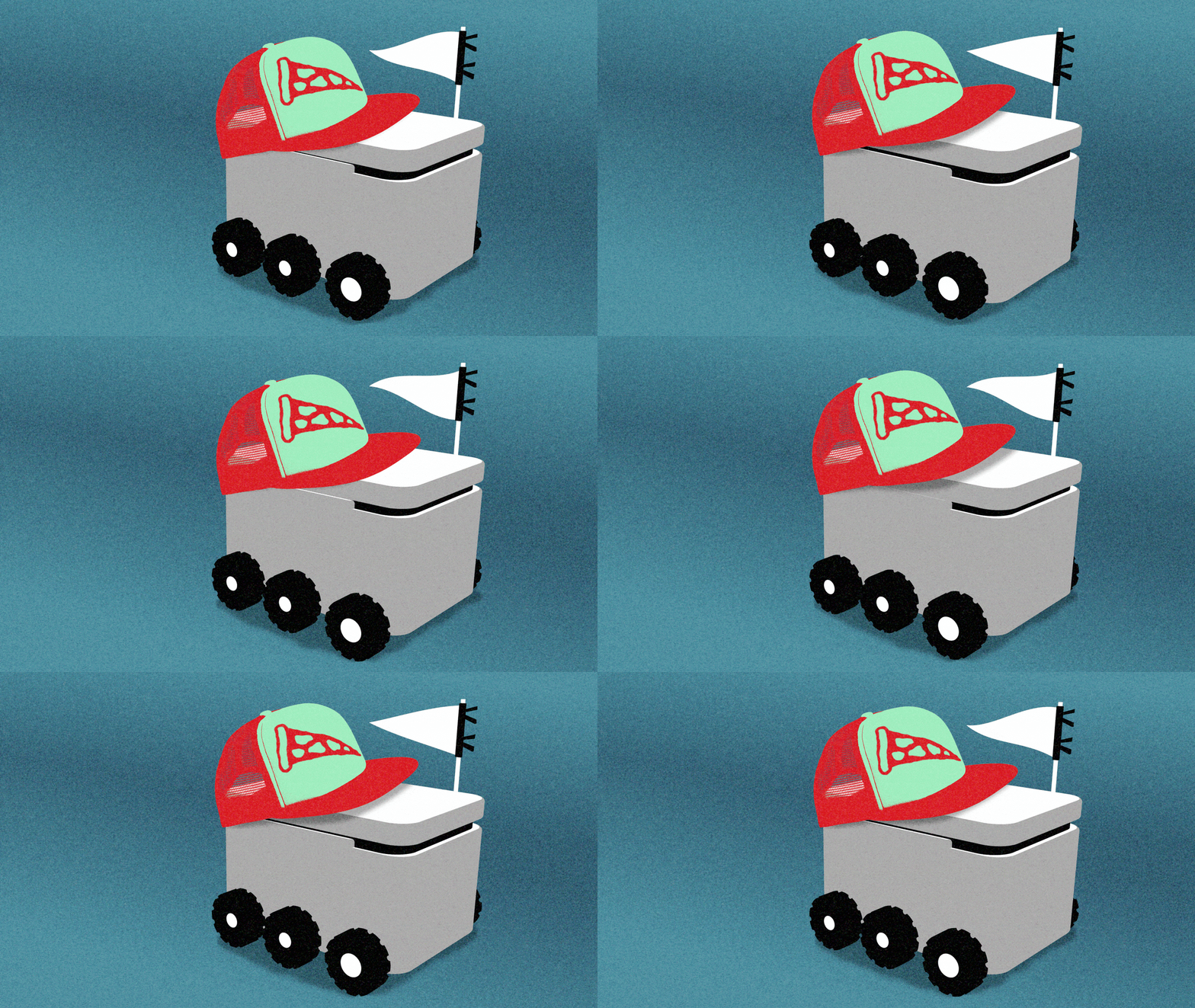
Illustration: Brendan Lynch/Axios. Stock: Getty Images
A new cohort of fresh-faced delivery robots is arriving on college campuses this fall after the leading incumbent graduated last spring to chase bigger ambitions in the real world.
Why it matters: Students and universities have come to love the futuristic porters of lattes, pizza and late-night snacks, while robotics companies get something far more valuable: a chaotic, real-world proving ground for physical AI.
Driving the news: Starship Technologies, which pioneered college robot delivery at George Mason University in 2019 — expanding later to 67 campuses — announced in May it was shifting its U.S. focus to more lucrative grocery deliveries.
- Universities already accustomed to the roving robots moved swiftly to recruit replacements, some of whom had already been eyeing campus delivery.
Between the lines: College students are a surprisingly good test audience for delivery robots.
- They're hungry at weird hours, impatient, tech-friendly and living in a compact environment where walking 15 minutes for dinner can feel like an intolerable burden.
- When school is in session, campuses offer exceptionally high order volumes and high turnaround rates, said a spokesperson for Avride, one of companies stepping in to fill the void left by Starship.
State of play: Avride operated robots on four campuses last year. Now it's adding 21 that were previously served by Starship.
- Robot.com just signed a seven-year agreement with food service company Sodexo to expand its autonomous delivery across Sodexo-managed campuses.
- Cartken and Coco Robotics are smaller players on campuses.
How it works: At many schools, students have the option of ordering from campus restaurants through Grubhub or similar platforms, using their meal-plan dollars or other university accounts.
- On a growing number of campuses, robots are the preferred method of delivery, both for cost and safety reasons, officials tells Axios.
By the numbers: Grubhub has quietly become a major piece of the college dining infrastructure, partnering with more than 360 universities and serving more than 4.5 million students.
The Ohio State University, a Grubhub partner that relies on an army of 125 Avride robots, saw nearly 235,000 robot deliveries to campus-run buildings during the 2025-2026 academic year.
- A daily record 2,054 deliveries occurred on Jan. 23, 2026, ahead of a winter storm.
- Typically, it sees about 1,500 deliveries a day, said Nate Darder, the associate director of administration and planning for dining services.
Bowling Green State University, about 115 miles northwest of OSU, switched to Avride this fall after having Starship robots on campus for five years.
- The new robots are much larger — capable of carrying a stack of five or six large pizzas — and should be safer because the technology is identical to Avride's robotaxis in Texas, says Jon Zachrich, the director of marketing, communications and technology for BGSU Dining.
Reality check: There's a problem with the college market though: Students keep going home for breaks, and campuses empty out during summer months.
- Starship figures its robots got only about seven months of work a year on college campuses, versus year-round demand for urban grocery delivery.
- That's a big reason why the company switched strategies, Valentin Naidja, Starship's senior vice president of revenue, tells Axios.
Follow the money: "The whole game is, like, how many deliveries can you do per robot?" Naidja said. "Obviously, if you do 15 deliveries per day per robot for 12 months, it's much better than doing 12 or 13 for six months or seven months, right?"
- Starship wants to be "a billion-dollar company" and sees dramatically more growth ahead in groceries.
What we're watching: Delivery companies' ambitions could run into a new U.S. rule restricting new foreign-made robots.
- Avride's robots are built in Taiwan, for example, and Starship's are built in Estonia.
- Naidja says complying with new U.S. sourcing and assembly requirements could make the already-challenging economics of robot delivery unworkable.
- "This might make the business unprofitable for everybody," he said, calling it "an issue for every robot provider right now."
The bottom line: For now, however, an incoming class of robots are getting a valuable education in delivery.
