Global disruptions mean booming refinery profits

Add Axios as your preferred source to
see more of our stories on Google.
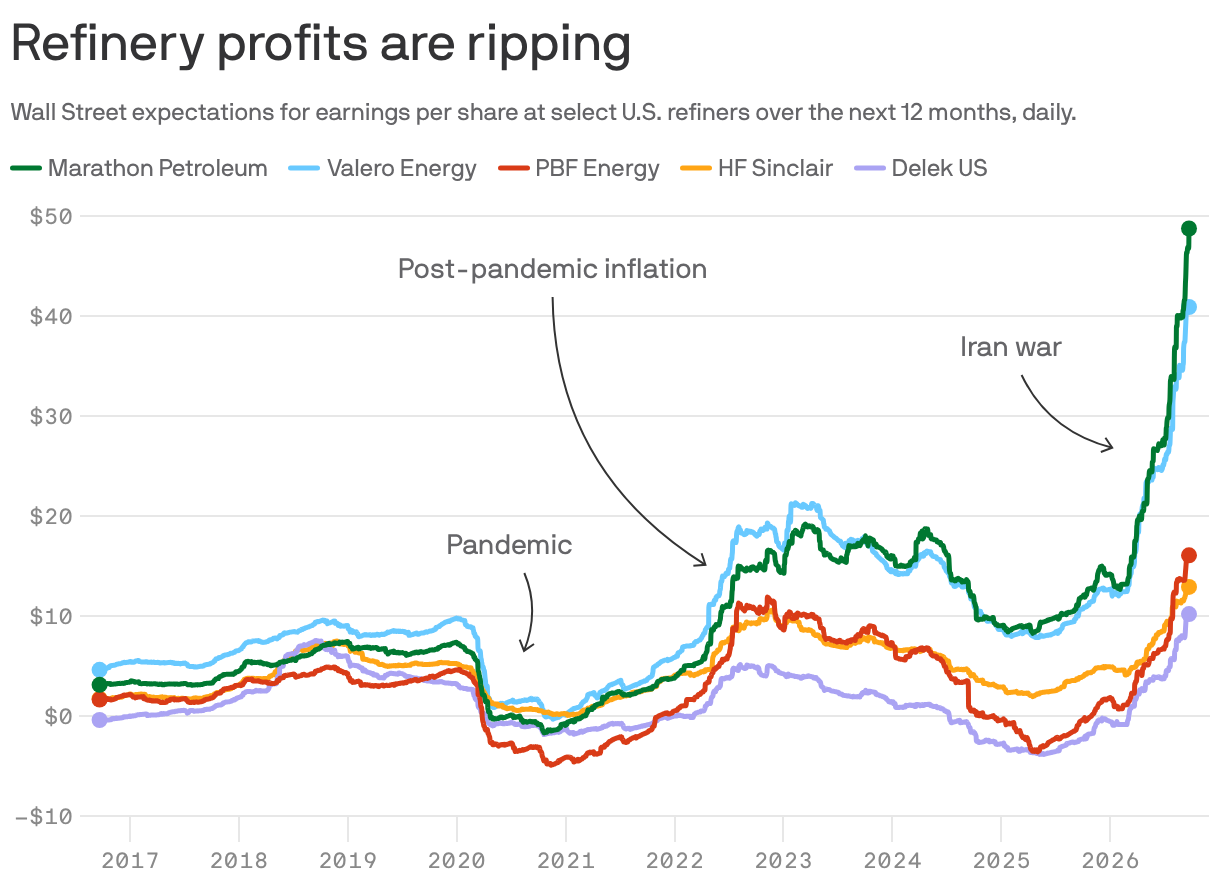
The global scramble to secure fuel supplies — diesel, above all — is supercharging profit expectations for refineries.
Why it matters: While painful at the pump, surging fuel prices have made refinery stocks a bright spot for the market.
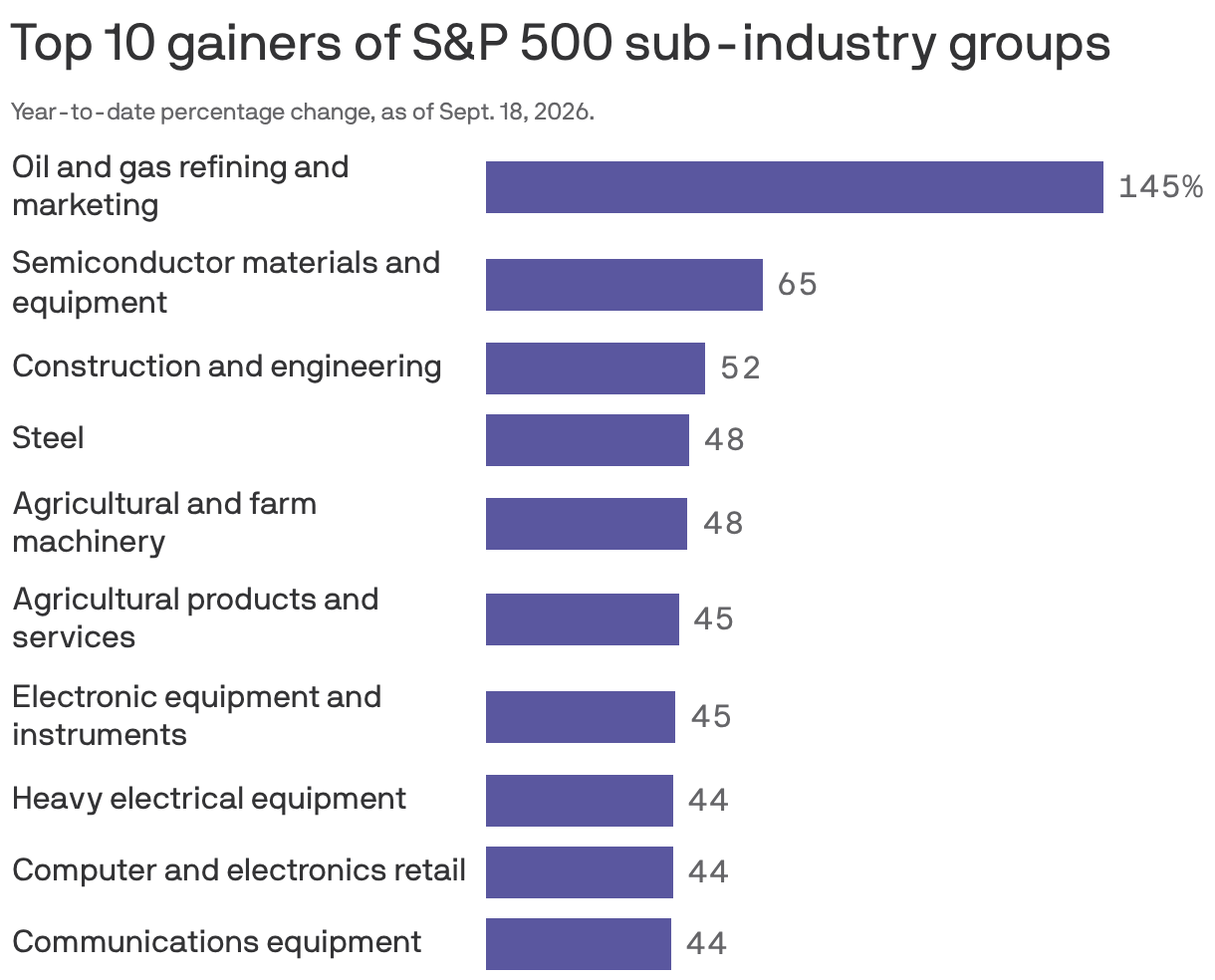
- Of the 126 subindustry groups represented in the S&P 500, oil and gas refining and marketing is by far the best performer of 2026, rising 145.4% through Friday's close, according to FactSet data.
The latest: Crude oil prices fell Monday, but prices for key refined products such as diesel, gasoline and jet fuel pushed higher, reflecting the shortages in refining capacity.
- Diesel continued to set records, with AAA saying the national average retail price for diesel fuel Monday hit an all-time high of $6.51 per gallon.
Catch up quick: Ukrainian attacks have damaged significant chunks of Russian energy infrastructure in recent months. Russia — traditionally a large exporter of diesel — responded by banning exports.
- Elsewhere, strikes on refinery infrastructure throughout the Persian Gulf have taken significant amounts of the region's refining capacity offline.
- Those outages, along with cuts to refinery production resulting from difficulties of getting fuel out of the gulf, have sharply reduced product availability.
- The shortages led China to restrict exports of key fuels for months as a result of the Iran war. (Though it has recently relaxed some of those restrictions, with exports bouncing, Chinese officials are reportedly considering whether they should be reimposed.)
- In the U.S., politicians seem open to similar export bans, as industries like trucking and agriculture are increasingly vocal about the pain created by high diesel prices.
By the numbers: Earlier this month, Bank of America analysts estimated that roughly 7% to 8% of global refining capacity was offline as a result of such drivers.
- Excluding the pandemic period, that's the highest level of offline capacity globally in the last 40 years, they wrote.
What they're saying: Prices of refined products will likely stay high for a while, relative to crude oil.
- "While we are mindful of the strong equity performance, we believe estimate revisions will continue to be positive and support further share strength," Goldman Sachs analysts wrote of U.S. refiners on Monday.
- "We believe refining margins are likely to remain elevated for longer, with normalization unfolding at a slower pace than generally expected," UBS analysts wrote earlier this month.
The other side: Bank of America analysts sounded slightly less confident that high levels for refinery margins — known as "crack spreads" or "cracks" — are durable.
- "While an uptick in mid-cycle cracks is warranted if some of the downed refining capacity in Russia/Middle East does not return, most experts currently believe that if the drone strikes cease, most can be brought back fairly quickly, making it hard to underwrite that large of a step up, in our view," they wrote.
What we're watching: Venezuelan crude oil production and exports, which could lower prices for the heavier, sour grades of crude that many U.S. refineries are optimized to use.
- If it lowers input costs, an influx of Venezuelan crude could keep U.S. refinery profits fat and stock prices high, even if prices at the pump decline a bit.
