How AI could change the workforce

Add Axios as your preferred source to
see more of our stories on Google.
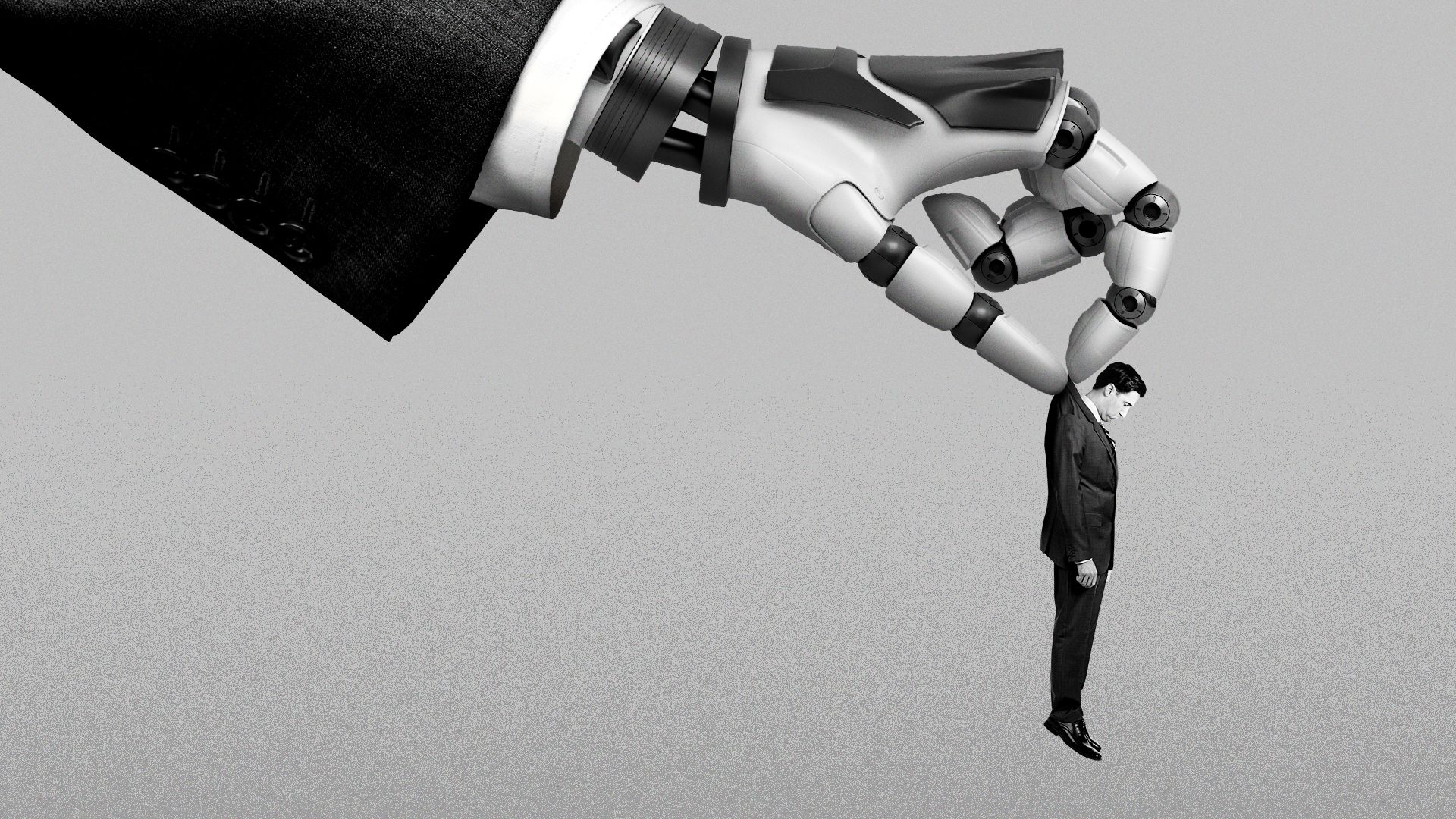
Illustration: Allie Carl/Axios
Roughly 11 million American workers — about 7% of the current labor force — might need to change occupations over the next decade, as the economy adapts to the AI era, per a new analysis from the McKinsey Global Institute out Tuesday.
The big picture: New technologies have always transformed the way people work, but the AI workforce transition could happen at three to four times the historical pace, they write.
By the numbers: The analysis estimates that 770,000 workers per year might need to switch their occupations — the long-run average is about 215,000.
- The U.S. got a little taste of what that was like in the pandemic years, the researchers point out — the rate then was about 788,000.
- Those who don't switch jobs will see their work transformed by AI: About 70% of U.S. workers will have to do some level of role reinvention, the report finds. (Anyone who lived through the rise of the internet might recall what that's like.)
Zoom out: "We will see new jobs and new roles and a reshaping of roles that emerges, just like other general-purpose technologies did in the past," Anna Kortis, a partner at McKinsey, who coauthored the report, tells Axios.
- "But this will happen faster and at a bigger scale than in the past."
Between the lines: Fast, disruptive technological changes can spill out beyond the workplace, triggering political and cultural changes with far-reaching consequences.
- You can draw a line from the Industrial Revolution to widespread labor unrest and union organizing.
Where it stands: Workers are anxious about the changes coming — employee confidence fell to a new record low in September, according to Glassdoor data out Monday.
- AI was a common source of that worsening anxiety. Mentions of AI in employee reviews were up 164% from last year.
Flashback: More than a year ago, Anthropic CEO Dario Amodei predicted that half of all entry-level white-collar jobs would vanish in the wake of AI transformation within one to five years and drive the unemployment rate to between 10% and 20%.
- So far, nothing like that broad collapse has happened.
What to watch: The unemployment rate was 4.1% in August — we'll get fresh data on the job market this Friday.
The bottom line: Instead of an all-out job apocalypse, a more nuanced picture is emerging: There may be enough jobs, but millions of workers could have a difficult path to landing them.
