Why Washington and Tehran keep talking past each other

Add Axios as your preferred source to
see more of our stories on Google.
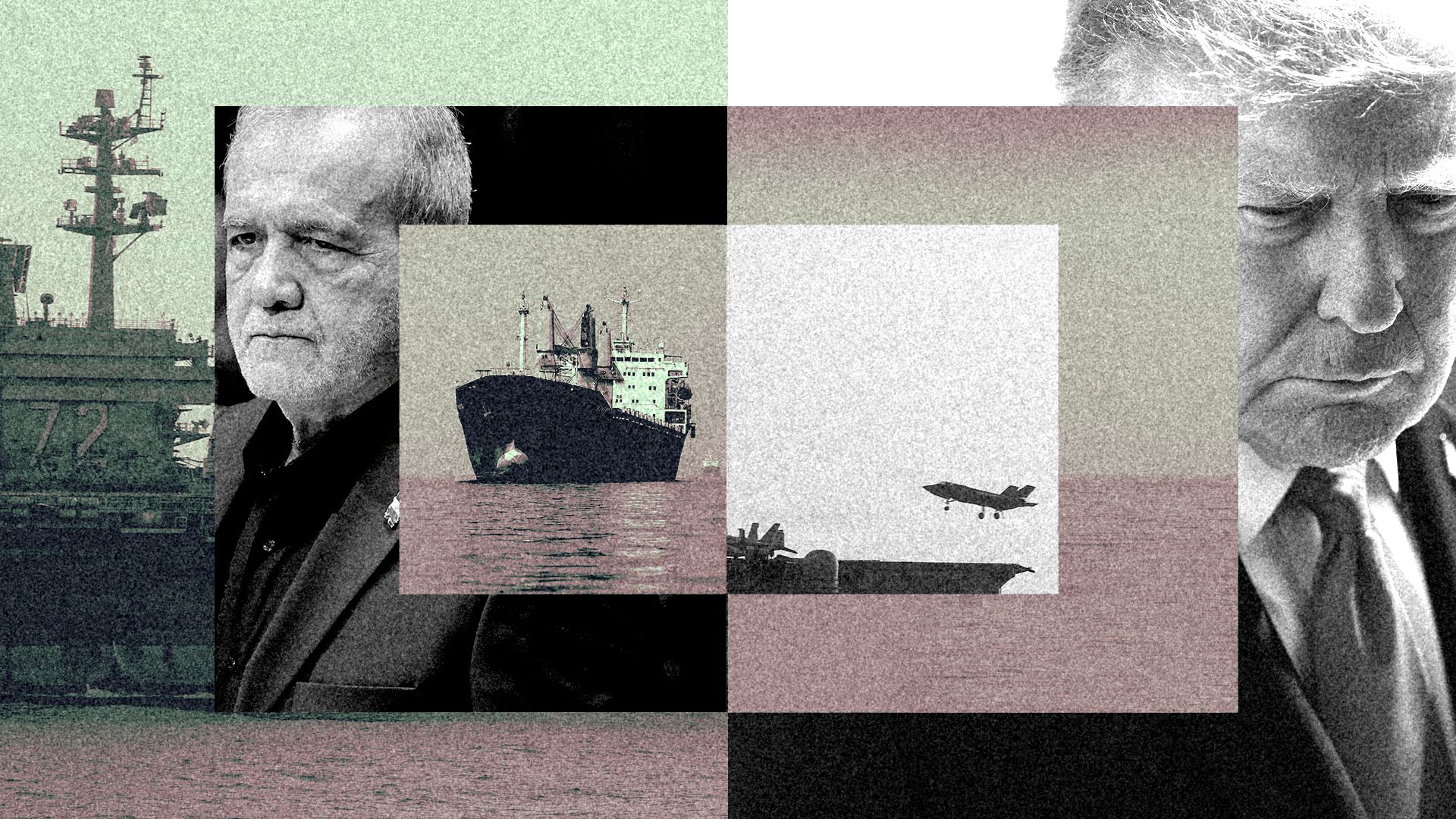
Photo Illustration: Brendan Lynch/Axios. Photos: Getty Images
The Trump administration and the Iranian regime both say they prefer a diplomatic solution to the war, but a deal looks more elusive than ever.
- The root causes of the impasse may be irreconcilable.
Why it matters: In the last 18 months, two failed rounds of negotiations have led to two wars. The June MOU collapsed within days and led to renewed escalation. If the current effort to reach a diplomatic breakthrough ends in a deadlock, another outbreak of fighting is likely within weeks.
Here's a look at some of the deep-seated dynamics between the two countries — personal, cultural, and political — that have stymied efforts to broker a deal:
"Trump has ADD; Iran has OCD"
One reason for the failures is that the U.S. and Iran see the timeframe for negotiations very differently. Trump is all about getting a quick deal — he gets impatient and frustrated when things move slowly. The Iranian negotiation style is the complete opposite. They are all about playing for time.
- "America under Trump is the attention-deficit superpower ... incapable of sustaining a strategy. Iran under the Islamic Republic is the obsessive-compulsive theocracy, fixated on resisting America far more than advancing the welfare of its own people," Karim Sadjadpour, a senior analyst at the Carnegie Endowment, told Axios. "Trump has ADD; Iran has OCD."
- For example, in April 2025 Trump set a deadline for negotiations at 60 days — an extremely short and unrealistic timetable. The Iranians, on the other hand, saw the negotiations as a longer process and didn't take the deadline seriously enough. They didn't think Trump meant it when he said 60 days.
- The negotiations in February of this year were even shorter — around three weeks. The chances of getting a deal that quickly were close to zero.
A megadeal vs. a narrow truce
Trump loves a splashy show of political theater, with him cast as lead actor. He envisions a legacy-making accord that redefines the relationship between the U.S. and Iran and reshapes the Middle East.
- The Iranians prefer a narrow, transactional deal that's negotiated indirectly — or with the lowest public profile possible. They view any deal as a truce rather than a peace agreement.
- "Trump and his negotiators pride themselves on being dealmakers. In Iranian political culture, the word for compromiser — 'sazeshkar' — is practically a slur," Sadjadpour said.
- He added: "Iran's leaders were never willing to meet with Trump directly. Had they been willing to do so, I think the outcome of events could have been very different. Trump wants to resolve the conflict; the Islamic Republic's entire identity is premised on continued confrontation with the U.S."
A matter of mistrust
The fundamental impediment in the negotiations is mistrust.
- The Iranians claim Trump cheated them twice when he attacked them in the middle of negotiations.
- Many inside the Iranian regime think any negotiations with the U.S. are just a ruse to mask preparations for a surprise attack.
- The U.S. side counters it was Iran that cheated when it violated the June 2026 memorandum of understanding, by attacking ships in the Strait of Hormuz days after signing the deal.
- U.S. officials say that they can't count on the Islamic Revolutionary Guard Corps or other radical elements inside the regime to abide by any deal they negotiate with more pragmatic members of the regime.
Domestic pressure
The negotiations are a fraught domestic political issue for both sides.
- Iran's negotiating team and others inside the regime who support a deal have come under constant attacks back home. It's pushed them to take a harder line in talks.
- Trump and his negotiators are getting pressure from the right not to cut a deal — and mocked by the left for potentially accepting one that either restores the pre-war status quo or resembles President Obama's 2015 nuclear deal.
- That kind of criticism made Trump pull back from more moderate positions he took several times over the last 18 months, including earlier this week.
What to watch: White House envoys Steve Witkoff and Jared Kushner and Vice President Vance still think diplomacy is worth pursuing. But Trump seems much more skeptical.
- In an interview with Time magazine published on Thursday, he said what Iran is ready to do "is not good enough" for him.
- "With Iran, I don't think you could ever have peace," he said, reiterating that he's considering resuming major combat operations after the midterms.
- Iranian President Masoud Pezeshkian on Thursday defended the negotiations with the U.S.
- "We have never and will not run away from dialogue, although the U.S. targeted our country three times despite having signed the agreement," he said, referring to the June MOU. "The U.S. should get rid of the idea that it would bring us to our knees through terror."
- But other Iranian officials, especially inside the IRGC, think negotiations are useless and that the only way to end the war is by inflicting more costs on the battlefield.
What they're saying: "Iran is adopting a strategy toward the United States defined by escalation and continuous offense," Mohammad Ayatollahi Tabaar, associate professor of international affairs at Texas A&M University's Bush School of Government and Public Service, writes in a new Foreign Affairs article.
- "[The regime] is clear about what it wants — the removal of all U.S. forces from the region — and it is prepared to remain indefinitely on a wartime footing to get it."
