Meta joins Big Tech's negative free cash flow club

Add Axios as your preferred source to
see more of our stories on Google.
Mark Zuckerberg's Meta got smacked around Thursday after reporting earnings that looked pretty strong at first glance.
Why it matters: Its drubbing in the stock market — Meta ended down 7% —suggests that investors are growing concerned that Big Tech's insistence on pouring more and more capital into data centers could end up costing them in the long run.
Catch up quick: Meta's revenue and adjusted earnings beat Wall Street estimates, but the company also raised the bottom end of its guidance for capital spending this year and deferred offering any guidance for 2027.
- "We expect to continue investing aggressively," the company said.
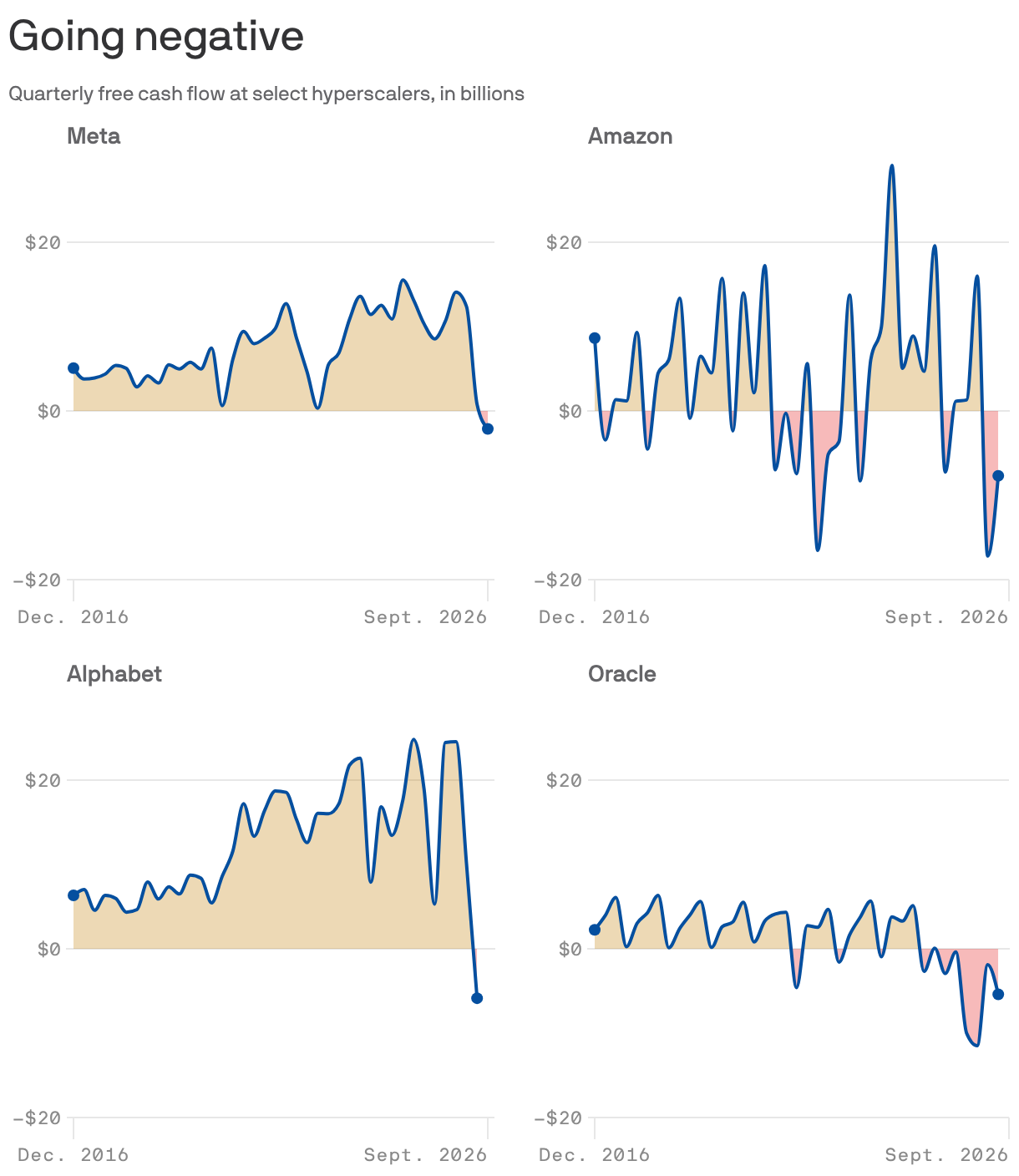
Zoom out: Meta's spending jag has fundamentally transformed the company's cash flow dynamics, turning it from one of the greatest cash generators in the history of corporate America into a company that actually had negative free cash flow in the third quarter.
- Of course, it's not alone. The AI buildout has had a similar impact on other hyperscalers, as you can see from the chart above.
Reality check: None of this suggests Meta's bank account is getting dangerously low. (The company reports that it has over $82 billion in cash and marketable securities socked away.)
Yes, but: It is creating a new class of shares that it can use to raise more money, without weakening founder Zuckerberg's control of the company.
- And while Meta didn't announce any plans for new capital, a decision to do so could dilute the economic value of the shares that existing holders already own.
- Alternately, the company could borrow in the bond market. But that would also add expense and risk.
The bottom line: The health of the AI boom driving the stock market depends on the continued kindness of capital markets to fund it, so market reactions like this — suggesting growing skepticism from investors — matter a lot.
