Exclusive: Beacon AI's pilot assistant takes flight with Air Force

Add Axios as your preferred source to
see more of our stories on Google.
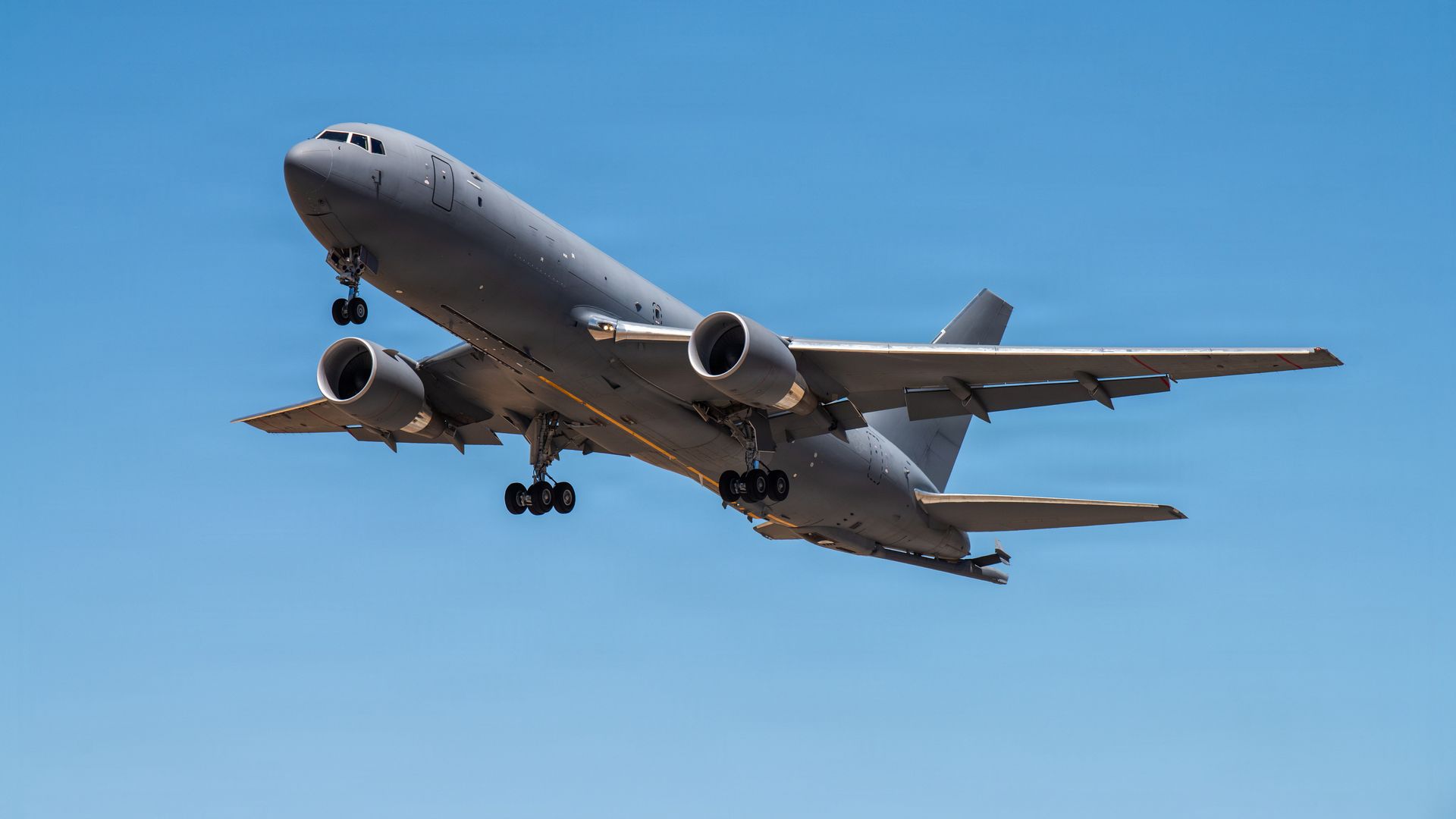
A U.S. Air Force KC-46A Pegasus approaches Travis Air Force Base, California. Photo: Kenneth Abbate/DVIDS
Murdock, a portable pilot assistant made by Beacon AI, has flown on three U.S. Air Force refueler-and-transporter aircraft — advising flight crews and racking up hours and hours of real-world experience.
Why it matters: The California startup is building "R2-D2 for pilots," according to co-founder Matt Cox, a former Navy fighter pilot, and this is a significant step in that direction.
- "These planes are very instrumented. There are thousands and thousands of parameters. We consume it," he told Axios.
Driving the news: Murdock was used aboard five KC-46A flights, beginning with the Emerald Flag drills at Eglin Air Force Base, Florida.
- The work was conducted under a contract with Air Mobility Command and followed an earlier deal with Special Operations Command.
- "Our system is similar to what Tesla Autopilot would be," Cox said, "if it was its own company."
How it works: Murdock pulls data from avionics buses and presents information that helps crews complete checklists and procedures, like taxiing and taking off; plan routes; and keep tabs on personal readiness, including fatigue levels.
- It can be carried onto an aircraft in a Pelican case and operates without modifying flight-critical systems.
- "Our company is very aimed at supporting pilot monitoring," Cox said.
- "The feedback has been, 'Good job. Keep going, go do more,'" he added. "AMC is really leaning in on these connectivity efforts."
Zoom out: The U.S. military has for years sought to augment troops with smart machinery and to predict when, where and how things will break.
Follow the money: Beacon raised $15 million in late 2024. The Series A was led by Costanoa Ventures.
- OpenAI's Sam Altman is among the startup's earliest backers.
What's next: Murdock is expected to fly aboard two additional aircraft: another "big one," Cox said, and one that is "smaller."
- "We want exposure to lots of different things," he said. "In aviation, some stuff happens every 100,000 hours — or every 1,000,000 hours."
Go deeper: Inside Red Flag: U.S. and allies train for future air combat
