U.S. overdose deaths drop 12%, per CDC estimates

Add Axios as your preferred source to
see more of our stories on Google.
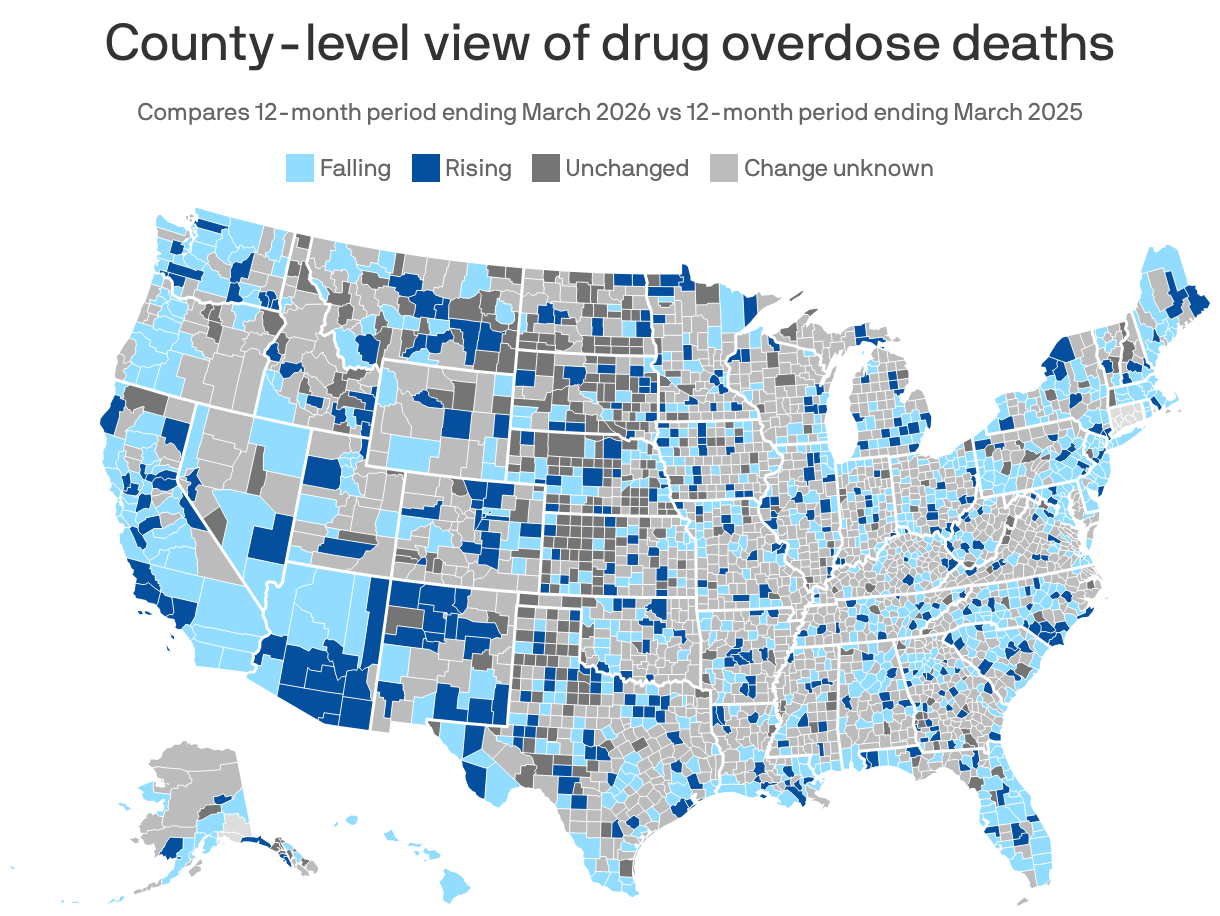
The CDC estimates there were nearly 68,000 U.S. overdose deaths in the year ended March 2026, about 9,500 fewer than the prior year, according to an Axios analysis of provisional data.
Why it matters: The national decline masks a rise in reported deaths in 430 counties, underscoring the crisis' uneven trajectory.
By the numbers: Of the counties where year-over-year changes could be determined, overdose deaths:
- Declined in 842.
- Increased in 430.
- Remained unchanged in 352.
The fine print: The analysis compares deaths in the 12-month periods ending March 2025 and March 2026.
- Trends couldn't be determined in nearly half of counties because the CDC withholds the actual number of deaths in counties with 1-9 deaths.
Zoom in: Several neighboring counties in Arizona and New Mexico endured year-over-year overdose death increases.
- Rio Arriba County, New Mexico, had 173 overdose deaths per 100,000 residents — the highest calculable rate in Axios' analysis of CDC counts and Census Bureau population estimates.
- Baltimore city also remains hard-hit, with a rate of 82 deaths per 100,000 residents.
What's happening: The CDC cites several possible drivers for the national decline, including wider access to the overdose-reversal drug naloxone, expanded addiction treatment, and changes in the illicit drug supply.
- However, the CDC has not quantified each factor's contribution, and Arizona health officials say they are still studying the increases there.
- Nationally, deaths involving fentanyl and other synthetic opioids, methamphetamine and cocaine have all declined, according to CDC data.
What we're watching: Axios Phoenix reported that Arizona's comparably later transition from counterfeit opioid pills to powdered fentanyl might help explain why the state's overdose crisis persists.
The bottom line: The downward trend of nationwide deaths is encouraging, but research and relief are still needed in communities that suffered high or rising tolls in the past year.
