Exclusive: York Space Systems eyes robot maker

Add Axios as your preferred source to
see more of our stories on Google.
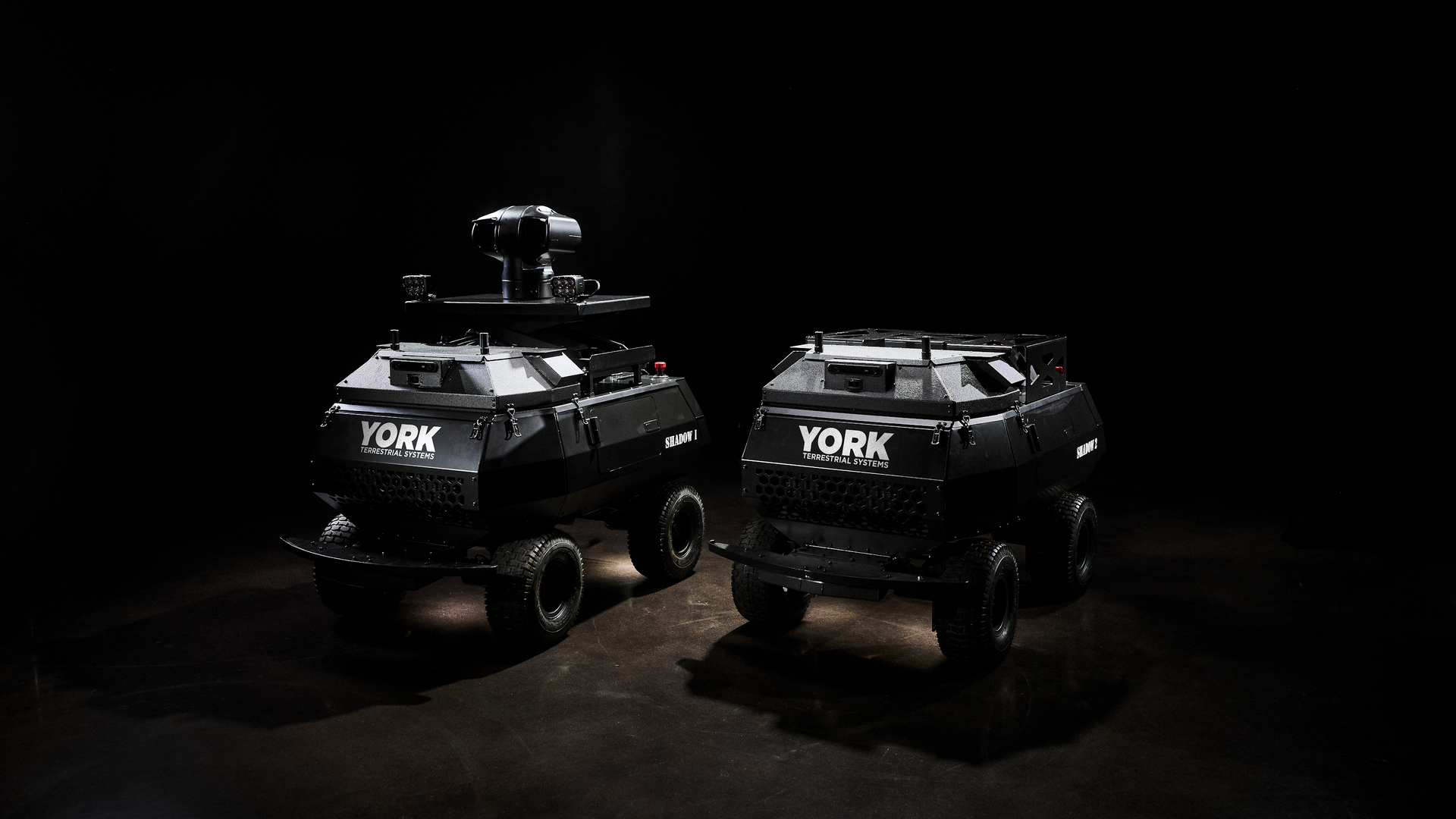
York Space Systems plans to acquire an Australian robot maker. Photo: Courtesy/York Space Systems
York Space Systems is planning to buy an Australia-based robot maker, marking the publicly-traded U.S. company's expansion into unmanned technology.
Why it matters: Space and autonomous systems are the future of modern warfare. York wants to weave the two together.
Driving the news: The Colorado-based space company plans to acquire Outlook Industries, a private firm, which will be the base for York Terrestrial Systems.
- The company's first robot offering will be Shadow: a four-wheeled ground rover built in the U.S. that will be connected to the firm's space-based network.
What he's saying: York Space Systems CEO Dirk Wallinger said in future wars, especially against an adversary like China, space-based connectivity for unmanned platforms will be the difference between having superiority and being left behind.
- "There's also the recognition that the space layer is what it takes to fight these global battles," Wallinger said. "This is a different battle, and you absolutely need space to do it."
The big picture: York wants autonomy to play a major role in its existing constellation of satellites and in its emerging robot fleet.
- York's planned purchase of Outlook follows the company's acquisitions of ALL.SPACE mobile satellite technology and ATLAS Space Operations' ground station software.
- The company is now also offering a software suite that automates satellite mission planning and day-to-day constellation operations, among other tasks.
- During a Dec. 15 demo, York plans to show the Shadow robot driving itself and deploying a drone, Wallinger said.
What's next: York is also interested in expanding its robot fleet offerings to unmanned boats and even underwater vessels.
- "We're starting with Outlook Shadow there and the unmanned system, but it doesn't need to stop there," Wallinger said. "It's more about leveraging our space ecosystem so that we can have the architecture that the U.S. needs going forward in the future."
