How the Fed will react to wobbling markets

Add Axios as your preferred source to
see more of our stories on Google.
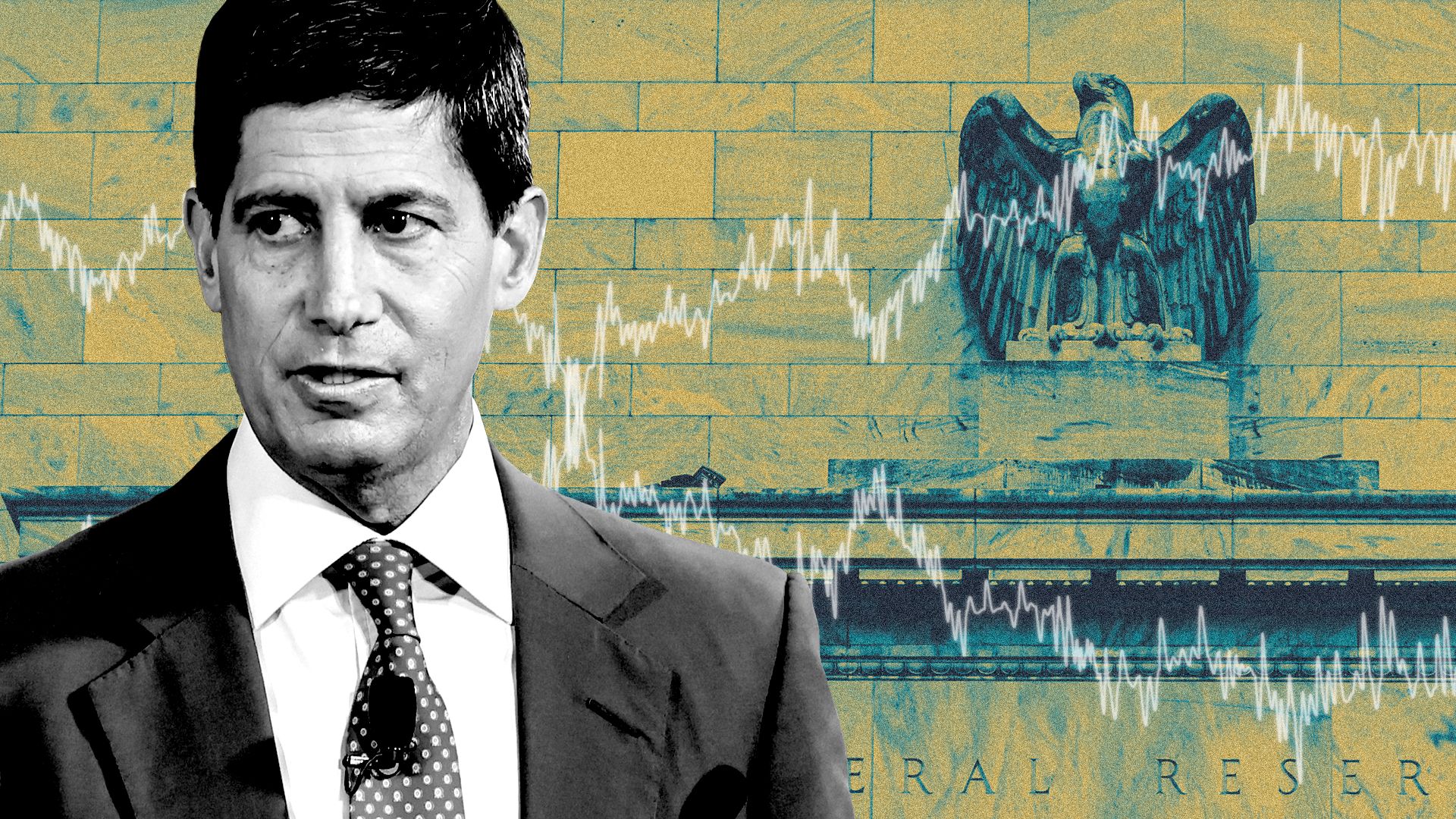
Photo illustration: Brendan Lynch/Axios. Photo: Tierney L. Cross/Bloomberg via Getty Images
Monday morning's furious market rally notwithstanding, the tenor on Wall Street has turned more ominous this month. It puts pressure on Kevin Warsh's Fed to rethink its plans to keep raising interest rates — though at this juncture the mood swing probably isn't enough to derail them.
The big picture: During periods of financial turmoil, the Fed can ride to the rescue, offering cheaper money that helps offset declines in prices of risky assets.
- Right now, however, it is more constrained given lingering high inflation — and a sense that the very sectors showing signs of financial strain have been a cause of the elevated inflation the Fed is seeking to quash.
- As a result, a slowing of the AI investment boom may not be the worst thing in the world, at least in the view of many Fed policymakers — so long as it remains contained and doesn't spill over into a broad retrenchment of economic activity and a worsening of the job market.
Catch up quick: Stocks fell in each trading session last week, including a whopping 3.7% drop in the S&P 500 on Friday.
- There has been a remarkable bounce back this morning, with the S&P up 4.1% as of 10:00am — but even after that surge, the market is down about 5% in November, more if you confine the analysis to leading tech stocks.
- That has coincided with other measures of tightening in financial conditions, like a widening in spreads between riskier corporate bonds and Treasuries.
By the numbers: Goldman Sachs economists estimated that the tightening in financial conditions through Friday was the economic equivalent of 1 percentage point's worth of Fed rate hikes — and, if sustained, would reduce GDP growth by 0.5 percentage points over the next year.
Yes, but: The Fed raised interest rates a quarter point in September and has all but locked in another rate hike on Dec. 9, and most officials seem inclined toward one or two more next year.
- Against that backdrop, 100 basis points' worth of financial conditions tightening seems downright welcome, basically getting ahead of a policy move many at the central bank have thought is necessary.
- In a speech on Friday, for example, governor Lisa Cook said that in her view "financial conditions are too accommodative at a time when inflation remains stubbornly above target, with no clear signs of disinflation in train."
- "The current stance of policy does not appear to be curtailing the AI buildout, and equity prices continue to support consumer spending," she said in Chile.
Reality check: If the stock market were to resume its plunge and credit conditions tighten up more widely, it would inevitably make the Fed back off its rate-rising plans. It's easier to talk tough when all that has transpired is a few bumpy days of stock trading.
- For better and worse, this episode of volatility has featured a traditional inverse relationship between stocks and bonds: On days when stocks fall and the world looks scary, bonds rise and their yields fall, in anticipation of easier monetary policy in the future.
- That implies that, unlike in the last three periods of meaningful market disruption (the onset of the Iran war in March, the "liberation day" tariffs in April 2025 and the Fed tightening campaign of 2022), the smart money believes that the Fed will ultimately provide relief if the road gets too bumpy.
What they're saying: "Further tightening could eventually persuade the FOMC that additional rate hikes are unnecessary," Goldman Sachs economist David Mericle wrote.
- "A further equity market selloff led by concerns about AI spending in particular might lessen the need for further hikes" because AI demand is boosting inflation, Mericle added.
What's next: Just six days ago, New York Fed president John Williams told us that he saw market moves as "more of a normalization of financial conditions which are still pretty supportive of growth."
- Williams is scheduled to appear at an event in the Bronx at 4:00pm ET today, right at the market close, and the world will be watching whether three days of turbulence last week followed by today's rebound bring a change of tone.
