Scoop: Northwood hits key Space Force milestone

Add Axios as your preferred source to
see more of our stories on Google.
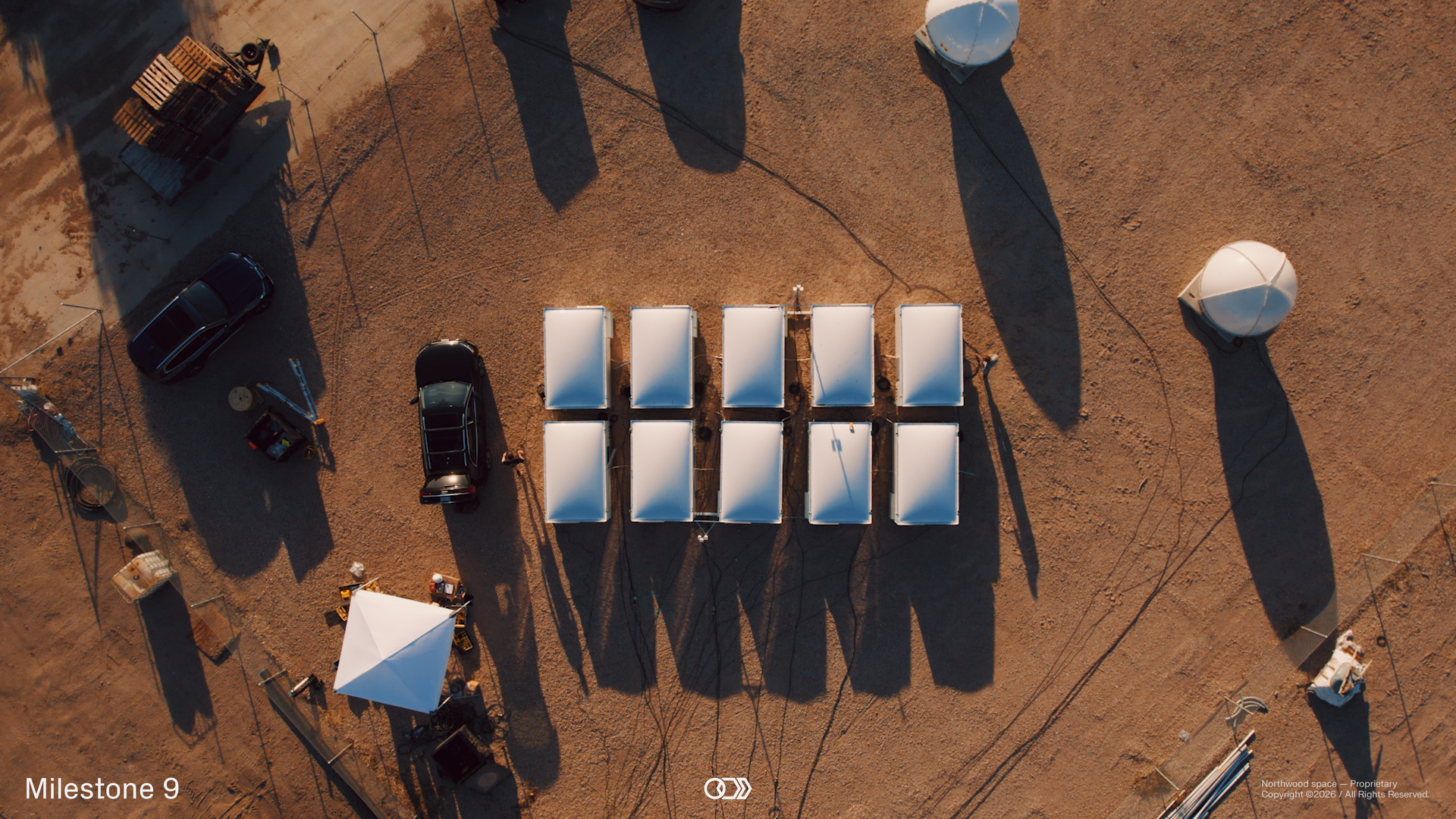
Northwood Space Portal units in California were used for a September test. Photo: Courtesy/Northwood Space
Northwood Space quickly connected its antennas with a satellite in deep orbit during a Space Force test, a key milestone first shared with Axios.
Why it matters: The U.S. military wants rapidly deployable, survivable and reliable ground stations for future conflicts.
- In September, as part of a Space Force prototype contract, Northwood's Portal ground antennas connected multiple times and exchanged data simultaneously with a U.S. government satellite in geosynchronous orbit, or GEO.
- Satellites in GEO move in tandem with the Earth's rotation, providing wider coverage for military operations.
- After the successful Space Force test, the Torrance, California-based firm's Portal antenna is now eligible for the Space Force to move it from prototype into production.
What she's saying: "GEO satellites carry some of the most critical government and commercial missions, and they're some of the hardest links to close," Bridgit Mendler, Northwood's CEO, said in a statement.
Context: Northwood's refrigerator-sized Portal antenna is smaller than traditional ground-based radar sites and takes up less real estate.
- With just one week's notice from the Space Force, the firm placed 10 of its antennas in Ventura, California, to connect to the U.S. government satellite.
- Previously, Northwood had proven back-and-forth data sharing with a satellite in low-Earth orbit. GEO is more challenging.
- What would have typically taken a year or more to set up took only "a matter of days," Northwood chief technical officer Griffin Cleverly told Axios.
Follow the money: The milestone announcement comes after Northwood raised $375 million earlier this month in a Series C funding at a $2 billion valuation.
The bottom line: The firm is now pushing to get more Portal antennas produced and placed at more ground stations.
- "What we're geared towards now is getting that unit through its engineering development into production in 2027," Cleverly said. "Then we're just going to start pumping out sites across the world to provide global coverage."
