Illinois 2026 election voter guide: How to vote, key races and deadlines


Add Axios as your preferred source to
see more of our stories on Google.

Illustration: Brendan Lynch/Axios
Welcome to our 2026 midterm voting guide with info on casting your ballot and key races in Chicago and across Illinois.
State of play: From statewide contests to local judicial races, there's a lot to sort through this election season.
- We've broken down the essentials to help you make informed decisions before Election Day on Nov. 3.
How to vote

Early voting started Oct. 1 and kicked into high gear on Oct. 19 with the opening of early spots in all 50 wards.
Why it matters: You don't have to wait until Election Day on Nov. 3, but deadlines for registering, voting by mail and finding an early voting site are approaching.
🗳️ Vote now: Two downtown early voting locations are open at 137 S. State St. and the Board of Elections office at 69 W. Washington St. along with the 50 ward locations.
📬 Vote by mail: You have until Oct. 29 to request a ballot, but election officials are urging voters to request and return ballots early amid concerns about postal delays and changes to USPS postmark procedures.
- In Illinois, ballots must be postmarked by Election Day and received by Nov. 17.
✍️ Register: Online registration ends Oct. 18, but Illinois allows same-day registration and voting through Election Day.
🏫 On Election Day: Polls are open from 6am to 7pm Nov. 3.
Governor's race

The race for the governor's mansion is in its final month, and Democrats and Republicans are ramping up their attacks.
Why it matters: Gov. JB Pritzker is seeking a third term that would further cement Democratic control in Springfield, while Republican Darren Bailey is promising a sharp change in direction.
Context: Pritzker and Bailey are facing off for the second time. Pritzker defeated Bailey by nearly 13 percentage points in 2022.
- Independent Collin Corbett is also on the Nov. 3 ballot.
U.S. Senate
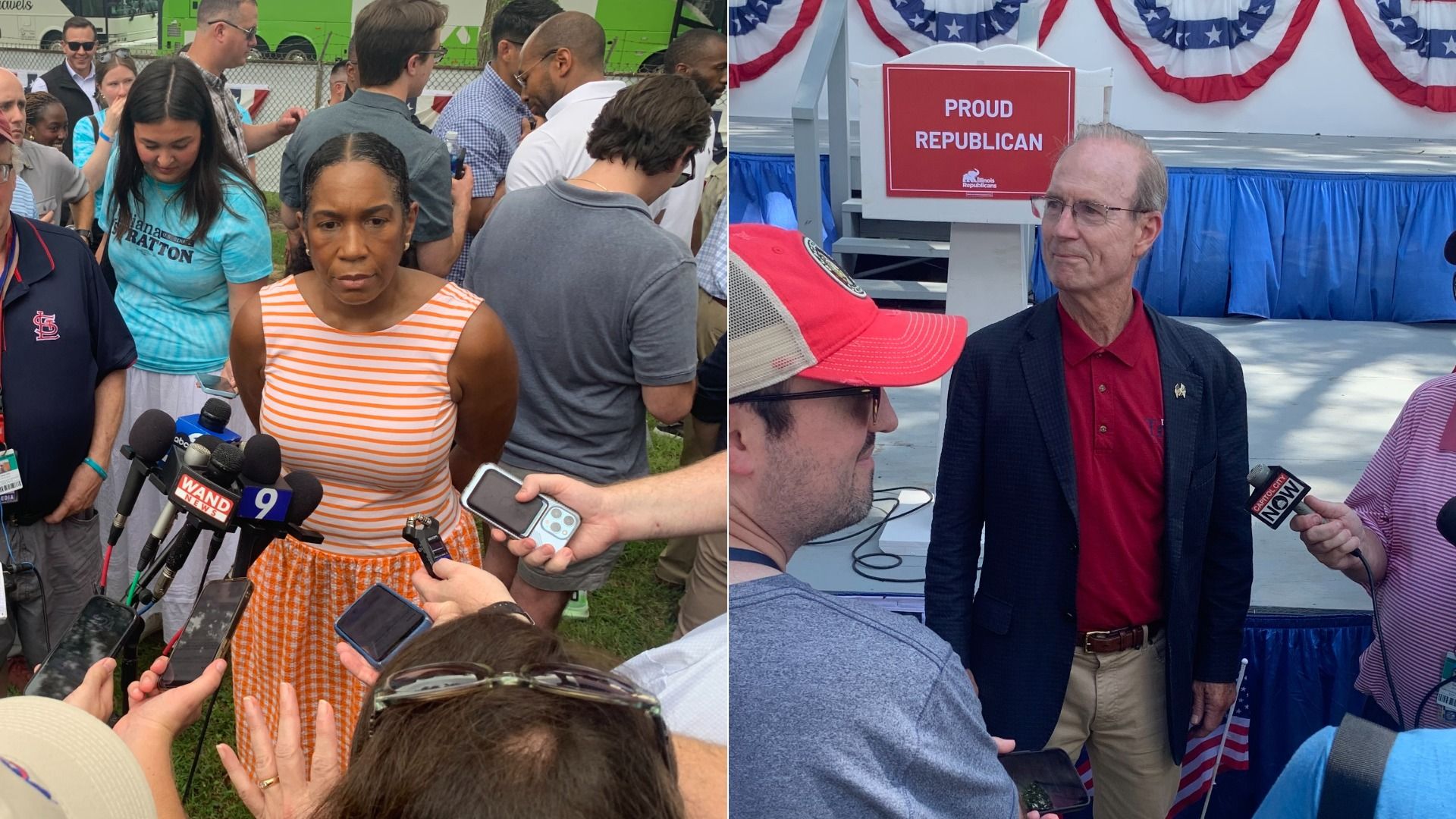
For the first time in 30 years, Illinois will not have a U.S. senator named Durbin.
Why it matters: The midterm election will determine control of the Senate, where Republicans hold a 53-47 majority.
The big picture: Sen. Dick Durbin is retiring after three decades in the Senate, paving the way for a new face to join Sen. Tammy Duckworth in Washington.
Zoom in: Lt. Gov. Juliana Stratton (D) is facing former Illinois GOP chairman Don Tracy (R).
- Independent Whitfield Harrington Jr. is also on the ballot.
Illinois congressional races
All 17 of Illinois' congressional districts are on the ballot Nov. 3, with voters choosing who will represent them in the U.S. House for the next two years.
Why it matters: The races will help determine which party controls the House when the new Congress convenes in January.
Here's who's running:
1st: Jonathan Jackson (D-incumbent) vs. Christian Maxwell (R)
2nd: Donna Miller (D) vs. Michael Noack (R)
3rd: Delia Ramirez (D-incumbent) vs. Angel Oakley (R)
4th: Patty Garcia (D) vs. Lupe Castillo (R) vs. independent Chris Getty and Working Class Party candidate Ed Hershey
5th: Mike Quigley (D-incumbent) vs. Tommy Hanson (R)
6th: Sean Casten (D-incumbent) vs. Niki Conforti (R)
7th: La Shawn Ford (D) vs. Chad Koppie (R)
8th: Melissa Bean (D) vs. Jennifer Davis (R)
9th: Daniel Biss (D) vs. John Elleson (R)
10th: Brad Schneider (D-incumbent) vs. Carl Lambrecht (R)
11th: Bill Foster (D-incumbent) vs. Jeff Walter (R)
12th: Mike Bost (R-incumbent) vs. Julie Fortier (D)
13th: Nikki Budzinski (D-incumbent) vs. Jeff Wilson (R)
14th: Lauren Underwood (D-incumbent) vs. Jim Marter (R)
15th: Mary Miller (R-incumbent) vs. Jennifer Todd (D)
16th: Darin LaHood (R-incumbent) vs. Paul Nolley (D)
17th: Eric Sorensen (D-incumbent) vs. Dillan Vancil (R)
Statewide offices

Democrats hold all Illinois executive offices, and all but one race has an incumbent on the November ballot.
Attorney general
Former Chicago alderman Bob Fioretti is running as a Republican against Kwame Raoul, who is seeking his third term.
- Raoul has fought against President Trump's agenda, from the administration's attacks on transgender and voting rights to immigration enforcement.
- Fioretti says he's running to restore public trust and fight corruption.
Secretary of state
Incumbent Alexi Giannoulias faces Republican Joliet business owner Diane Harris.
Context: Giannoulias has focused on improving the DMV and fighting book bans, but Harris says the DMV still needs more work.
The intrigue: Giannoulias is also running a very active campaign for mayor, which recently sparked a lawsuit from one of his opponents in that race.
Comptroller
State Rep. Margaret Croke faces Republican attorney Bryan Drew to become the state's chief financial officer.
Context: Croke is backed by Illinois' Democrats, including money from Gov. JB Pritzker. Drew says this support will erode Croke's ability to hold state leaders accountable for financial decisions.
Treasurer
Incumbent Michael Frerichs faces Republican attorney Max Solomon to retain his seat as the state's chief investment and banking officer.
- While the office maintains the state's portfolio, it's also the keeper and distributor of unclaimed property.
- Frerichs even delivered $8.65 to Pope Leo this summer.
Chicago School Board election
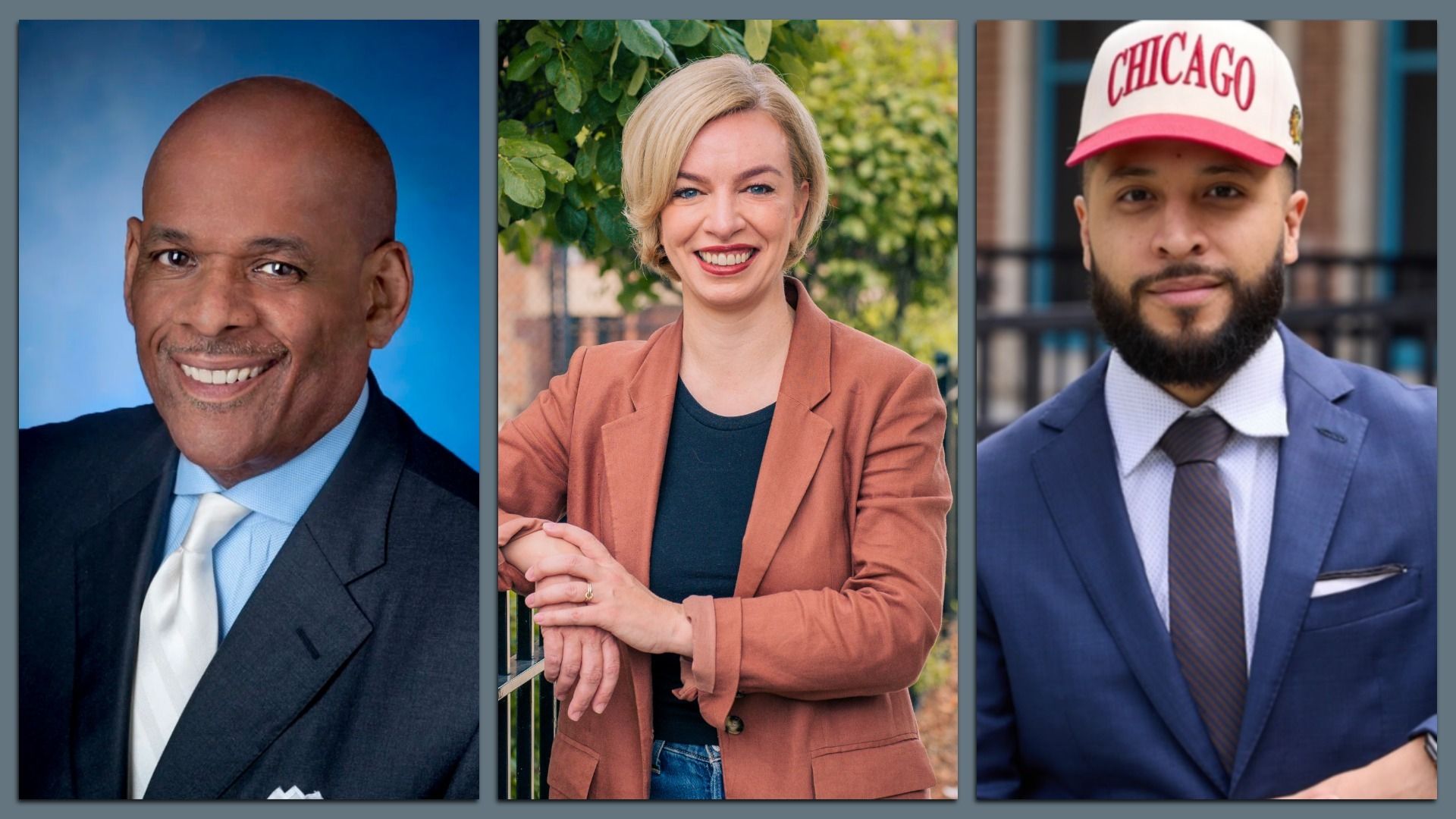
Chicagoans will make history on Nov. 3 when they vote for the city's first fully elected school board.
Why it matters: After decades of the mayor controlling the board, Chicago voters will have a direct say in who governs the nation's third-largest school district, potentially leading to more independent policies.
The big picture: Chicagoans will vote for both the board president and a representative from one of the city's 20 school board subdistricts.
- The 21 winning candidates will start their unpaid jobs on the board in January 2027.
Illinois House and Senate races
All 118 seats in the Illinois House of Representatives are up for election Nov. 3. Representatives serve two-year terms.
Voters will elect state senators in 39 districts this November. The Illinois Senate has 59 members, who serve staggered two- and four-year terms.
Why it matters: State lawmakers make decisions on issues that affect Illinois residents, from school funding and public safety to taxes and housing.
For a list of all candidates, check out the Illinois Board of Elections site.
Judicial candidates
Unlike states where government leaders appoint judges, Illinois elects its circuit court judges on a six-year cycle.
How it works: Judges running to fill a vacancy this year are pretty much a shoo-in because no Republicans have filed.
- Those running for retention must be approved by 60% of voters.
- If they fail to garner 60% approval, they're dismissed and members of the Illinois Supreme Court will appoint a temporary replacement.
Yes, but: This rarely happens. Just three judges have failed to win retention in the last six years, according to Abdon Pallasch, spokesman for the Cook County Office of the Chief Judge. He covered the beat for years at the Chicago Sun-Times.
- "Only Shannon O'Malley lost last time around, and there was a pretty organized campaign to vote 'no' on Judge O'Malley's retention," he tells Axios.
Get smart: If you don't have the time to study each of the more than 60 Cook County judges running for retention alone, you can check out some easy-to-use guides with recommendations from:
Ballot Measures

While referendum questions are non-binding, their answers can help legislators gauge public opinion and decide which laws to pursue.
Zoom in: Here are some questions Cook County voters will find on their ballots, alongside more localized questions applied to specific wards, school districts and suburbs.
Gunshot detection
"Should the City of Chicago restart the use of gunshot detection technology that informs first responders when gunshots are detected?"
Context: After long battles with the Chicago City Council, Mayor Brandon Johnson fulfilled his campaign promise to shut down the controversial ShotSpotter program in the fall of 2024, with the promise to seek a better solution.
- Some studies suggested the program led to over-policing and false alarms. But a diverse group of alders from the South, West and far Northwest and Southwest sides urged the mayor to keep it until another program was in place.
The latest: On Oct. 20, after the start of early voting, Johnson's office announced a new pilot program to test an unspecified alternative system in six police districts on the South and West Sides.
Festival space
"Should Chicago develop a permanent festival and outdoor event space for large-scale events?"
Zoom in: Supporters say a dedicated site could reduce the need to close parks, shut down streets, cancel softball games and mess up park grass for private shindigs like Lolla and Riot Fest.
- Critics argue that the current system uses existing city assets while bringing revenue and visitors to areas of the city they might not have otherwise visited.
Blitz compensation
"Shall the City of Chicago pursue all lawful means to recover financial compensation from the federal government for the costs and economic harm caused by the Donald Trump administration's violent, militarized ICE operations, including the Midway Blitz operation led by Greg Bovino, to recover lost tax revenue, public safety response costs, and services provided to residents and families affected by those operations?"
By the numbers: One study by UIC's Great Cities Institute suggests Chicago area businesses lost $1.2 billion in revenue during the 2025 immigration crackdown.
Yes, but: It's unclear how the city would secure compensation in a climate that still hasn't seen a single prosecution of an on-duty federal agent for the shooting, killing, beating, tear-gassing and apprehension of locals during Midway Blitz.
Millionaire tax
"Shall Illinois adopt the Millionaire Amendment for Property Tax Relief and Education, which would enact a 3% income tax surcharge only on millionaires and use 50% of this new revenue to provide property tax relief for residential and commercial taxpayers and 50% to improve state funding for public education?"
Zoom in: The tax, which would be applied to income over $1 million, could affect about 41,000 Illinois residents and generate $3.8 billion in its first full year, according to a report by the Illinois Economic Policy Institute and UIUC.
Yes, but: Opponents warn it could drive businesses and revenue out of the state.
What's next: Depending on the support voters show for each issue, lawmakers could use the results to push for binding legislation.