Bike activists want to see more protected lanes in Denver

Add Axios as your preferred source to
see more of our stories on Google.
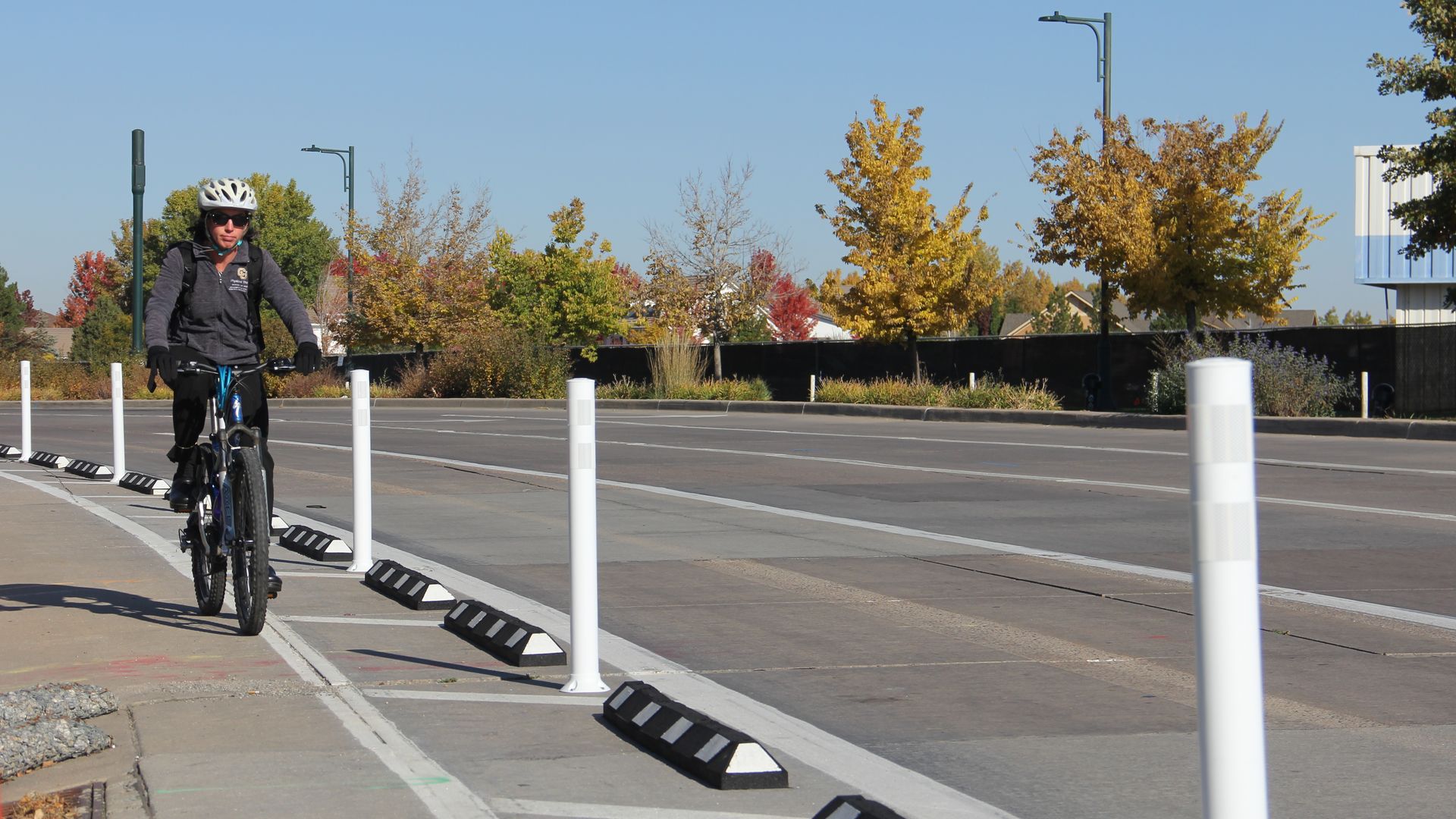
A cyclist rides inside a protected bike lane along Central Park Boulevard on Oct. 17 in Denver. Photo: Esteban L. Hernandez/Axios
Advocates are calling out the city's plan to build its bike infrastructure, hoping Denver invests in more protected lanes for people to ride safely.
Why it matters: Protected lanes make cyclists feel more comfortable, give riders another way to get around, and help replace emissions-emitting cars.
By the numbers: Of the 107 miles of bikeways built and upgraded since 2018, 31 miles are protected, according to Denver's transportation and infrastructure department. This means lanes with a vertical element or physical separation.
- Yes, but: Just 5 miles will be protected of the 44 miles of new bikeways and upgrades planned over the next year.
The big picture: Jill Locantore, executive director at Denver Streets Partnership, said cyclists generally want to see protected lanes that include some physical barrier between them and a car lane.
- This includes lanes with plastic bollards or other barriers, like concrete.
- Such design is often more expensive, Locantore said, and can prompt public outcry if installation means removing a car or parking lane.
What they're saying: "That's not great," Rob Toftness, co-founder of the Denver Bicycle Lobby, told Axios Denver when he learned the total number of protected lanes in the city. The lobby is a grassroots group advocating for bike infrastructure and safety.
- "We want to make it easy for people on bikes to ride at a speed that is comfortable for them without interference from prevailing traffic," the city's transportation department spokesperson Vanessa Lacayo told Axios Denver in an email.
- "For each new project, we take in consideration the width of the road, existing vehicle use/speeds, community input, adjacent land use and activities, as well as national standards and guidelines."
Between the lines: The city has installed protected lines along some busy corridors in the city, including Broadway and Central Park Boulevard.
- The city newest protected lanes are along both sides of 17th Avenue near Sloan's Lake.
Details: The city says its goal to build 125 miles of bikeways includes "high-comfort" lanes, but that term does not necessarily mean protected.
- The city defines "high comfort" as those including encompasses shared use paths and neighborhood bikeways, which don't have any kind of separation.
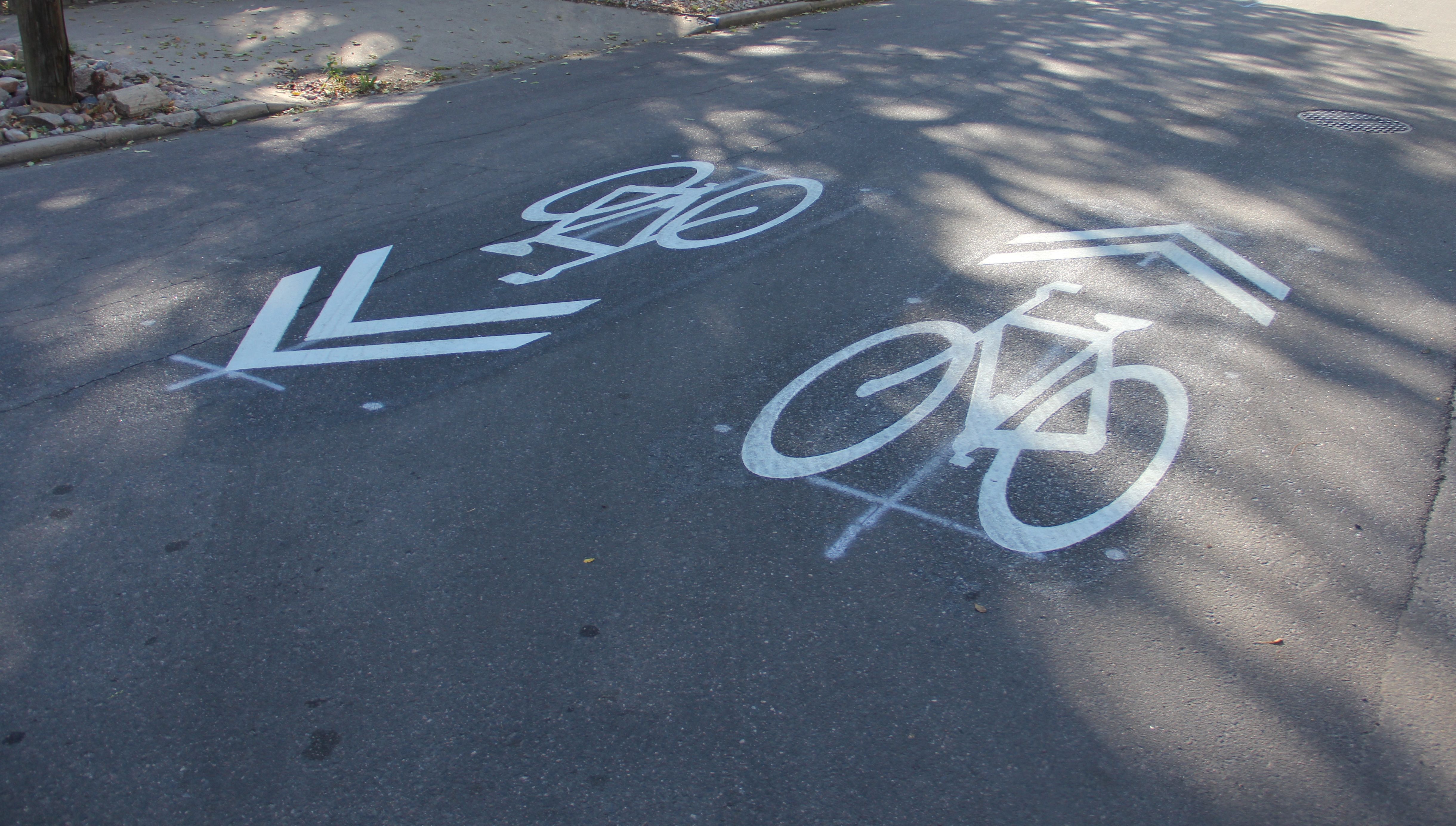
- Neighborhood bikeways are installed in low-volume, low-speed streets, often in residential areas. The city says design elements like signage — such as bike sharrows, road markers depicting bicycles — and curb extension are meant to slow traffic and prioritize bicycles.