Honor WWI veterans from Phoenix Indian School this weekend

Add Axios as your preferred source to
see more of our stories on Google.
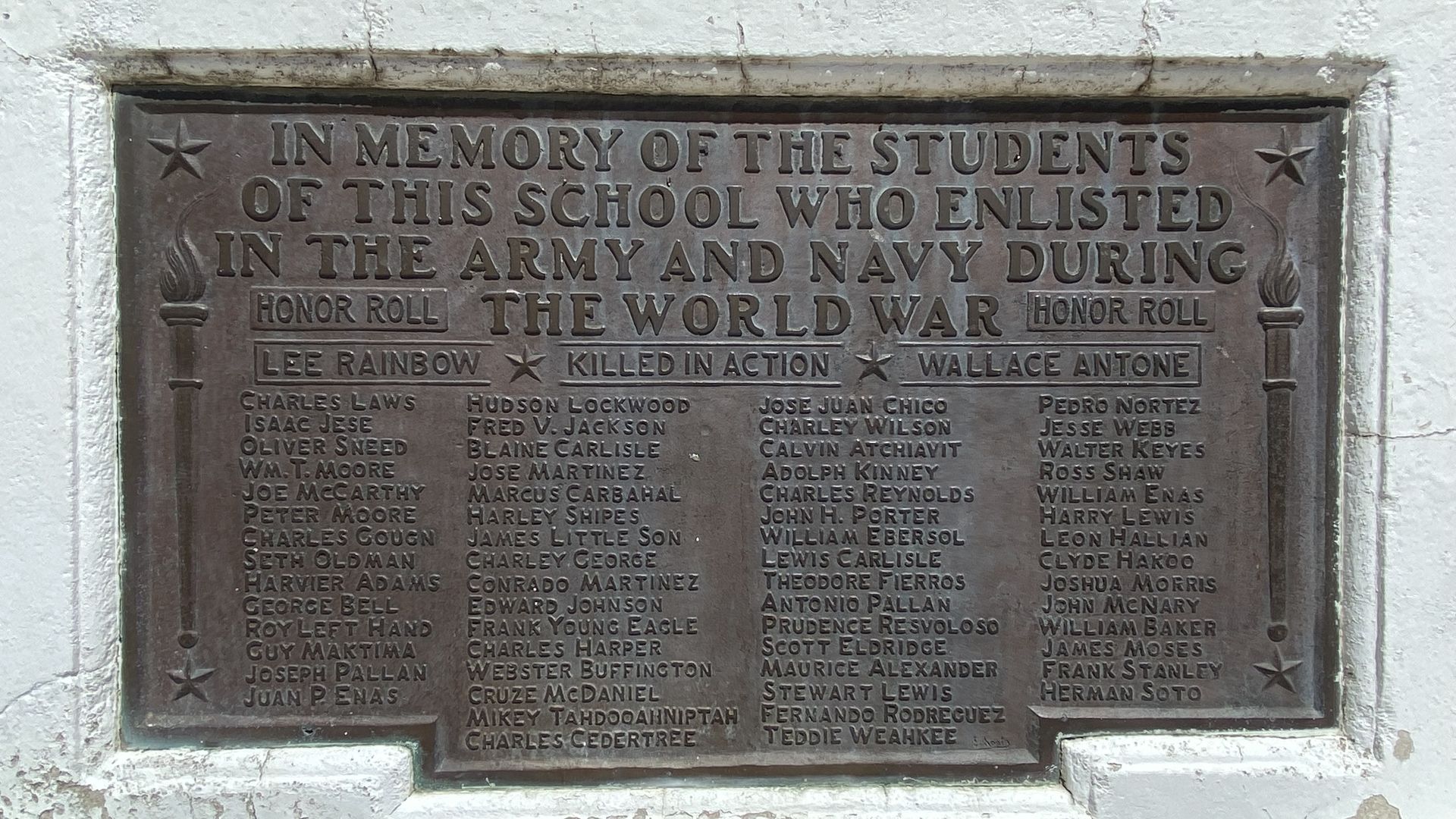
You can find this plaque outside Memorial Hall at Steele Indian School Park. Photo: Courtesy of Patty Talahongva
One hundred years ago, Memorial Hall was dedicated to Phoenix Indian School students who served in World War I.
Driving the news: The city of Phoenix and local Native American groups are hosting a commemorative program at the hall tomorrow from noon to 2:15pm.
- The event will feature performances by renowned flutist R. Carlos Nakai, Blue Medicine Well drum group and others.
- The event coincides with the annual Native American Recognition Days, and there will be a parade before it and a social powwow and gourd dance.
Why it matters: Phoenix Indian School alum Patty Talahongva tells Axios Phoenix that the event is meant to preserve an important piece of American history that is rarely celebrated or taught in schools.
- She says people pass by Memorial Hall at Steele Indian School Park all the time and likely don't know or appreciate the history and sacrifice behind it.
- "They were going to defend their homeland. That was the overwhelming factor and consideration when they enlisted," says Talahongva, who has interviewed Native American veterans
Catch up quick: After the U.S. entered World War I in 1917, more than 60 Phoenix Indian School students enlisted in the Army and Navy, even though the government had yet to recognize them as American citizens.
- The students had been removed from their reservations by the government and forced to attend the assimilation boarding school.
- Two of them were killed during the war.
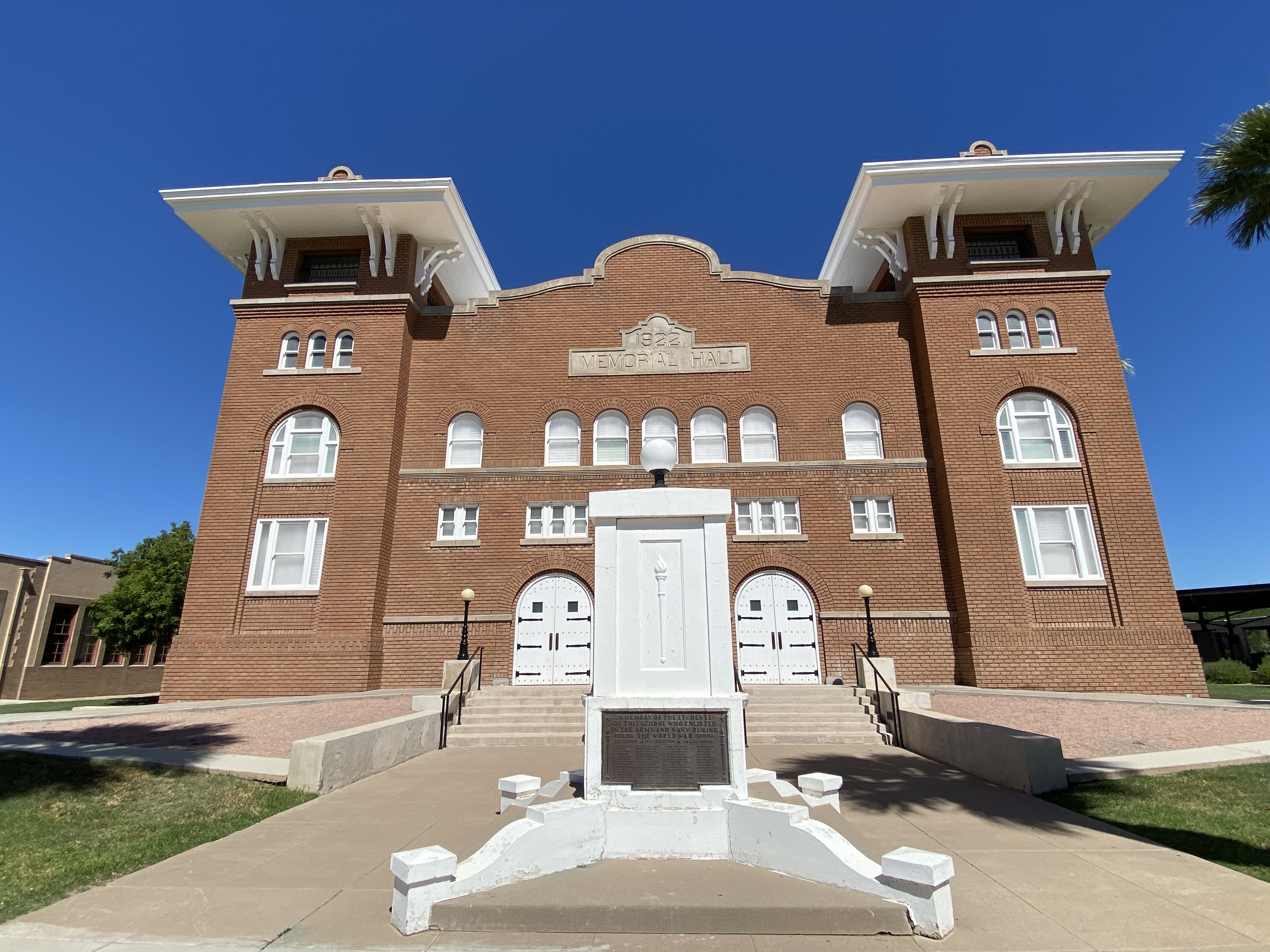
What happened: After WWI, the U.S. government built Memorial Hall to honor their service on the boarding school's campus, where Steele Indian School Park is located now.
- In part because of their service and that of other Native Americans who enlisted across the country, Congress passed the Indian Citizenship Act in 1924.
Flashback: Phoenix Indian School operated like a military school, with students wearing uniforms, marching to class and adhering to strict protocols, which made for an easy transition to military service, Talahongva says.
- While other servicemen struggled with homesickness during the war, "these tough little Indian boys hadn't seen their moms and dads for years," she says.
Of note: Phoenix Indian School's assimilation mission faded in the late 1920s and early 1930s, and later became a more traditional educational institution for Native Americans who didn't have high schools on their reservations.
- The school closed in 1990 and Steele Indian School Park opened on the grounds in 2001.
- Three buildings, including Memorial Hall, remain at the park and a visitor center opened in 2017 to remind Phoenix residents of the school's complicated history.