Chesapeake Bay earns historic C+, but Richmond still has a problem


Add Axios as your preferred source to
see more of our stories on Google.
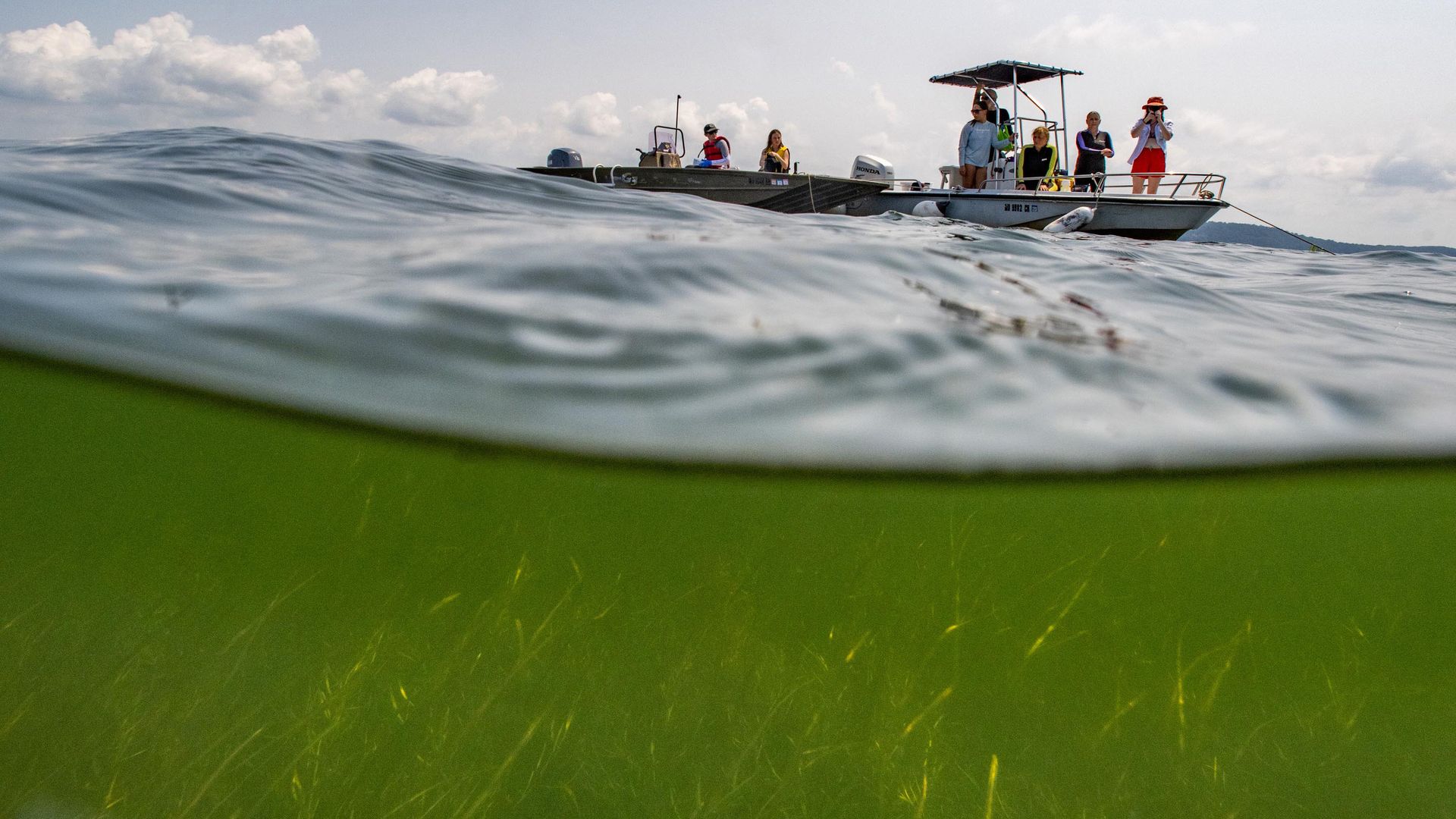
The Chesapeake Bay received its highest report card grade in 40 years. Photo: Jerry Jackson/The Baltimore Sun/Tribune News Service via Getty Images
The Chesapeake Bay just earned its best report card in 40 years: a respectable — if not quite honor roll-worthy — C+.
Why it matters: It's encouraging progress for America's largest estuary — a playground for boaters, a livelihood for watermen and a critical habitat for wildlife — after decades of efforts to clean up pollution and restore the Bay.
Driving the news: Eight of the Bay's 15 regions are showing long-term improvements in environmental health, up from six in last year's report card from the University of Maryland Center for Environmental Science.
- The Lower Bay, near Virginia Beach, earned a record B+, while Maryland's western shoreline south of Annapolis lagged with a D-.
- The Potomac River earned a C-, the same grade as last year, though its numerical score rose three points.
Zoom in: Closer to home, the James River earned a C+ — tying for the highest score among the Bay's major tributaries — and is showing long-term environmental improvements, but the news is mixed for Richmond.
- The good news: The river's biggest improvement came in phosphorus, a pollutant that can fuel harmful algae growth.
- The bad: Water clarity declined, potentially making it harder for underwater grasses to grow.
- And a broader warning sign: Water quality across the Lower James watershed — which includes Richmond and areas downstream past the fall line — is declining over the long term. The James is one of just two regions across the entire Chesapeake Bay watershed showing that trend. (The other is Lower Eastern Shore in Maryland.)
What they're saying: "We've seen tremendous improvement in overall river health, but concerning indicators in the lower James, notably poor water clarity and underwater grass scores," James River Association advocacy director Jamie Brunkow tells Axios.
What could help: Less pollution washing into the James from farms, streets and wastewater systems, plus more investment in restoring underwater grasses and oyster habitats, per the James River Association.
What's working for the Bay: Decades of upgrades to wastewater treatment plants and efforts to curb fertilizer and stormwater runoff have reduced pollution, along with investments in restoring oyster reefs — nature's water filters.
- Scientists are also seeing improvements in underwater grasses and oxygen levels that sustain aquatic life.
The big picture: The report comes at a time of uncertainty for federal restoration efforts.
- The Trump administration last month revoked a 2009 Obama-era order that expanded federal coordination around Chesapeake Bay restoration.
- Trump's replacement order emphasizes "on-the-ground" pollution reduction projects, such as planting trees to curb fertilizer runoff, but leaves questions about how federal funding, staffing and oversight will support long-term restoration efforts.
What else they're saying: Virginia Natural and Historic Resources Secretary David Bulova called the gains especially remarkable amid population growth, climate change and invasive species like blue catfish.
- "I'm amazed that we make progress at all," he said at Tuesday's announcement. "It really does speak to the incredible job that we are doing to push the ball forward."