Seattle science powerhouses bet big on AI-designed biology

Add Axios as your preferred source to
see more of our stories on Google.
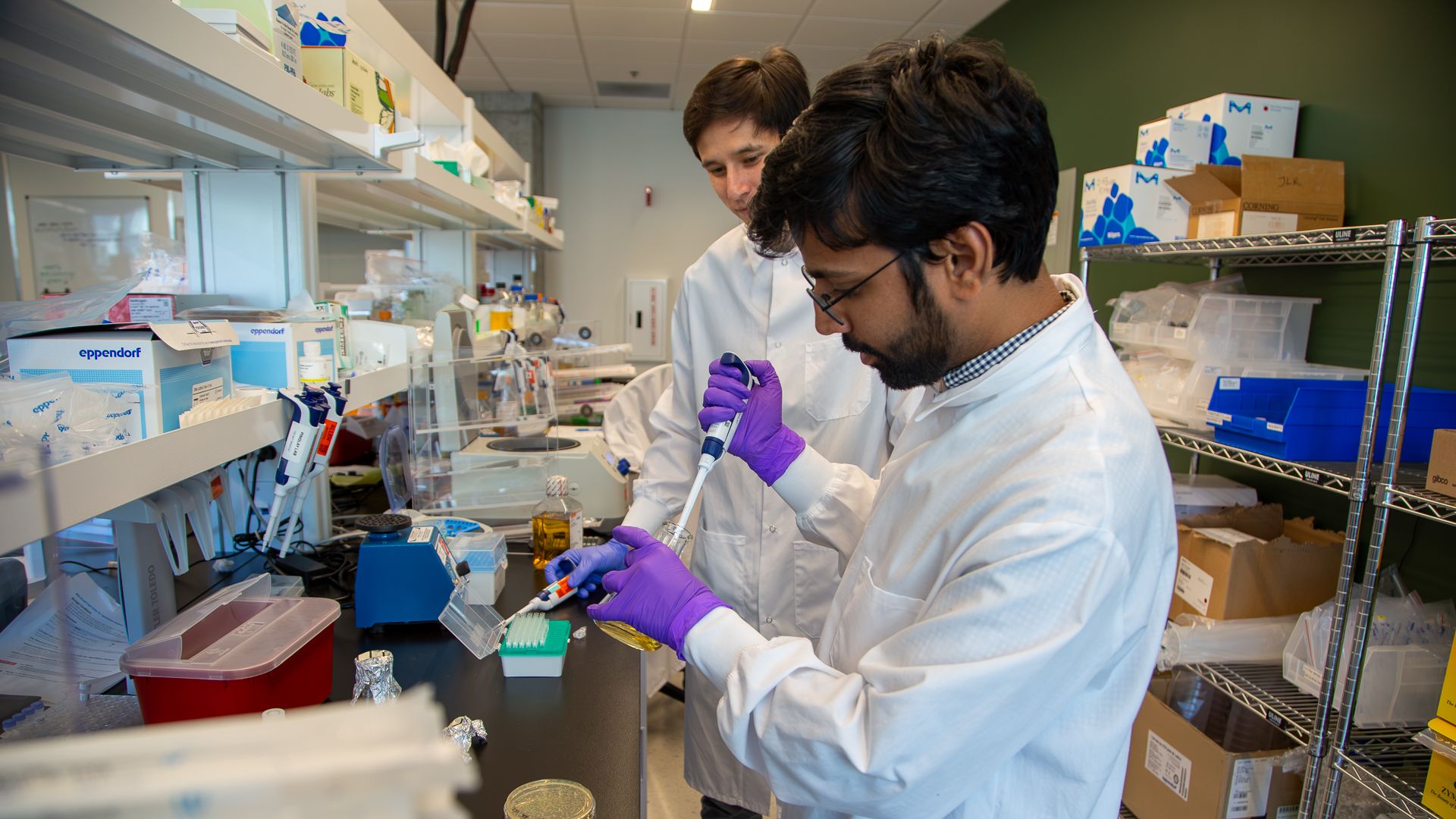
Biology by design. Photo: Courtesy of the Allen Institute
A nearly $95 million Seattle research effort aims to use artificial intelligence to design biological molecules that don't exist in nature.
Why it matters: The AI BioDesign project, which was announced Thursday and will run at least five years, is looking to combine AI and bioscience, with potential applications from cancer treatments to enzymes that break down plastics.
Driving the news: The project is supported by the Fund for Science and Technology, a nonprofit foundation launched by late Microsoft co-founder Paul Allen's estate.
- The Allen Institute will receive $46.1 million, the University of Washington will receive $43.8 million and the Fred Hutch Cancer Center will get $4.7 million, according to the Allen Institute.
How it works: AI models will propose new biological designs, which scientists will build and test in the lab. The results will then be fed back into the models, helping them make better designs in the next round.
- The idea is to explore possibilities that evolution hasn't produced and, in the process, learn more about the fundamental rules governing how biology works.
What they're saying: Evolution creates diversity, but "it is a slow process," said UW researcher David Baker, who won the 2024 Nobel Prize in Chemistry for pioneering the computational creation of new proteins.
Zoom in: Among the first targets are custom proteins designed to latch onto disease, genetic switches that can turn genes on or off, and tools that can selectively destroy or stabilize proteins, according to Jay Shendure, lead scientific director of the project.
The bottom line: Researchers hope the project can harness AI's potential for good — turning biological possibilities into medicines, materials and technologies that work in the real world.