Projected deficit renews focus on fraud in Minnesota

Add Axios as your preferred source to
see more of our stories on Google.
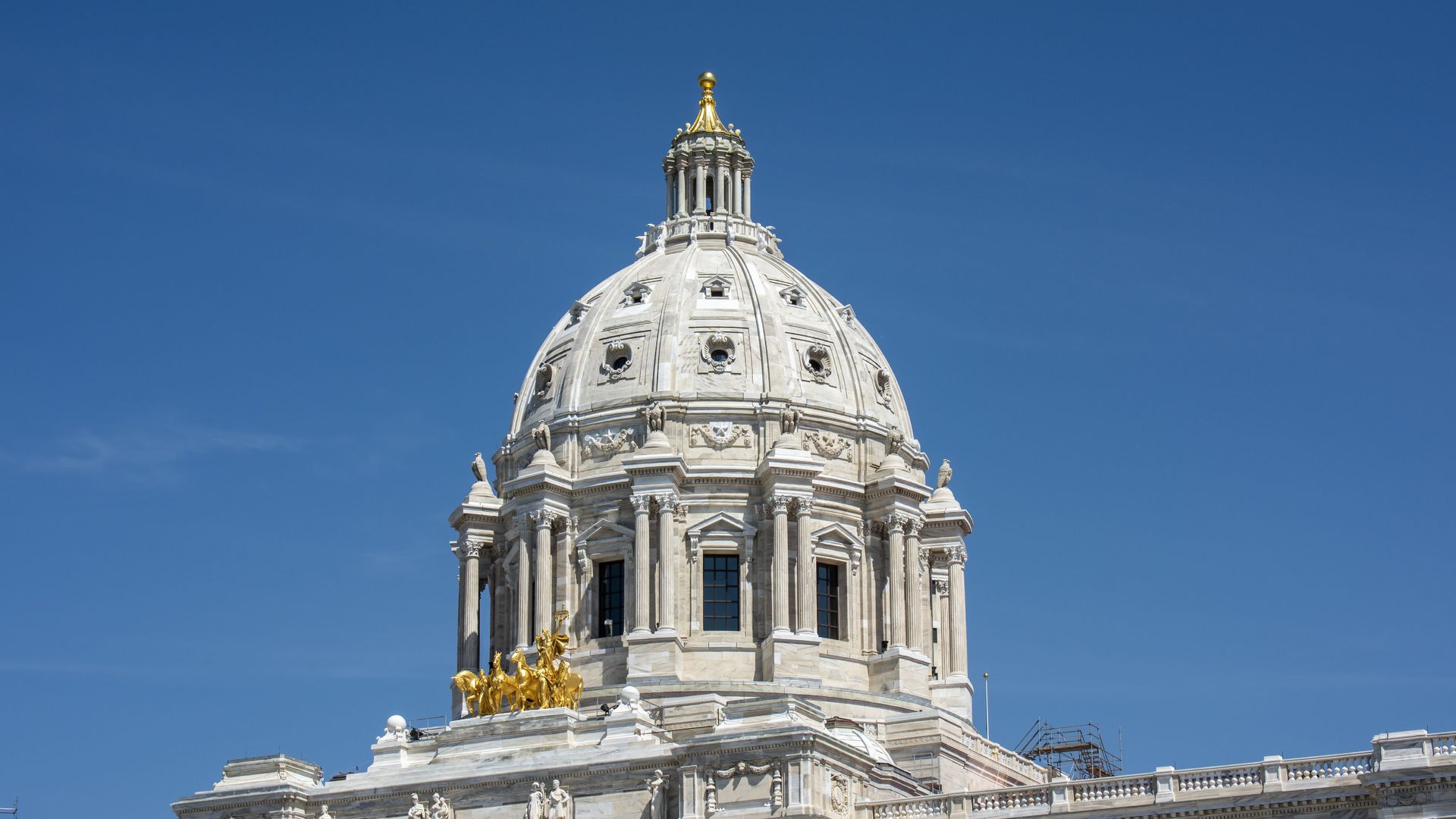
Legislators return to the Capitol on Jan. 14. Photo: Michael Siluk/Education Images/Universal Images Group via Getty Images
The return to divided government and a potential $5 billion deficit on the horizon are expected to reignite a debate at the Minnesota Legislature over curtailing fraud.
The big picture: A series of recent high-profile examples of misuse of government funds — including the $250 million Feeding Our Future case — have fueled calls for more safeguards for state spending.
- On Thursday, the FBI searched at least two Minnesota autism centers as part of an investigation into "substantial evidence" of Medicaid fraud.
- That development came days after the nonpartisan Legislative Auditor dinged the state Department of Human Services for not trying to recover $40 million in overpayments.
Driving the news: Legislative Republicans renewed a pledge to use their power in a tied House to conduct oversight and crack down on improper spending in the wake of last week's troubling economic forecast.
- "We have to control the spending, get rid of the fraud, ask those agencies for accountability," said House Republican Leader Lisa Demuth, whose chairs are already peppering commissioners with questions about their budgets.
The latest: On Thursday, Demuth called on Gov. Tim Walz to "order state agencies to immediately pause payments to anyone or any entity that is suspected or convicted of fraud."
- A key legislative Democrat, meanwhile, called for "serious conversations" about new "guardrails" for the autism centers, which are not currently subject to licensing.
Friction point: Walz's administration has faced a series of critical reports from the nonpartisan Office of the Legislative Auditor related to its handling of hundreds of millions of dollars of fraud caught in state-run programs in recent years.
- Its leader, Judy Randall, has raised concerns that state agencies aren't approaching their work with enough of an oversight mindset and are increasingly dismissive or defensive in response to her recommendations.
Case in point: In June, her office found that "inadequate" oversight" and a lack of action by the Minnesota Department of Education "created opportunities" for the Feeding Our Future defendants to siphon hundreds of millions of dollars from a federal child nutrition program.
The other side: Walz and DFL legislative leaders say that while they take the issue seriously — and enacted new safeguards just last year — bad actors are already being identified and held accountable by both state officials and prosecutors.
- "When [people] rip off the government, we try to find them, we try to prosecute them and I think whenever possible, we should put them in prison. And we do," DFL House Leader Melissa Hortman said at a panel this week, citing the jailed Feeding Our Future defendants.
Plus: They argue that ferreting out additional misspending won't make a dent in the overall budget, which is driven by big-ticket appropriations related to schools and safety net programs.
- "I don't think that's the place we're going to find the savings we need in four years to balance the budget," Senate DFL Leader Erin Murphy told reporters last week.
Reality check: It's not just Republicans calling for a closer look. State Sen. Heather Gustafson (DFL-Vadnais Heights), pledged last week to push for establishing an independent state inspector general — an idea Republicans have backed in the past.
- The swing district Democrat called the move, which could involve consolidating current IG positions within state agencies, "a practical solution to ensure accountability, transparency, and fiscal responsibility in state government."
Between the lines: One big challenge, as a former deputy commissioner of the Department of Human Services wrote in the Minnesota Reformer this week, is that fraud investigations are time and resource-intensive, with money sometimes continuing to flow while authorities and staff build their case.
- And when there's a crackdown, some fraudsters simply look "for greener pastures" in a different program.
What we're watching: Walz told the Star Tribune yesterday that he'd like to see tougher penalties for people who commit Medicaid fraud and use artificial intelligence to identify irregularities sooner.
- He's expected to release a new fraud prevention package before the next session.