Why D.C.'s distillery boom went bust

Add Axios as your preferred source to
see more of our stories on Google.
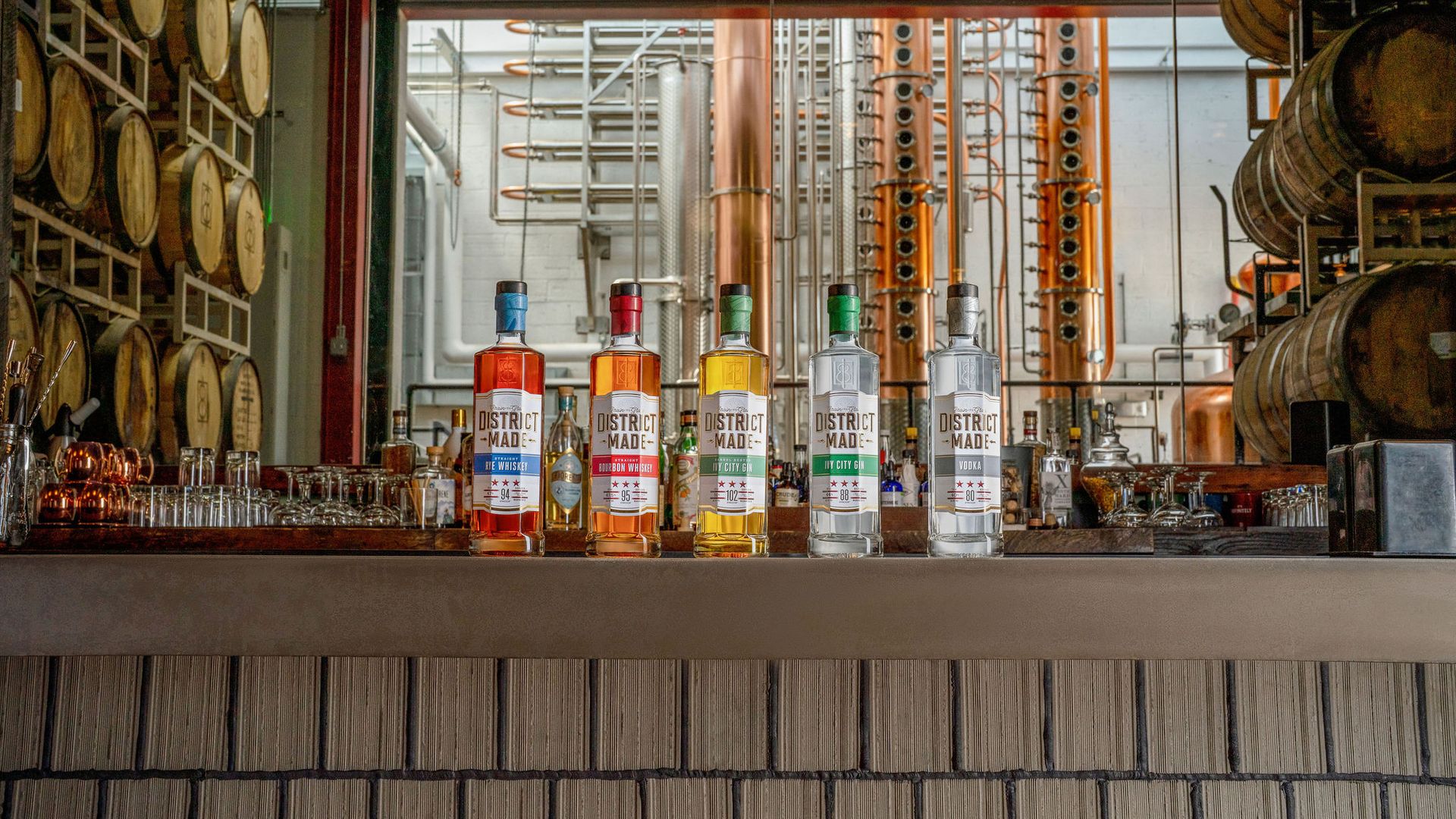
Pour one out for District Made. Photo: courtesy District Made Spirits
A bunch of D.C. distilleries have closed in the past two years — a pendulum swing from the city's craft booze boom that started a decade ago.
Why it matters: D.C.'s downward distilling cycle exposes just how tough the booze biz can be for small operators, and leaves fewer options for local consumers.
State of play: Ivy City, D.C.'s once-bustling distillery district, suffered a wave of closures since the pandemic. New Columbia (aka Green Hat Gin), the city's first modern-day distillery that opened in 2012, was acquired by mega-spirits company MGP and moved to Kansas two years ago.
- Whiskey and gin distillery Jos. A. Magnus & Co also skipped town to scale up, departing for Michigan when the pandemic hit. Bo & Ivy, which took over the distillery, is shutting down production at the end of this month.
- District Made Spirits (born One Eight Distilling), another Ivy City pioneer who crafted D.C.'s first bourbon in decades, just went dark (they're selling bottles through March).
Zoom in: District Made co-founder Alex Laufer tells Axios there were a variety of reasons for their closure. Some are on them (a rebrand that confused consumers), others on the pandemic.
- But ultimately, Laufer says it comes down to access in the fortress-like marketplace that is the spirits industry, and exploding competition on the shelf — especially when craft, in general, is more costly.
What they're saying: "When we started there were less than 500 [craft] distilleries in the nation and now it's nearly 3,000. We're hitting that saturation point," Laufer tells Axios.
- Sure, District Made produced a unique farm-to-bottle whiskey harnessing the terroir of local grains. "But it's hard for the little guys to compete with the big brands in terms of what they can do for a bar — we can't fly everyone to Oaxaca to taste our new mezcal."
Between the lines: Some of those big guns invested heavily in the upstarts when the craft craze took off — take Under Armour founder Kevin Plank fueling Baltimore's Sagamore Spirits, which was recently acquired by the heavy hitters behind Disaronno.
- But Laufer says that heyday is dwindling. "We're not seeing the investments by the larger houses in the mid-size [distillery] range."
The big picture: The U.S. craft spirits industry raked in $7.9 billion in sales last year, according to the American Craft Spirits Association, but growth is slowing — 2.4% over the last year compared to 17.4% the previous year.
Flashback: D.C.'s distillery boom exploded with the rest of the country, thanks in large part to the early wave that changed the city's liquor laws. Before New Columbia opened, distilleries could only offer a sample — and not charge visitors—for max three ounces of spirits per person per day.
- They certainly couldn't self-distribute, run a distillery bar, or mix cocktails with spirits they didn't produce themselves — all statutes that changed through the 2010s with more progressive legislation.
Reality check: D.C.'s spirits scene is hardly running dry. Popular rum distillery Cotton & Reed is expanding to take over Bo & Ivy's space. Plans TBD, but it'll grow its bottle production and expand its Union Market tasting room and rum bar — which co-founder Jordan Cotton says is the "life flow" of their cash-positive business.
The intrigue: The newcomers and stills left standing tend to be specialized instead of relying on a mixed bag of vodka, gin, and whiskey — which takes the most time, barrel space, and money to produce.
- Take Chacho Spirits, a Latin aguardiente-style producer in Manor Park, or Don Ciccio & Figli in Ivy City, which for years has produced gorgeous Italian liqueurs.
Yes, but: Wide-ranging distilleries can still win with the right formula.
- Republic Restoratives, a rare woman-fueled distillery in Ivy City, has found success landing its Civic Vodka at Nationals Park and other venues. They also produce whiskeys, brandy, and only-in-D.C. limited releases like an RBG-themed "Dissent Gin" that promotes reproductive rights.