Axios Macro

December 04, 2024


Today, we check in on the big story in financial regulation over the last couple of years: a hard-fought battle over new capital rules for the biggest banks.
- The presidential election makes the outlook even murkier.
👀 Situational awareness x 2:
- Payroll processor ADP said private-sector employment rose by a mere 146,000 jobs in November, and it revised downward its October estimate to 184,000. November's government jobs data is due out Friday morning.
- President-elect Trump said hardline China hawk Peter Navarro will return to his administration as senior counselor, focusing on trade and manufacturing.
Today's newsletter, edited by Ben Berkowitz and copy edited by Katie Lewis, is 692 words, a 2½-minute read.
1 big thing: How Trump could kill tough bank rules
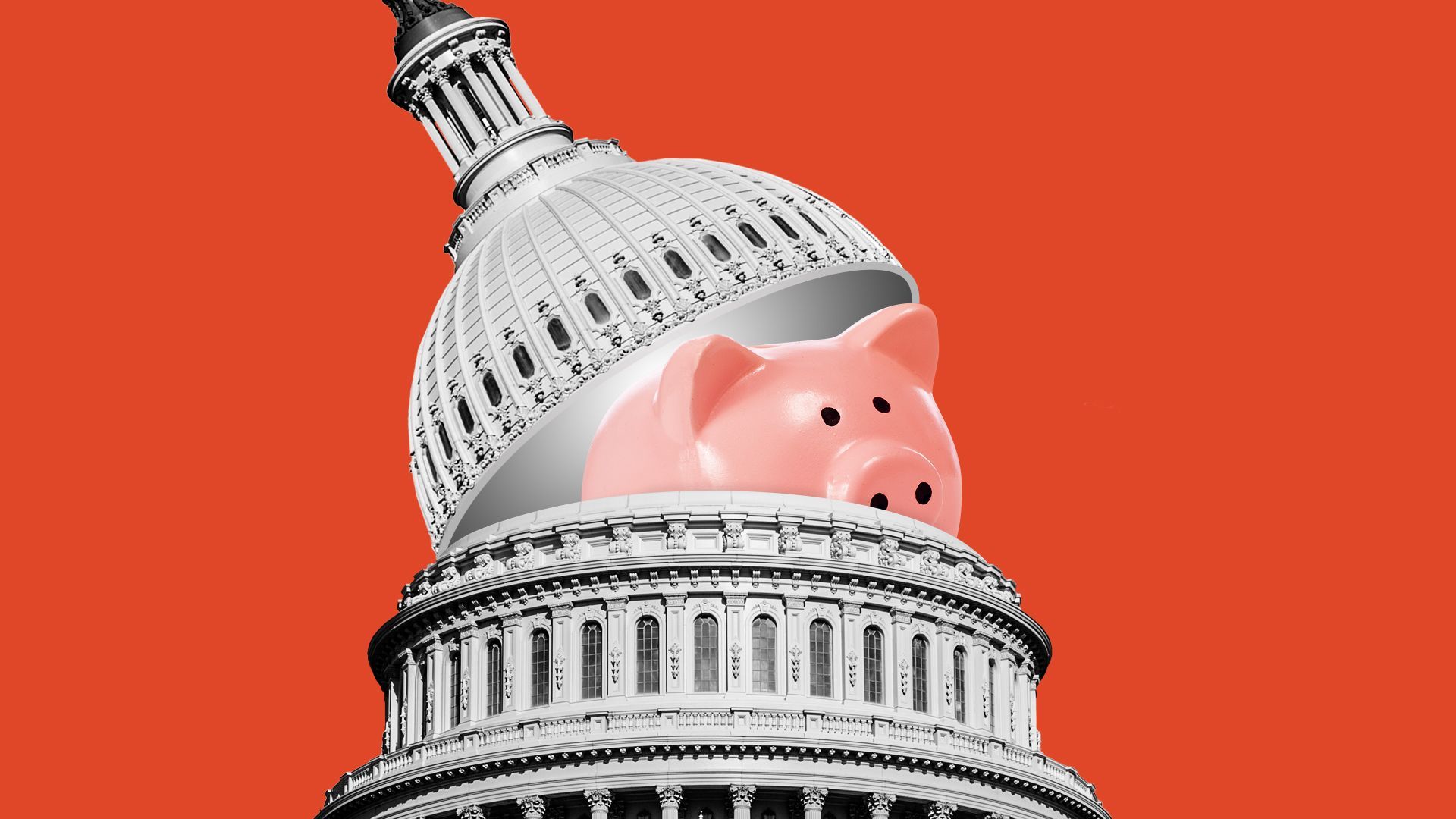
Unprecedented pushback helped soften the tougher regulatory rules awaiting the nation's biggest banks. Trump's return to the White House might kill them altogether.
Why it matters: Corporate America anticipates Trump will usher in an era of light-touch regulation. A regulatory overhaul meant to safeguard the financial system is on hold indefinitely, if not outright dead.
What they're saying: "A lot of bankers are dancing in the street," JPMorgan CEO Jamie Dimon said at a conference days after the election.
- Citi CEO Jane Fraser told CNBC: "I would expect a lighter version of the Basel III proposal," referring to the set of plans that would, among other things, require banks to have more capital.
Catch up quick: Regulators say higher capital levels provide a larger cushion in an economic shock.
- The big banks say they have withstood recent crises and the increase would have undue harm on the economy (and industry profits).
Between the lines: Capital requirements for the largest banks are proposed to increase by 9%, lighter than the 19% increase Biden-era regulators first imagined.
- It was a big win for the industry's intense lobbying efforts, but executives are now questioning why capital requirements need to go up at all — and they see the possibility that incoming Trump appointees will agree with them.
The intrigue: Regulators agreed to pause work on major proposals, including Basel III, until Trump takes office.
- Michael Barr, the Fed's vice chair for supervision, has led the charge on finalizing Basel III, the international accord for global regulatory standards first developed in the years following the 2008 financial crisis.
- But Barr also needs sign-off from two other regulatory agencies: the Office of the Comptroller of the Currency and the Federal Deposit Insurance Corporation — both of which will see new leadership installed by Trump.
"It will be up to the incoming administration to decide how to proceed," Rep. Patrick McHenry, R-N.C., chair of the financial services committee, said in a statement to Axios.
- "If they do move forward with implementing the Basel Committee's recommendations, I'm confident it will be based on sound, objective analysis supported by data — not driven by a progressive agenda," McHenry said.
What to watch: Any revisions are anticipated to dilute the proposal further, while finalizing the rules will be dragged out longer — risking a slow death of the rules put forward last summer.
- "In the current political context, it is unlikely any rules will be made more demanding," Nicolas Veron, a senior fellow at the Peterson Institute who has researched financial regulatory reform, tells Axios.
- Veron says that the U.S. is behind on Basel, even taking into account how long these processes can usually be, which has slowed implementation in other nations, too.
2. Key personnel decisions incoming
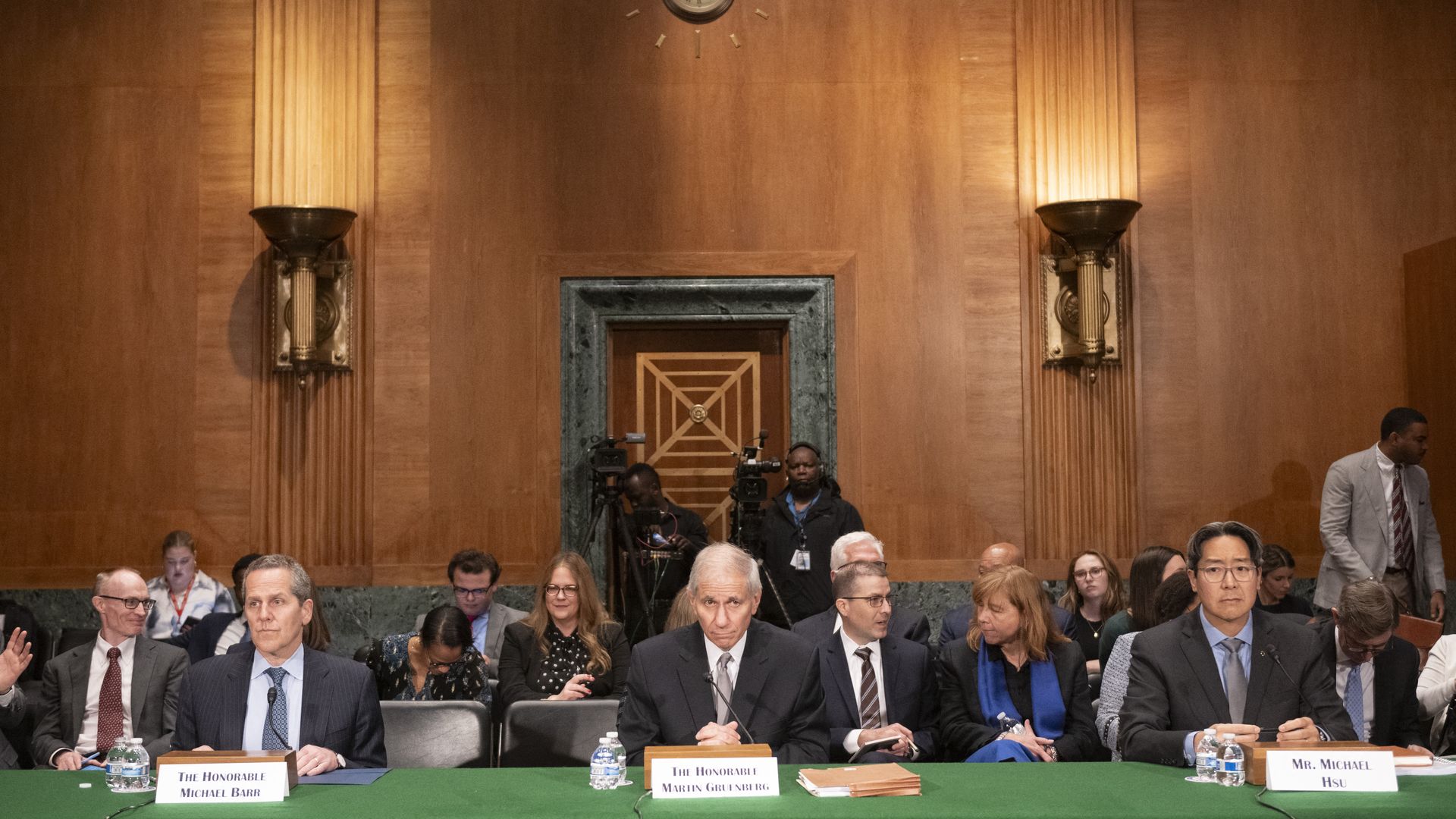
While Trump has moved quickly in naming nominees for cabinet positions, he has not yet tapped key figures for bank regulation.
- Embattled FDIC chair Martin Gruenberg will step down Jan. 19, giving Trump a clear lane to nominate a replacement.
- The comptroller of the currency position is technically vacant — Michael Hsu serves in the role in an acting capacity.
Yes, but: Things are a little more complicated for the third key bank regulator, the Fed vice chair for supervision. Barr's term extends until July 2026, and he said last month that he does not intend to vacate the position early.
- Some in Trump's orbit have floated the idea of demoting or firing Barr, which could lead to a disruptive legal battle. Fed chair Jerome Powell has been adamant that such a move would be against the law.
- Powell's term as chair also extends well into Trump's term, ending in May 2026. No Fed governor slots are scheduled to open up until January 2026, a year into Trump's term.
The bottom line: The proposal is "not dead, but it will be dormant for a while," Ian Katz, managing director of Capital Alpha, tells Axios in an email.
- "It's possible that we get a proposal sometime next year, and then a final rule more likely in 2026, Katz says. "But it's also possible that we don't get anything next year, and that this basically stalls out for 18-24 months."
Sign up for Axios Macro