Axios San Francisco

August 27, 2026

🌻 Let's make it a good Thursday!
🌤️ Today's weather: Mostly sunny, with a high around 70, lows near 60.
🎧 Sounds like: "9 To 5" by Dolly Parton.
Today's newsletter is 912 words — a 3.5-minute read.
1 big thing: ⚖️ Mail-in voting fight intensifies

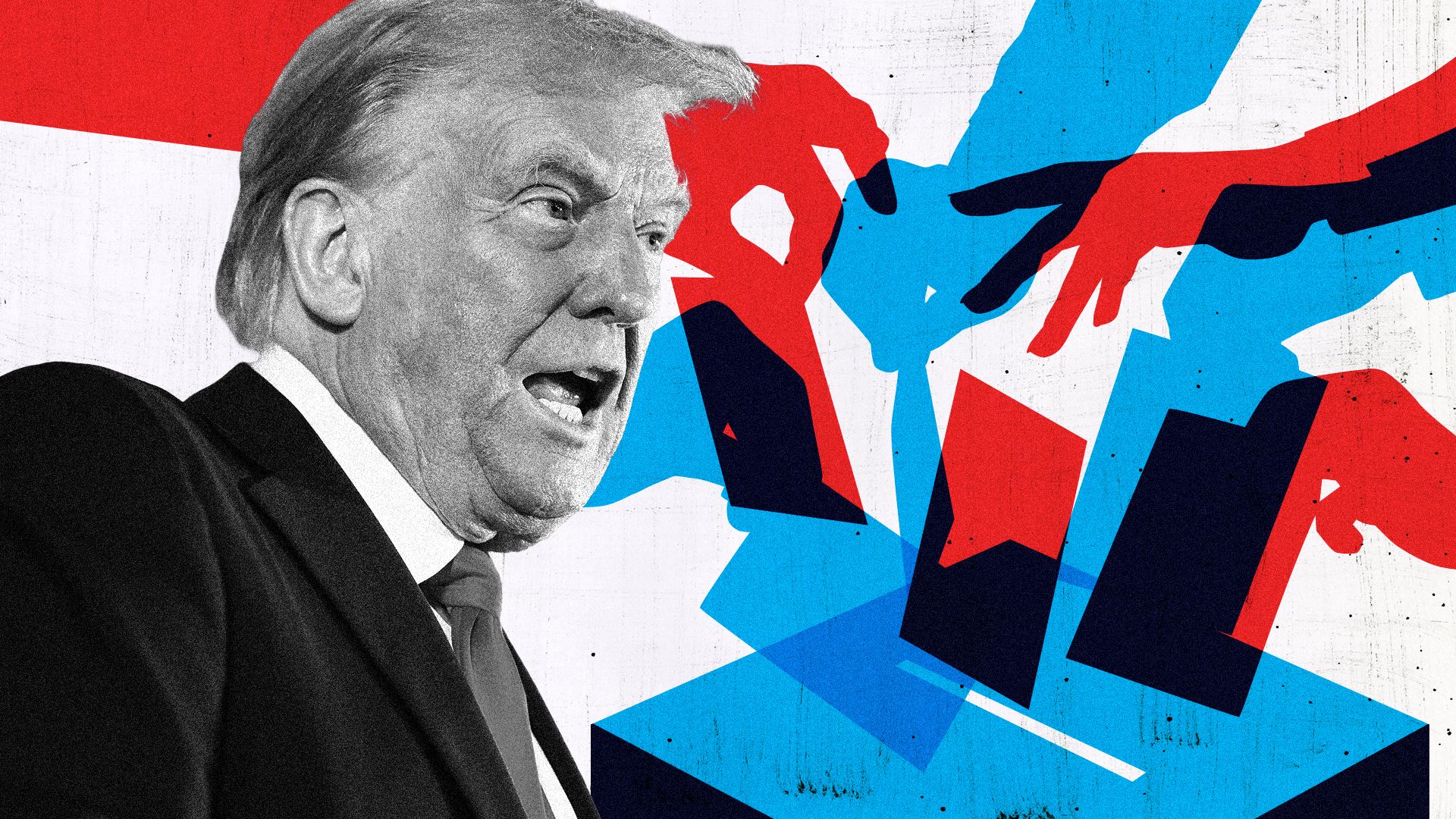
California is leading a renewed legal challenge to President Trump's sweeping Postal Service rule on mail-in voting, joining a coalition of states seeking to block the policy just days after the Supreme Court lifted a lower court's injunction against his executive order.
The big picture: The Supreme Court's decision essentially said the states sued too early. Now, they're hoping the timing is right to kneecap the plan ahead of the midterms.
- The ruling didn't weigh the merits of Trump's order, which critics warn would expand federal power over state-run elections.
Driving the news: The complaint, brought by 24 attorneys general and Pennsylvania Gov. Josh Shapiro, challenges the U.S. Postal Services' final rule outlining the implementation of Trump's mail-in voting provisions.
- The states argue that the rule "violates the Constitution and federal statutes many times over" and that they'll have to redesign ballot envelopes and build new systems to transmit voter lists to USPS with just weeks to comply.
- "If not stayed or preliminarily enjoined, the Rule will frustrate or outright prevent Plaintiff States from administering their mail voting programs in November and foreseeably disenfranchise voters who vote by mail," the complaint reads.
Zoom in: California is particularly exposed because vote-by-mail is built into its statewide election system. Every registered California voter will automatically be mailed a ballot for the Nov. 3 general election.
The other side: White House spokesperson Lauren Bis said in a statement that the Supreme Court's decision "was a major win for the security of American elections."
Zoom out: Democrats and advocacy groups also revived their challenges Tuesday ahead of the Postal Service's final rule's publication.
- A judge initially decided the Washington, D.C., lawsuit brought by Democrats was premature, finding — like the Supreme Court's majority — the challengers could not yet prove harm.
Catch up quick: The Supreme Court on Monday cleared a block on parts of Trump's March executive order.
- The executive order calls for "State Citizenship List[s]" of eligible voters, and a proposed U.S. Postal Service rule says it won't transmit mail ballots for people not on a state list.
Between the lines: USPS' final rule, which landed on the Federal Register yesterday, mandates specific ballot-envelope designs and says the Postal Service will generate state-specific mail-in voting participation lists.
- The Postal Service's rule said it would not implement the rule without relief from the injunctions.
2. 🎟️ Ticket middlemen cash in


Ticket market middlemen added $11.3 billion in unnecessary costs for live event fans last year, according to new research from the Vanderbilt Policy Accelerator.
Why it matters: Lawmakers have struggled to regulate the ticketing market and save fans money. The research includes model legislation that could provide a roadmap.
What they're saying: "The core problem with the modern ticket broker industry is that it inflates the price of live events without providing any value to either customers or event producers," Vanderbilt researcher Brian Shearer says.
Follow the money: Fans pay $6.8 billion in excess platform fees and $4.5 billion in inflated scalper prices.
- Shearer says policymakers could prohibit ticket resales above face value and cap service fees at 10%.
Catch up quick: Congress has pursued laws to regulate ticketing, including the Main Event Ticketing Act.
- Rhode Island limits ticket resale prices, though secondhand sites still operate there.
The other side: Supporters say secondhand platforms like StubHub help combat counterfeit tickets.
Yes, but: The Vanderbilt research disagrees.
- "The resale market cannot be justified by notions of economic efficiency. Resellers do not necessarily reallocate scarce tickets to people who value them the most and instead often reallocate tickets to wealthier fans," the study concludes.
3. The Wiggle:💰 Meta settles for $18 billion
📱 Meta agreed to pay up to $18 billion and strengthen child-safety protections on Instagram and Facebook, ending a landmark trial over allegations that its platforms fueled teen social media addiction and harmed young people's mental health. (AP)
✈️ Activists are urging SFO to limit ICE access and passenger data-sharing, but airport officials say federal authority leaves them little power to restrict immigration enforcement. (Mission Local)
🏈 A police report says 49ers owner Jed York used a fake name while arranging a meeting with someone he believed was a prostitute before being arrested in an Ohio sting and pleading no contest to a lesser charge this week. (SF Chronicle)
☢️ Tetra Tech will pay $57 million to settle allegations that it falsified environmental testing data during the cleanup of the contaminated Hunters Point Naval Shipyard. (SF Chronicle)
🏠 A federal appeals court blocked Trump administration conditions tying billions in housing and transportation grants to policies on gender identity, abortion and immigration, protecting roughly $240 million in annual HUD funding for San Francisco. (SF Standard)
4. 1 photo to go: ✨ Aerialists take center stage
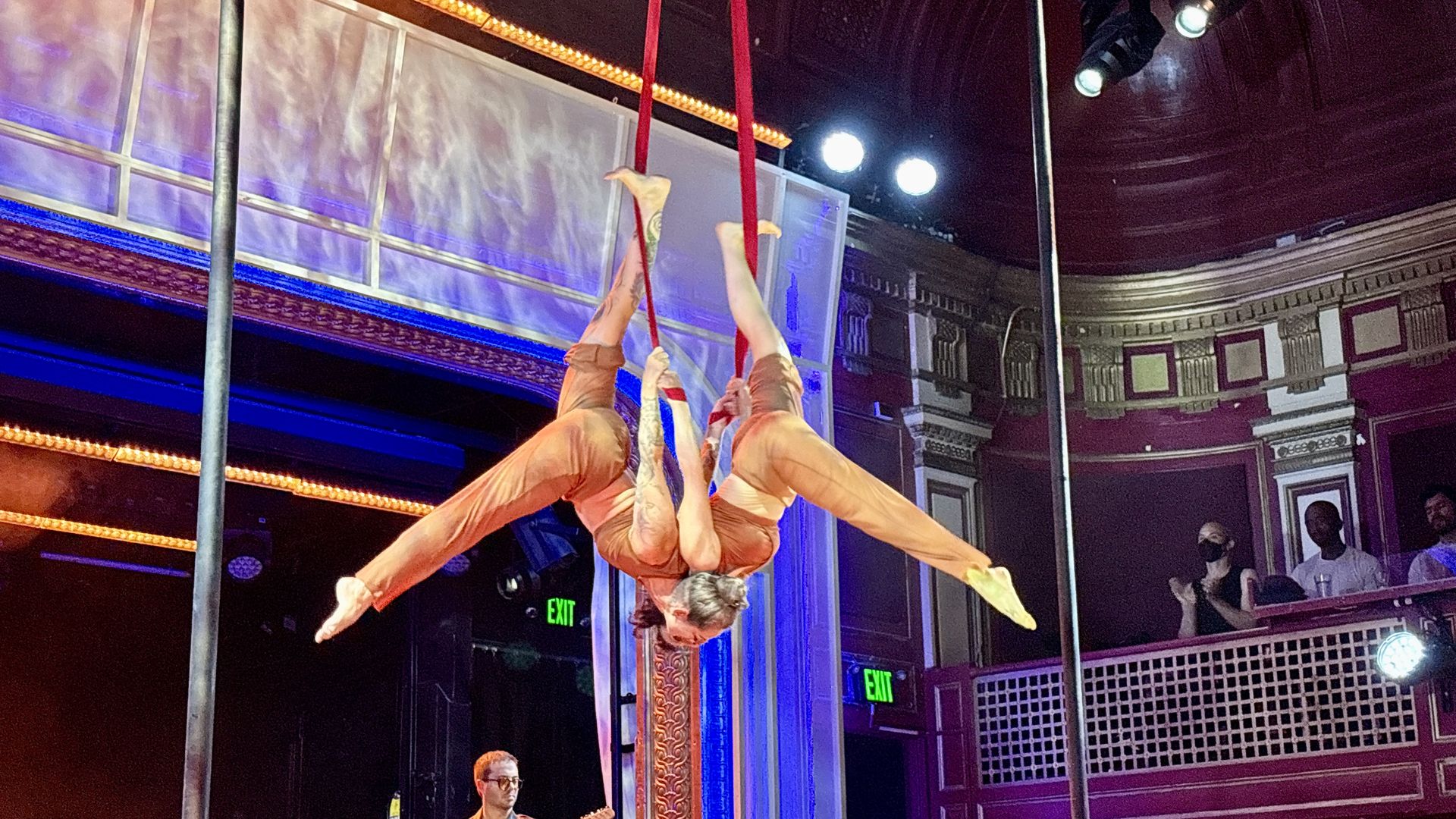
🎪 It's one thing to take an aerial class. It's another to see your instructors flying around Club Fugazi.
- I saw The Hive's annual showcase earlier this week, which brought the studio's instructors to the stage for a night of aerial performances set to live music.
- It was fun seeing a local circus community I usually associate with the studio get to put on a show in one of the city's best-known circus venues.
✨ Not to mention, each performance was stunning. Long live circus.
🎶 Nadia had fun seeing Useless Eaters at Vesuvio yesterday.
This newsletter was edited by Geoff Ziezulewicz.
Sign up for Axios San Francisco
