Axios from Tel Aviv

May 04, 2022

Welcome back to Axios from Tel Aviv.
- This week's edition (1,872 words, 7 minutes) starts with the rising tensions between Israel and Russia. It then examines discussions between Israel and the White House on Iran and Biden's upcoming trip to the region. Finally, it dives into domestic Israeli politics ahead of the Knesset's return.
- Sign up here to receive this newsletter.
1 big thing: Tensions flare between Israel and Russia
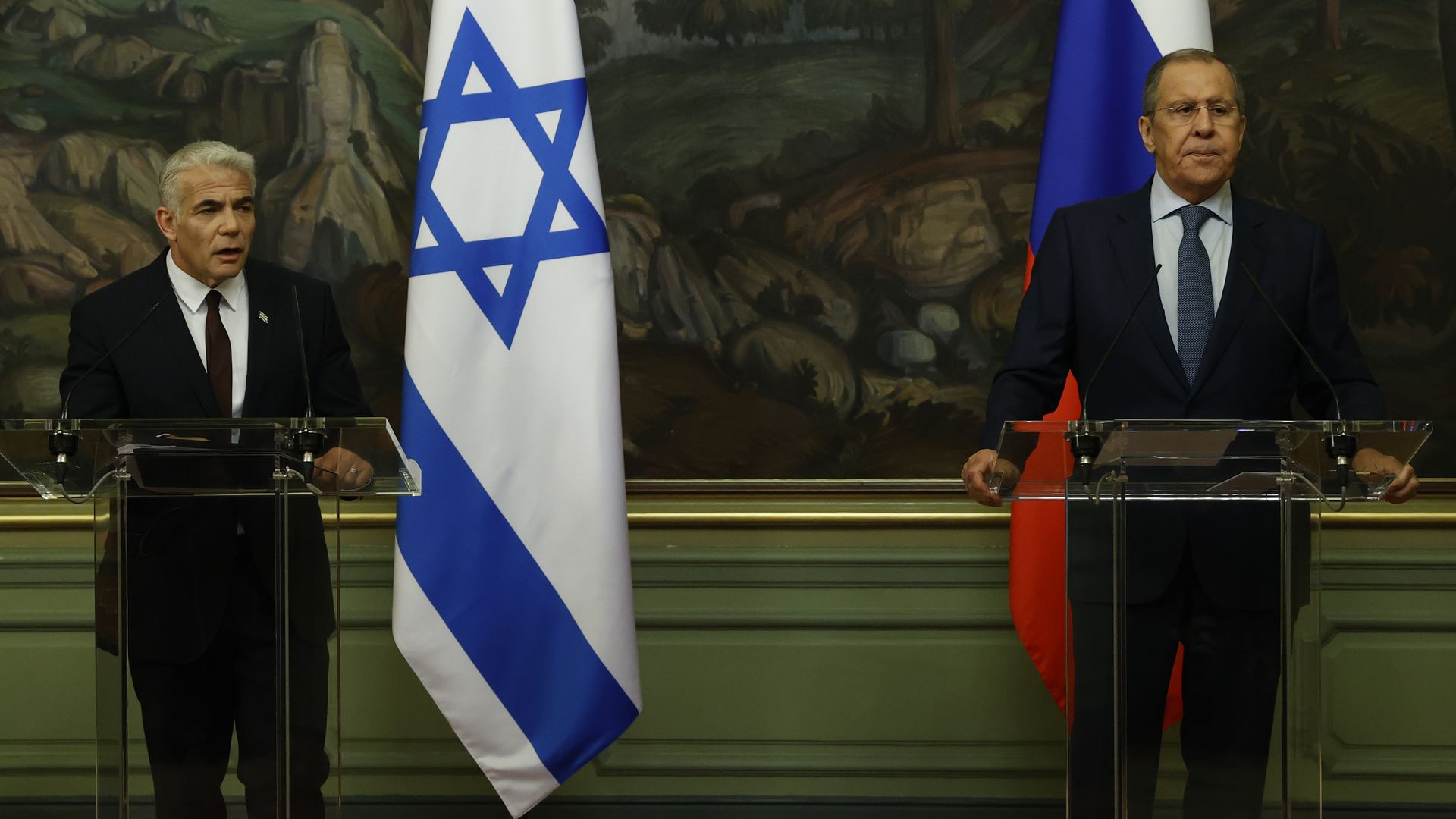
Israeli Foreign Minister Yair Lapid (left) and Russian Foreign Minister Sergei Lavrov hold a press conference following a meeting in Moscow on Sept. 9, 2021. Photo: Sefa Karacan/Anadolu Agency via Getty Images
Relations between Russia and Israel are at one of their lowest points in years after the Russian foreign minister falsely claimed Adolf Hitler had "Jewish blood," which he used to justify calling Ukrainian President Volodymyr Zelensky a Nazi.
Why it matters: Israel condemned the Russian invasion of Ukraine and accused Moscow of committing war crimes, but for more than two months, it has taken a careful approach to the war in Ukraine to ensure military cooperation with Russia in Syria continues.
- However, recently there's been a shift in Israel's policy, with more public criticism of Russia — including a strong condemnation of Lavrov's comments this week — and more willingness to support Ukraine (See item 2).
Catch up quick: Lavrov made his comments in an interview with an Italian TV channel on Sunday when asked how Russia can be "de-Nazifying" Ukraine — a stated goal of its invasion — if the leader of the country is Jewish.
- On Monday, the Israeli government reacted to Lavrov's remarks in an unusually strong way. President Isaac Herzog, Prime Minister Naftali Bennett and Foreign Minister Yair Lapid called the comments “lies,” “racist” and “oozing antisemitism."
- It was the first time Israel publicly condemned the Russian claim that Zelensky is a Nazi.
- The Russian ambassador was summoned to the Foreign Ministry in Jerusalem for what Israeli officials called “a very difficult conversation."
State of play: The Russian Foreign Ministry doubled down on Lavrov’s statements on Tuesday, saying Lapid’s statement contradicts history and falsely claiming the current Israeli government “supports the neo-Nazi regime" in Kyiv.
- Two Israeli officials told me they were very upset about the Russian Foreign Ministry's reaction but said no further action would be taken until after tomorrow's Israel independence day holiday.
- Meanwhile, a Hamas delegation arrived in Moscow today for a surprise visit that Israeli officials see as another form of retaliation by Russia.
Flashback: Russia-Israel relations have been relatively good in the nearly four years since a major crisis between the two countries erupted in September 2018, when a Russian military plane was downed by Syrian anti-aircraft fire during an Israeli airstrike.
- Russian officials blamed Israel for not coordinating its strike with them.
What to watch: Putin has yet to weigh in on the current tensions, and it is unclear whether the Russian president will continue down this line and escalate the crisis or tell his foreign minister to walk back his statements in order to calm things down.
- The big question though is whether the tensions will lead to any change in the Russian military behavior toward Israeli airstrikes in Syria.
2. U.S. asks Israel to increase military aid to Ukraine

A demonstrator holds an Israeli flag during a protest against Russia's invasion of Ukraine in Tel Aviv on March 20. Photo: Jack Guez/AFP via Getty Images
The Biden administration last week asked the Israeli government to consider increasing its military aid to Ukraine, U.S. and Israeli officials told me.
Why it matters: In its careful approach to the war, Israel has so far refused Ukraine's requests for advanced weaponry, and only last month agreed to send thousands of helmets and bulletproof vests for medical teams and first responders.
- But as Israel takes a more critical public line against Russia, it is signaling more openness to supplying Ukraine with certain nonlethal military equipment.
Behind the scenes: Israel last week sent Dror Shalom, the head of the political-military bureau at the Ministry of Defense, to Ramstein Air Base in Germany for a U.S.-led meeting on sending weapons to Ukraine.
- The Biden administration made it clear to the Israelis that the U.S. understands its complicated situation with Russia and appreciates what it has done so far in terms of aid to Ukraine, but hopes it could do more in providing military equipment, U.S. and Israeli officials said.
- This message was delivered during a meeting between White House national security adviser Jake Sullivan and his Israeli counterpart Eyal Hulata at the White House last week and in conversations between the Pentagon and the Israeli Ministry of Defense.
- The White House declined to comment.
State of play: A senior Israeli official said the Israeli government is considering increasing its military aid to Ukraine and will likely do it as the war continues. But the official stressed Israel will only provide nonlethal military equipment.
- A senior Ukrainian official told me Ukraine doesn’t expect Israel to provide it with lethal weapons, but said it wants to use several pre-existing export licenses from the Israeli Ministry of Defense for communications gear and anti-drone systems.
3. Scoop: U.S. explores regional leaders' meeting
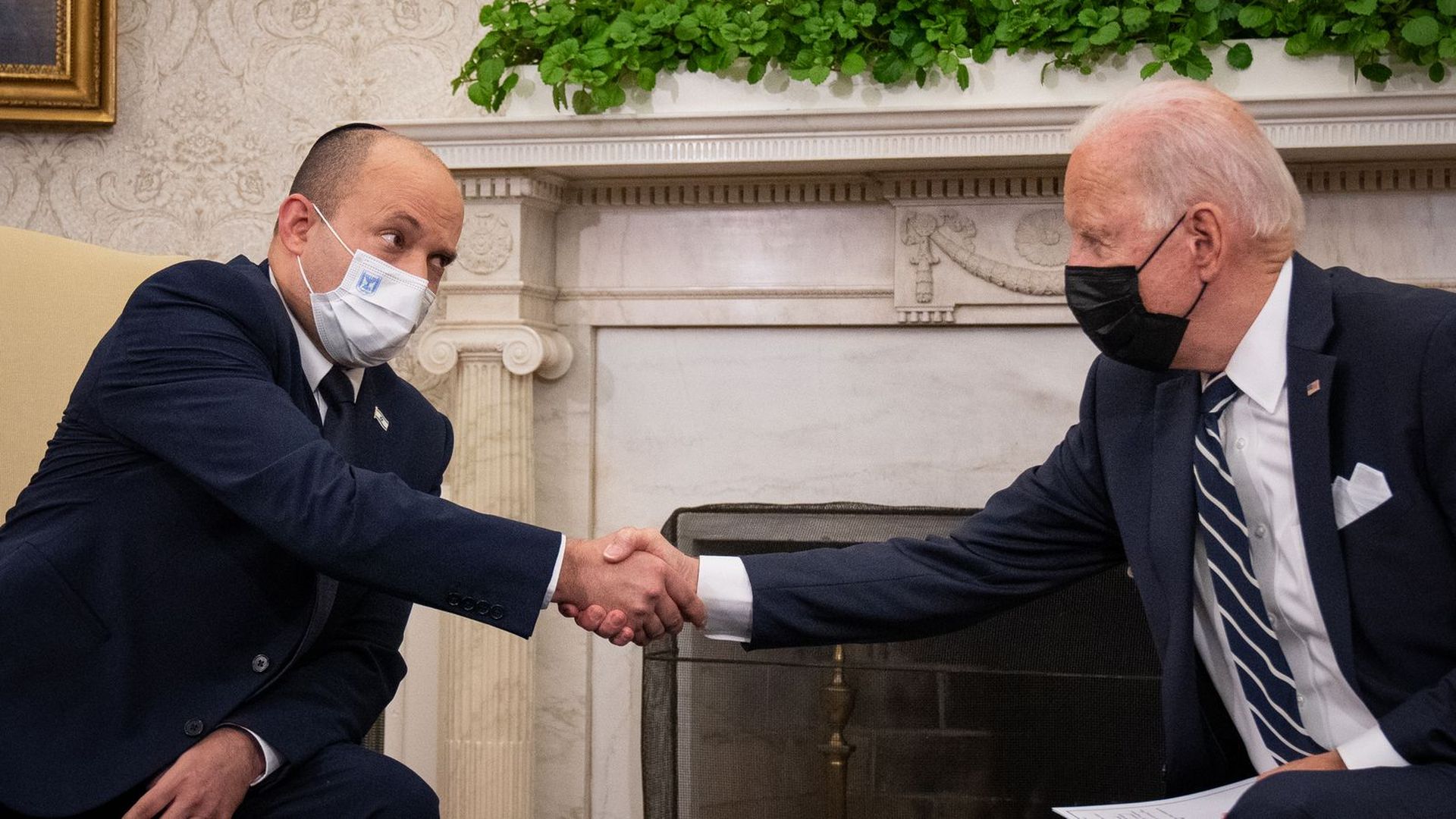
Israeli Prime Minister Naftali Bennett and President Biden shake hands while meeting in the Oval Office on Aug. 27, 2021. Photo: Sarahbeth Maney/The New York Times/Bloomberg via Getty Images
The White House and the Israeli Prime Minister’s Office discussed holding a regional leaders' meeting as part of President Biden’s visit to the Middle East toward the end of June, two Israeli officials told me.
Why it matters: A regional leaders' meeting headed by Biden would signal U.S. leadership and commitment in the Middle East at a time when the U.S. is seen as withdrawing from the region.
The big picture: Israeli national security adviser Eyal Hulata and his American counterpart Jake Sullivan discussed Biden's upcoming trip during talks at the White House last week, Israeli officials said.
- They talked about the possibility of adding a regional element to Biden's visit, according to the Israeli officials.
- One of the ideas was to hold a meeting between Biden, Bennett and several other leaders from the region either in Israel or in another country as a means to continue the momentum of the Negev summit that took place in Israel in late March and as a way to further strengthen the Abraham Accords.
- The Israeli officials stressed that the discussion was very preliminary and it is unclear if such a meeting will be possible, but talks on the issue are ongoing.
- The White House declined to comment.
State of play: Israeli officials said a final date for Biden’s visit has not been determined but should take place in the last two weeks of June.
- The visit is expected to be relatively short, with Biden spending 24–36 hours on the ground, meeting Israeli officials in Jerusalem and Palestinian officials in Bethlehem, the Israeli officials said.
- It will be Biden’s first trip to the Middle East since he took office. It is still unclear whether he will use the trip to visit other countries in the region.
- A White House team arrived in Israel on Monday to begin visit preparation discussions with the Israeli government.
4. U.S. and Israel discuss how to put more pressure on Iran
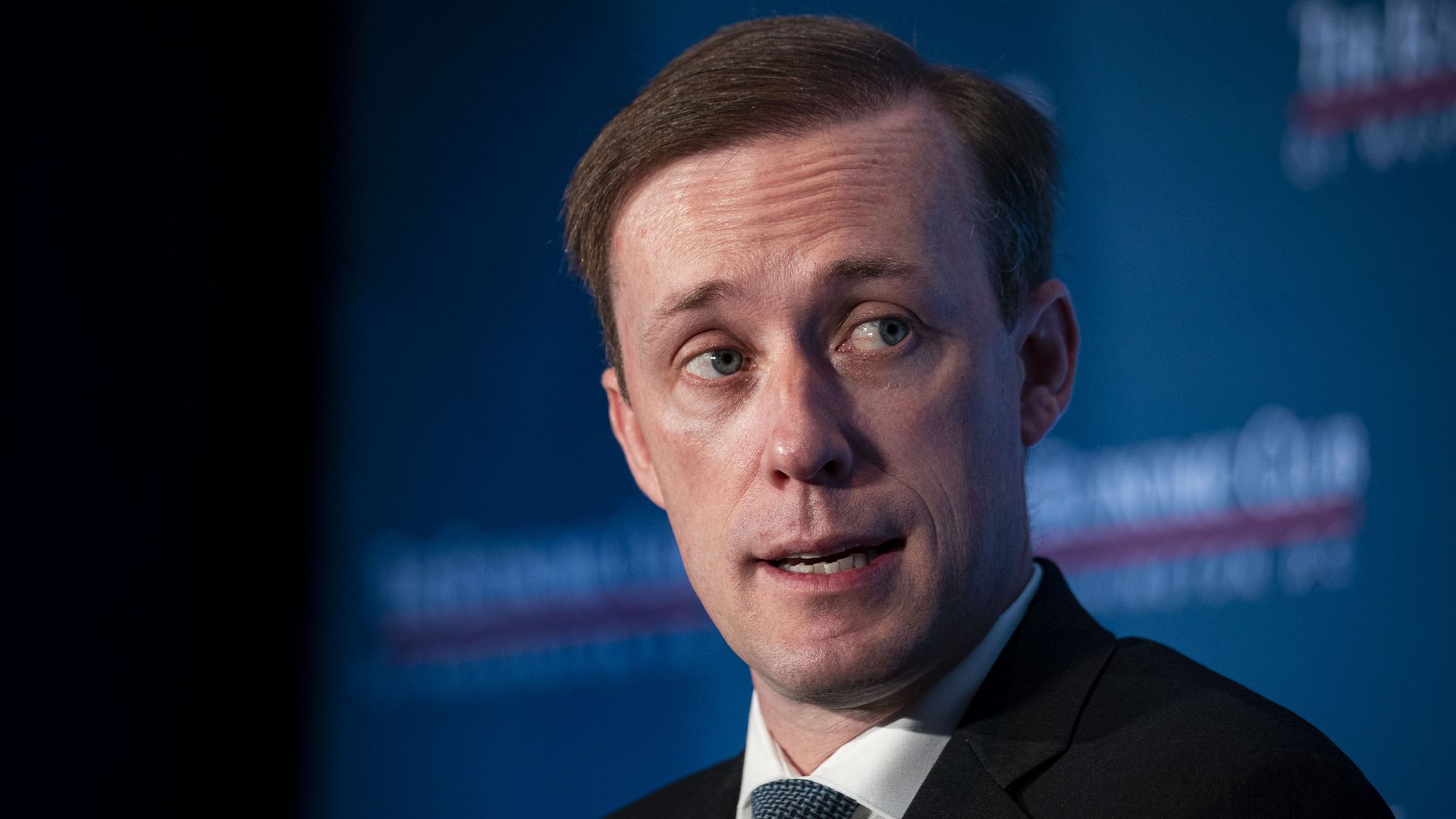
White House national security adviser Jake Sullivan. Photo: Al Drago/Bloomberg via Getty Images
Israel and the U.S. have been discussing ways to put more pressure on Iran in a scenario where there is no return to the 2015 nuclear deal in the near future, a senior Israeli official told me.
Why it matters: The seven-week “pause” in the Vienna nuclear talks has thrown the negotiations into limbo. The Biden administration, its European allies and Israel have expressed concerns that Iran will continue to advance its nuclear program while the talks are stalled.
Driving the news: Hulata's discussions with Sullivan and other senior officials at the White House last week were largely focused on Iran, including preparing for a possible reality where there is no return to the nuclear deal, the senior Israeli official told me.
- Israel is opposed to the current draft agreement on the U.S. returning to the 2015 nuclear deal, but Hulata and Sullivan did discuss how to put pressure on Iran in order to make it clear to the leadership in Tehran that it needs a deal, and at the same time, give the U.S. an advantage to get a better deal if nuclear talks resume, the senior Israeli official said.
- According to the Israeli official, the two national security advisers discussed how to do this without pushing Iran to escalate its nuclear program and enrich uranium to 90% purity — the level needed to produce a nuclear bomb.
- Israel suggested several possible ways to put pressure on Tehran, including passing a censure resolution at the International Atomic Energy Agency board of governors meeting in June and increasing U.S. military deterrence in the Middle East, the Israeli official said
- “All those possible steps are meant to signal to the Iranians that nobody is waiting for them and that time is not working in their favor," the senior Israeli official said.
What they're saying: The White House declined to comment, but said in a readout of the meeting that Sullivan "emphasized" that the U.S. is "attuned to Israel’s concerns about threats to its security, including first-and-foremost from Iran and Iranian-backed proxies. "
- Sullivan and Hulata "agreed to further enhance the ongoing coordination through the U.S.-Israel Strategic Consultative Group and strengthen security and diplomatic cooperation wherever possible with other regional partners," the readout added.
- Their meeting came a day after Biden had a 35-minute phone call with Bennett in which they discussed "shared regional and global security challenges, including the threat posed by Iran and its proxies," according to the White House.
What to watch: The senior Israeli official told me that after the Biden-Bennett call and Hulata's White House meetings, it's clear something dramatic would have to happen for Biden to agree to remove Iran's Islamic Revolutionary Guard Corps from the U.S. foreign terrorist organizations blacklist — the key Iranian demand that remains a sticking point in the nuclear talks.
5. Israeli parliament to return as coalition fights to stay afloat
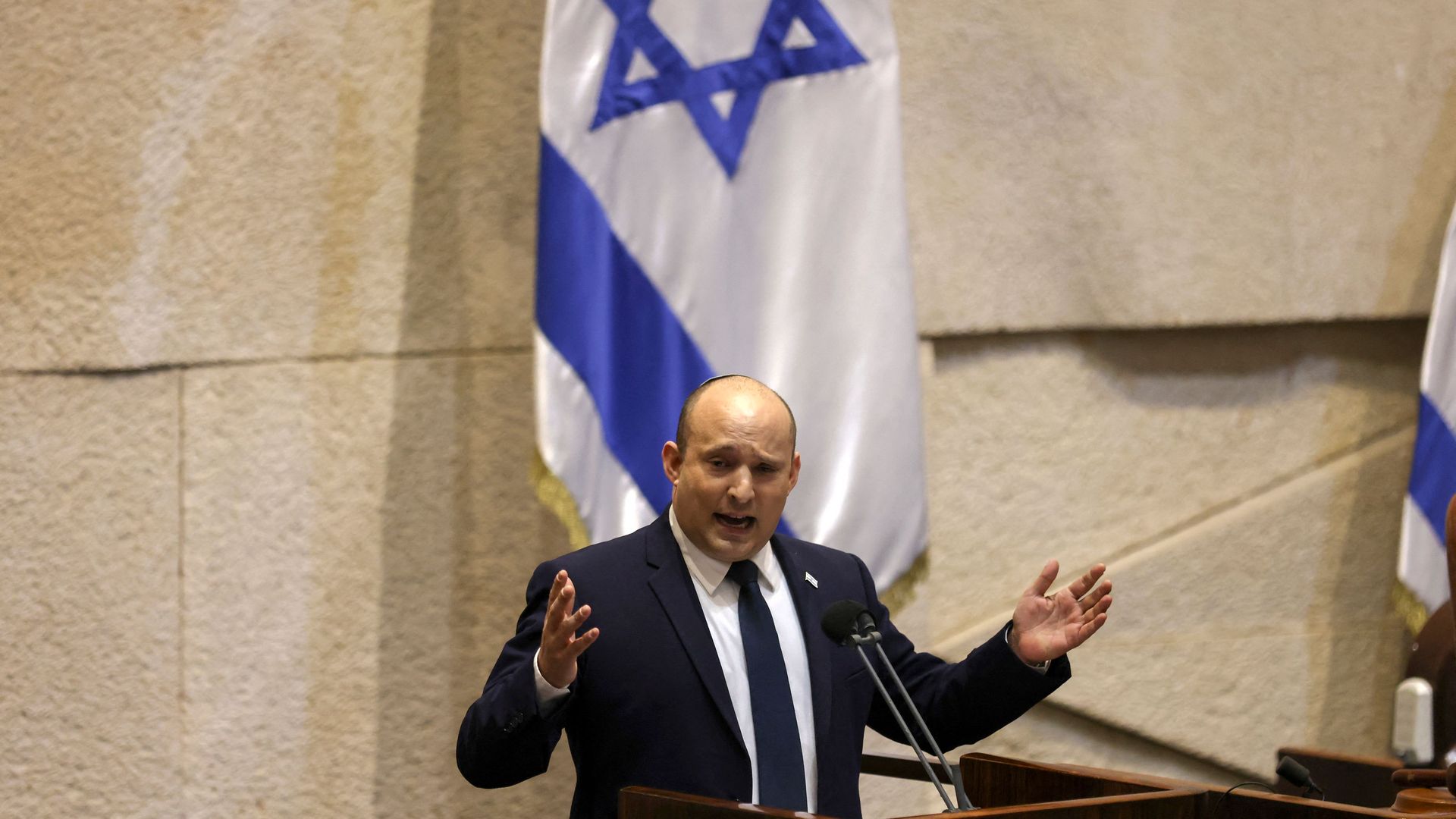
Bennett speaks during a plenum session at the assembly hall in the Knesset in Jerusalem on Nov. 3, 2021. Photo: Ahmad Gharabli/AFP via Getty Images
The Knesset will return from recess on Monday in what could be a fight for the political life or death of Bennett’s coalition.
Why it matters: After losing its majority in the Knesset, the fragile coalition will have a hard time passing legislation and faces huge risk of crumbling before the session is over.
The big picture: During the recess, the coalition whip — a lawmaker from Bennett’s party — defected and joined the opposition. As a result, the coalition lost its majority.
- The tensions at the Al-Aqsa Mosque compound in Jerusalem last month led the Islamist Ra'am party, also known as the United Arab List, to symbolically suspend its membership in the coalition.
State of play: The heads of the different parties in the coalition met in recent days in an attempt to reach an understanding that they must stabilize the coalition.
- Ra'am party leader Mansour Abbas is expected to end the suspension of his party membership in the coalition.
Yes, but: Several lawmakers have put forward ultimatums and demanded tangible achievements in return for not leaving the coalition.
- It will be close to impossible to satisfy all of them. One more defector could be enough for the opposition to pass a vote calling for a new election.
But, but, but: Dissolving the Knesset and calling for an election won’t be that easy either. Benjamin Netanyahu, the former prime minister and Likud party leader who now leads the opposition, only has the support of 54 lawmakers. He would need 61.
- Netanyahu and his allies claim they will be able to get another member of the coalition to defect, but this won’t necessarily be enough to dissolve the Knesset.
- The other six lawmakers of the opposition are members of the Arab Joint List, which does not support the current government but is also vehemently opposed to Netanyahu and his allies who they accuse of being racist and anti-Arab.
What to watch: The ultra-Orthodox parties, who are part of the opposition and have become increasingly frustrated with Netanyahu, have openly called for the Likud leader to step aside and allow another member of his party to try to form an alternative coalition without calling for an election.