From weeks to seconds: The AI revolution in engineering
A message from: Altair
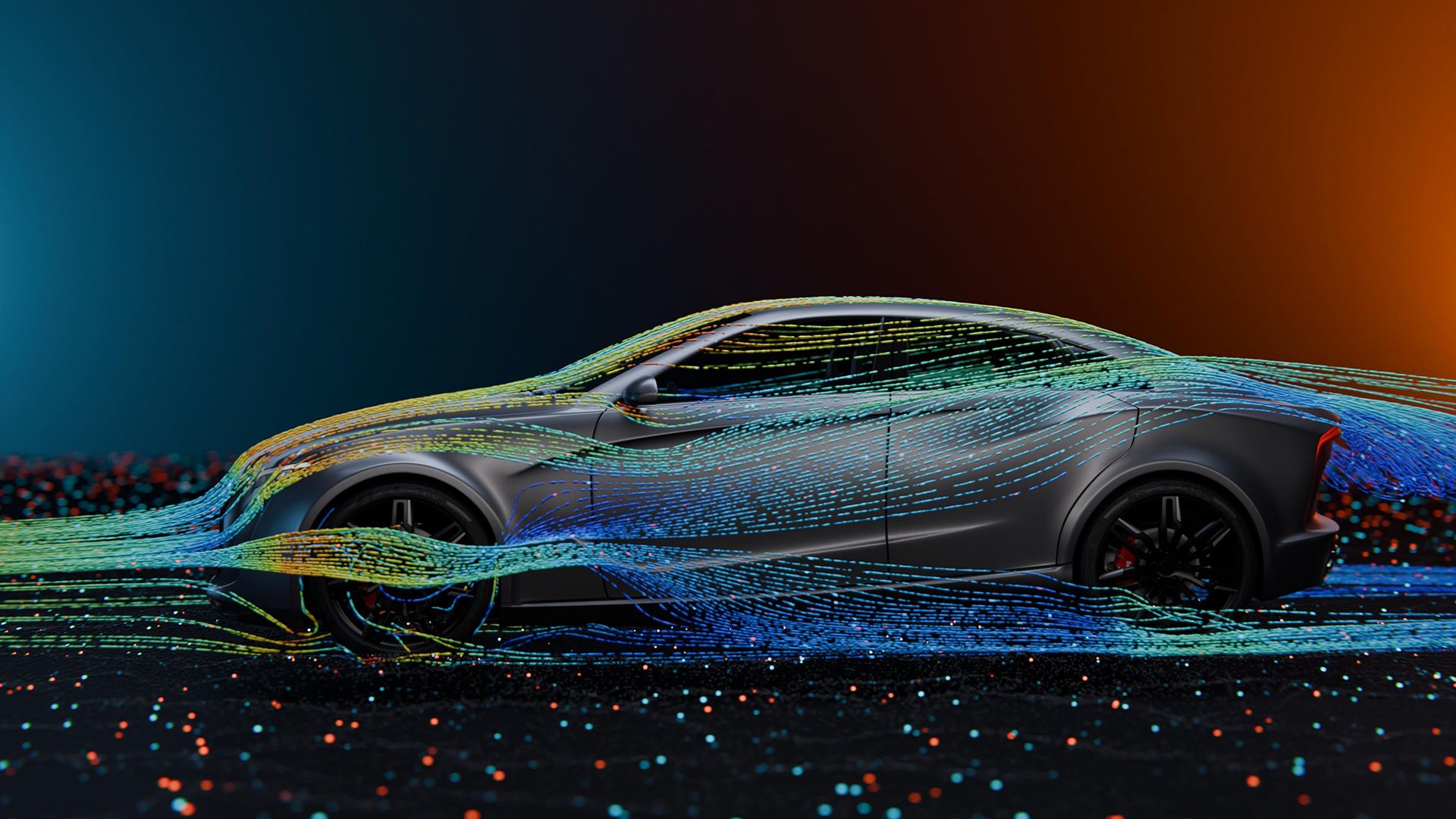
Engineering touches nearly everything — from automotive, aerospace, defense, electronics and beyond. But for decades, simulation and design have been iterative, time-consuming and resource-intensive.
Now, Altair is redefining engineering through AI — not by replacing engineers, but by augmenting their ability to solve complex problems faster and more precisely.
Why it's important: Many engineers still rely on traditional, physics-based simulations. While accurate, they're often too slow and computationally intensive to support today's demand for rapid iteration and innovation.
- And as products grow more complex — from electric vehicles to smart devices and more — the cost of delay or error compounds.
💡 The solution: Altair® HyperWorks® is an integrated design and simulation platform supercharged with AI. Altair® PhysicsAI™ uses geometric deep learning to simulate complex physics outcomes up to 1,000x faster than traditional solver-driven simulation.
- The idea: Engineers can analyze hundreds of design iterations in seconds instead of days, unlocking possibilities for a "zero-prototype" future where designs are perfected virtually with AI.
Altair's AI-powered solutions form a unified digital ecosystem connecting simulation, data management, system modeling and physical tests through a seamless digital thread.
- Engineers move effortlessly from initial designs through detailed simulations and optimizations, with AI providing instant, reliable insights at every step.
How it's done: Altair's tools embed AI across workflows. AI-driven optimization processes, rapid physics prediction and streamlined simulation workflows become routine, empowering engineers to focus on strategic, high-value tasks.
- With Altair's frictionless AI integration, even non-AI specialists can harness advanced capabilities through intuitive, no-code interfaces and readily accessible high-performance computing resources.
With Altair's AI solutions, engineers can:
🔮 Predict with confidence: PhysicsAI™ doesn't just accelerate simulations — it ensures reliability. Using geometric deep learning, it identifies relationships between shape and performance across various physics applications.
- Built-in confidence scoring evaluates geometric similarity, flagging novel designs for verification, safeguarding results and maintaining trust in the predictions.
🧠 Utilize smarter system models for real-time simulation: Altair uses AI to automatically generate reduced-order models (ROMs) that replicate complex simulation behavior, at a fraction of the computational cost.
- What this means: Engineers can quickly build compact models from existing computer-aided engineering (CAE) or test data — no coding needed. These models are perfect for real-time uses like system design, embedded controls and digital twins.
- The benefits: Faster iteration and early integration of simulation into product development.
🔨 Add to your engineering toolkit: Gain access to tools like the Altair® CoPilot™ AI assistant and enablement engine. It provides product-level assistance through step-by-step guidance and scripting-level automation by automatically generating and running Python scripts.
- In other words: It empowers engineers to execute full tasks from model setup to simulation, reducing the barrier to entry and increasing productivity across experience levels.
Worth a mention: AI isn't replacing expertise — it's amplifying it. Engineers get help with time-consuming tasks from AI, while they focus on creativity, strategy and innovation.
The takeaway: By accelerating simulation, simplifying system modeling and democratizing AI access, Altair empowers technical teams to innovate faster — and smarter — without compromising accuracy.
- Altair's AI-powered platform is redefining engineering. For leaders aiming to scale innovation, reduce complexity and deliver results, the future starts here.